
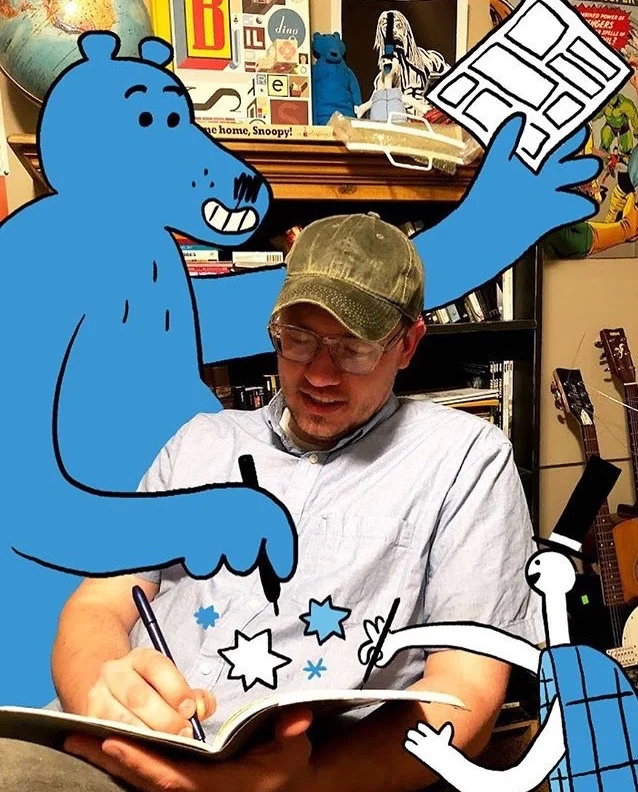
Day in the Life of Jess Smart Smiley
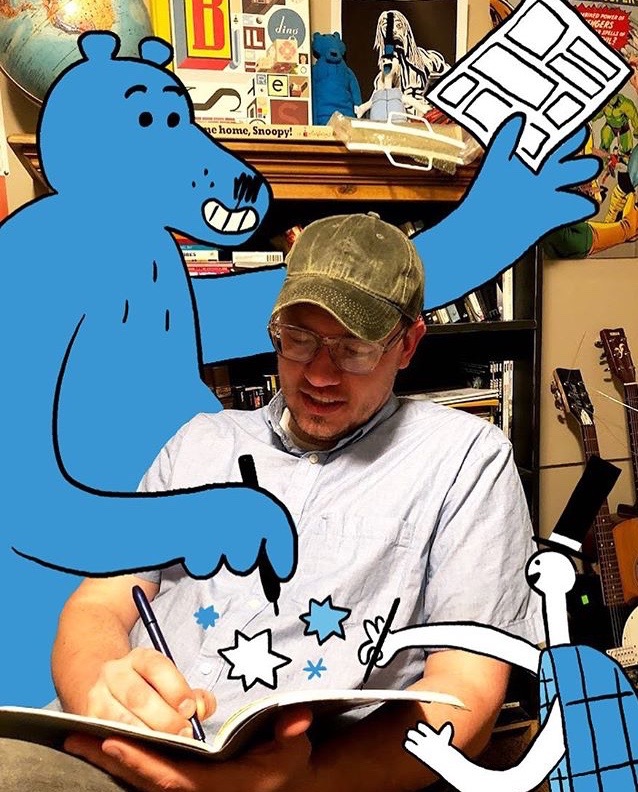
photograph courtesy of Jess Smart Smiley
If you haven't heard of the multi-talented, rad cartoonist, teacher, illustrator, and writer Jess Smart Smiley, you're in for a treat. Smiley is based in Utah and has created six rad kid's books including Upside Down: A Vampire Tale and Rude Dude Book of Food. His bold drawing style and witty characters are not only smile-inducing, they're approachable. By creating hilarious, instantly love-able personalities out of simple shapes and lines, Smiley makes illustration inviting for readers of all ages and drawing skill. In his latest book Let's Make Comics Smiley leads readers through a roller-coaster ride of 90 jam-packed activity pages that offers a foundation for any budding cartoonist. Best friends Peanut (a turtle donning a top hat) and Bramble (a lady-bug loving bear) star as the teachers of the activity book, creating mischief and adventure on every page. Because the book is set up with its own comic book narrative, Smiley makes learning the ins-and-outs of drawing feel just like watching Sunday morning cartoons. And for kids and grownups that have a paralyzing fear of picking up a pen, this book is a refreshing antidote. We were lucky enough to pick Jess Smart Smiley's brain a bit about the joys and challenges of being a professional artist, the process of making Let's Make Comics, and some of his favorite graphic novel and comic recommendations. We hope you enjoy, and don't forget to check out ILLUSTORIA's Instagram giveaway of the book running now until June 31st!

Let's Make Comics! by Jess Smart Smiley
Hi Jess! Tell us about yourself.
Jess Smart Smiley is a joke. Seriously. He makes rad pictures with his bare hands and has helped more than 1,000 children, teenagers, and adults create their very first comics. See more at jess-smiley.com.
What was the last thing you made with your hands?
I drew this tiger face in my sketchbook.

art by Jess Smart Smiley
In your latest release, Let’s Make Comics, you offer tons of creative, engaging ways for comic book beginners to start creating their own story lines. What was the inspiration behind this book?
6 years ago I was invited to teach a week-long comics workshop to teenagers. I came up with the activity pages as a way for students to complete a comic while also exploring the nature of comics, the role of words and pictures, and a variety of tools, methods, and techniques for creating comics. Since that very first workshop, I’ve used the activity pages to introduce children and their parents to the exciting world of storytelling through comics!


Let's Make Comics by Jess Smart Smiley
What do you love most about creating comic books?
Because a comic can display several illustrations on a single page, it gives me the opportunity to draw a character I love from a bunch of different angles, in a variety of situations, and with a range of emotional expressions.

art by Jess Smart Smiley
Can you talk about your process of creating Let’s Make Comics from start to finish, and share some process pics with us?
Sure! Once I had created a handful of activity pages for my workshop and had seen how helpful they were for beginning creators, I started writing ideas for other possible pages onto index cards. I used something like 350 index cards and then picked my favorite 100 or so from the stack.


From here, I grabbed a bunch of blank 8.5" x 11" copy paper and spent some time drawing very rough versions of each activity. The drawings were sloppy and the writing wasn’t usually well-thought-out, but my goal was to get the idea down on paper in a way that I could understand and make a final version from.

art by Jess Smart Smiley
I scanned each rough activity page and pulled them one at a time into Photoshop, where I created new layers for my final drawings, colors, and text.

art by Jess Smart Smiley
(As a side note, there was one Sunday when I still had something like 20 activity pages to rough out. I was starting to lose steam from so much drawing, but there was a sudden rainstorm and our power went out. I love a good rainstorm, so I sat on the porch and drew the final 20 pages, charged by the energy of the storm.)

Let's Make Comics by Jess Smart Smiley
If you could be any comic book character from history, who would you be and why?
Probably Snoopy. Now THERE’S a dog who knows how to have a good time! Plus, his dog house can fly!

What were you like as a kid?
Quiet. Timid. Always drawing in class. I loved playing basketball and kickball at recess and reading everything from Roald Dahl and Beverly Cleary.

art by Quentin Blake from Roald Dahl's Fantastic Mr. Fox

art by Louis Darling from Beverly Cleary's Ramona
What is the most challenging part about being an artist/writer/maker?
Pitching a new idea. Publishers want to make great books, but they can’t just trust a creator to do whatever they want. Publishers want to know what your next book will be before you’ve made it. That means a creator has to prepare some illustrations and writing that demonstrate and describe a book before it ever exists. If I don’t put enough thought into the drawings and writing in my pitch, then I leave too many gaps in the story and holes in the idea for publishers to guess at. It’s like not finishing a sentence—and how often do people guess at exactly what you were trying to say?

art by Jess Smart Smiley
Where/ do you feel your most creative?
When I’m working on a project I’m really enjoying, but also have time to explore doodling in my sketchbook and time to read.
What is your favorite activity from Let’s Make Comics?
I love watching children, teenagers, and adults complete the “Let’s Take a Walk” activity on page 26. The comic is missing backgrounds and environments, so it’s up to the reader to draw their own into the comic.

Let's Make Comics by Jess Smart Smiley, page 26
What are some comics every kid should get their hands on, ASAP?
There are so many great comics out there and I’ll never be able to list them all. That being said, here are some of my favorites that I often recommend:


Bone by Jeff Smith is a wonderful fantasy adventure centered around a lovable cast of friendly cousins who find themselves in a magical and terrifying forest, where they encounter horrific creatures, the Great Red Dragon, and a host of mysteries.
The Hazardous Tales series by Nathan Hale recount true tales from history in an incredibly informative and entertaining way. There are currently 7 books in the series, covering everything from the Revolutionary War to the Donner party and World War II.
The Unsinkable Walker Bean by Aaron Renier is the book I’ve gifted the most—to young readers, to my cartoonist friends, and to anyone who enjoys a good story. Walker Bean is a young boy who takes to the high-seas in an attempt to relieve his grandfather from an ancient curse. Along the way, Walker Bean encounters pirates, sea witches, mysterious machines, and a magical glowing skull. Do yourself a favor and read it before the sequel comes out this October!


Raina Telgemeier’s Smile tells the story of the author’s sixth-grade experience with injuring her front teeth, getting braces, trying to understand boys, and finding her true friends.
Luke Pearson’s Hilda books are incredibly charming, filled with beautiful illustrations, giants, sprites, trolls, and hounds, adventurous stories, idyllic landscapes, and a curious blue-haired girl named Hilda. (Did I mention Hilda is coming to Netflix this Fall?!)
What is the day in the life of Jess Smart Smiley?
On any given day I might be working on a new comic, illustrating a picture book, designing a video game, creating character designs, developing story ideas, drawing in my sketchbook, teaching a comics workshop, or doing some combination of these things.
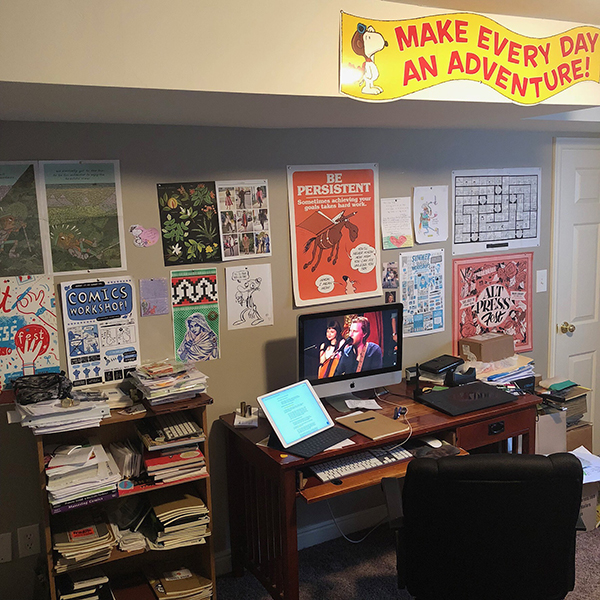
I prefer to wake up and get right to work, usually by finishing something I started the night before. (It’s helpful for me to finish something early in the day, so I can stay motivated to keep going.) I keep a to-do list in my sketchbook of different things that need to be done for each of my projects, which makes it easy for me to know what to do next. I’ll often prioritize my projects by ranking them in the order they should be completed, and then I’ll try to come up with a rough idea of how much time any one task with take. I never have to ask myself What should I do next?, because I’ve already thought through what needs to be done.

art by Jess Smart Smiley
After writing, drawing, and planning at home, I might spend a few hours working at the library, the local Barnes & Noble, or my neighborhood comic shop, Dragon’s Keep. I meet up with local business owners, friends, and fellow creators to talk about upcoming projects, or I might take the role of consultant, offering what I hope are helpful thoughts for writers, artists, comic book creators, and others in the community.
In-person events are also a big part of my schedule. Over the last few years I’ve been able to help more than 1,000 children, teenagers, and adults complete their first comics. I started with a week-long comics workshop, and have since introduced others to making comics at school visits, library events, Girl Scout meetings, comic conventions, book festivals, writing and art symposiums, and Skype visits. Last month I was able to visit a group of schoolchildren in Pakistan and a comic festival in England, all thanks to the magic of Skype!
I love seeing people’s reactions to Let’s Make Comics, and knowing that I’ll be teaching others about the things I’m learning about making comics helps me stay committed and really consider what I’m doing and how I’m doing it.
My family and I spend time together and I like to get a little reading in, maybe go for a walk, and then I do a little more drawing or writing before bed. Pretty exciting!
We hope you enjoyed this interview with Jess Smart Smiley! Don't forget to head on over to our Instagram for a chance to win Let's Make Comics in our giveaway (closes 7/31).
If you've got the comic-loving-bug, you will obsess over ILLUSTORIA's Issues #1 - #7. Each issue of ILLUSTORIA is filled to the brim with comics, illustrated short stories, interviews with artists, coloring pages, DIYs and more. Order an issue or a subscription today and fill your days with creativity!
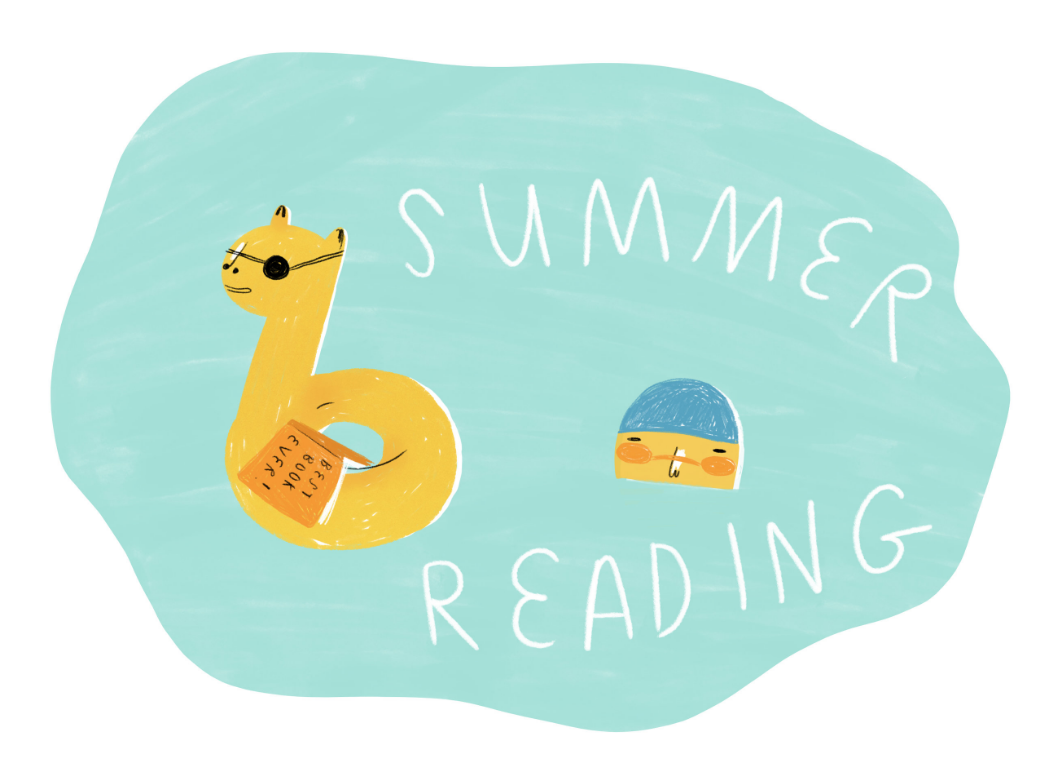
Summer Reading Roundup
Illustration by Paige Geimer
School’s out and summer is settling in! It’s the best time of year for jumping in lakes, beating the heat with ice-cold drinks, and falling asleep in the shade with a good book. Don’t know where to start with all of the wonderful titles lining the shelves? We rounded up some of our favorites that are the perfect companions for all your summer adventures! There is plenty of time for fun activities, thrilling stories, and books that take you to a new and unique world during these long days.
The Kid's Awesome Activity Book by Mike Lowery

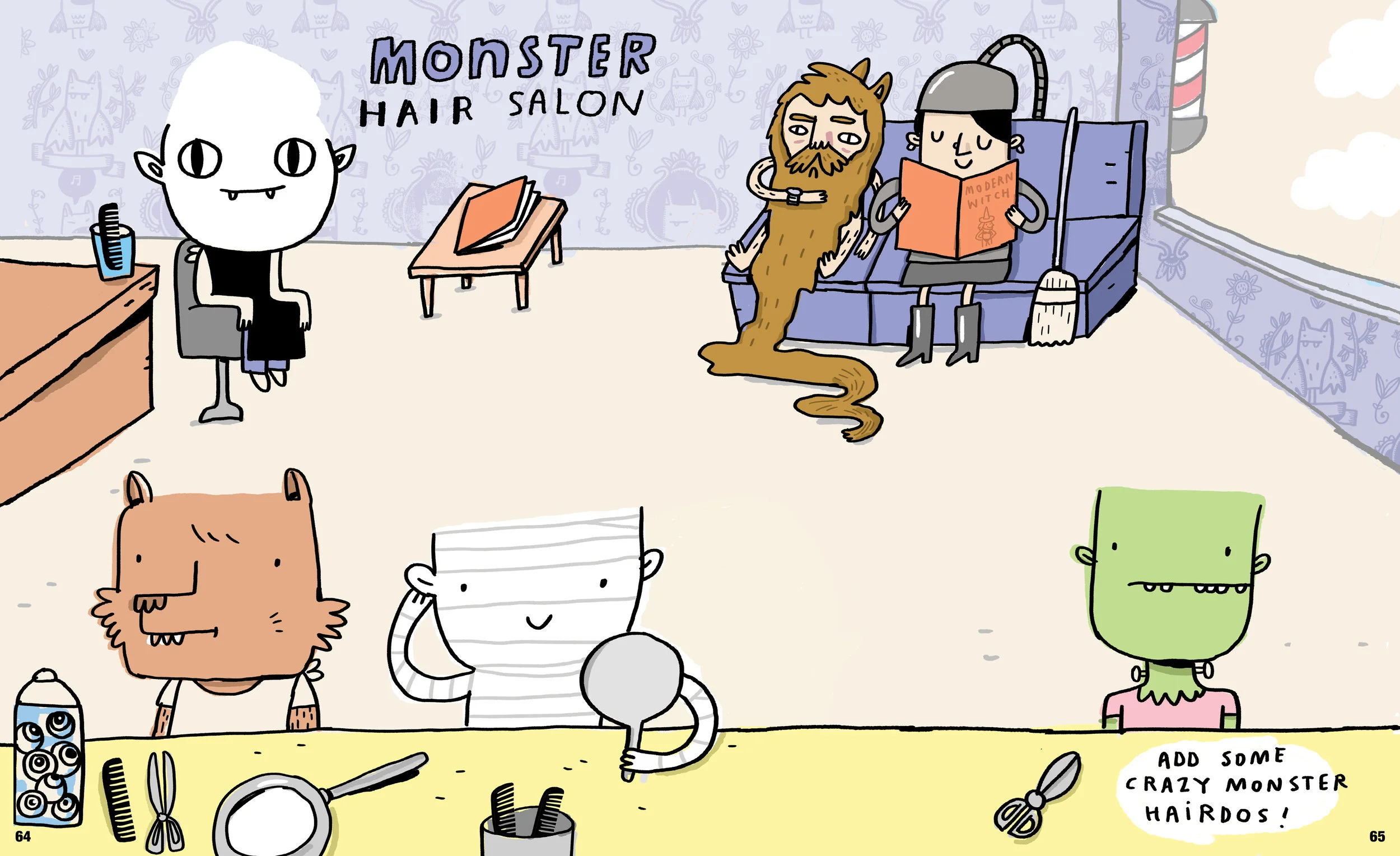
Kids Awesome Activity Book by Mike Lowery

It’s no secret that we love Mike Lowery here at ILLUSTORIA - how can we resist the amazing doodle-esque illustrations and immensely fun activities?! This book has you coming up with some funky monsters hairstyles (mullets are back in, right?), deciphering secret messages, and creating a masterpiece to go on the walls of a museum. Lowery has made a book that is perfect for long car rides or sitting hanging out in the backyard. Plus, the book comes with stickers, finger puppets, and a fold out poster to keep you creative even when you can’t see the white spaces in the book anymore!
The Better Tree Fort by Jessica Scott Kerrin and Qin Leng


The Better Tree Fort by Jessica Scott Kerrin and illustrated by Qin Leng
Jessica Scott Kerrin’s story will have you feeling nostalgic about long summer nights that were spent dreaming of the world’s raddest tree house - equipped with a skylight and fireman’s pole for getting down, obviously. The Better Tree Fort focuses on Russell who is building a tree fort with his dad, but can’t help but be jealous of the bigger one 3 doors down. After spending some time at the bigger fort, Russell realizes that his tree fort is better after all! We absolutely love Qin Leng’s watercolor illustrations, which we have gotten to know and love in her book A Family is a Family is a Family. She perfectly captures the ambiance of a summer’s DIY activity; we can almost hear the crickets chirping in the beautiful sunset spread.
Rad Girls Can by Kate Schatz and Miriam Klein Stahl


Rad Girls Can by Kate Schaltz and illustrated by Miriam Klein Stahl

This summer reading list wouldn’t be complete without including the newest edition of the Rad Women series with Rad Girls Can by Kate Schaltz and Miriam Klein Stahl. Their new book featuring 50 (FIFTY!) girls that have done, well, rad things that all of us are completely in awe about. Turning the focus onto girls under the age of 20, girls can see that they are never too young to stand up and make a difference. In fact, some of the most revolutionary ideas come from young minds! Flashback to Issue 5: Motion, Kate and Miriam talked to us about what inspires them and how to use their talents to support women and girls alike. Now the duo is releasing the third book in the series and we are more inspired to get out there and help more than ever. Rad Girls Can comes out July 17, so make sure to keep an eye out at your fav local bookstore!
Under the Canopy by Iris Volant and Cynthia Alonso


Under the Canopy by Iris Volant and illustrated by Cynthia Alonso
This one is for all of the nature lovers out there! Under the Canopy not only showcases Alonso’s stunning, colorful illustrations of some of the amazing trees that we find around the world but also highlights the cultural context of these seemingly everyday sightings. Did you know that Hawthorne trees were thought to be the meeting place of Celtic fairies? Or that Anne Frank used to look out to a large Horse Chestnut Tree outside of her hiding spot in Amsterdam? Just because school is out doesn’t mean that the learning has to stop, especially when it is about awesome subjects like this! After reading this Flying Eye book, you’ll want to go out and see what trees you can find in your own backyard. (Super cool bonus: check out Cynthia’s sweet illustrated story in Issue 6: Symbols.)
Ghost Boys by Jewell Parker Rhodes


Ghost Boys by Jewell Parker Rhodes

While this might not exactly be beach reading, Ghost Boys is a fantastic and necessary tale to be told. Jewell Parker Rhodes paints a heartbreakingly poignant story that is all too familiar - a young boy dies at the hand of a trigger happy policeman. This middle grade novel retells the story by weaving through time and relationships that were made both while alive and after death. He comes across many sides of the story, including another boy whose fate was not unlike his as well as the policeman's daughter, highlighting different perspectives of these events. While the hectic nature of school is gone, summer could be a great time to open up a conversation about these themes with your young one.
I Really Want to See You, Grandma by Taro Gomi


I Really Want to See You, Grandma by Taro Gomi
I Really Want to See You, Grandma is one of those books that we keep going back to over and over. Probably because Taro Gomi is a genius and we can’t stop looking at his illustrations, but also because this book reminds us of what it’s like to miss someone we are close to and do everything we can to see them. Gomi does a perfect job at creating a sweet story about the bond between a grandmother and granddaughter who both have the same idea to make a trip, but keep missing each other in the process. Though, this doesn’t discourage them and we get to follow these journeys, inspiring us to reach out to our grandparents too. Pack this book in your backpack and go on a journey to read it with a loved one!
The Forest by Riccardo Bozzi, Violeta Lopiz, Valerio Vidali
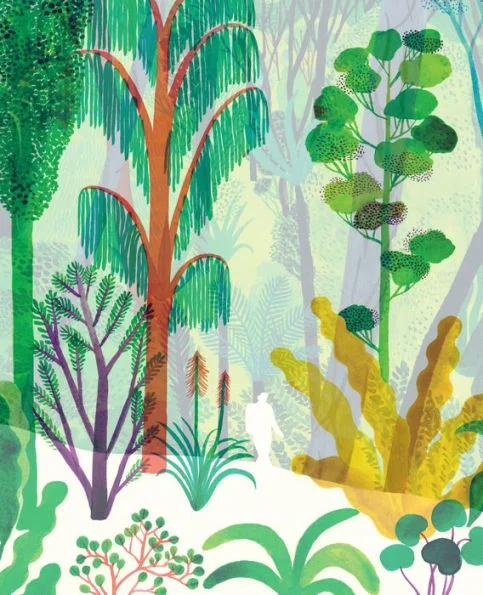

The Forest by Riccardo Bozzi, Violeta Lopiz, Valerio Vidali

The Forest refuses to be put into a category, and that’s what we love about it. Bozzi, Lopiz, and Vidali do a phenomenal job at making every single aspect of this book special. The story is a sweet rendition of life - from birth to death - using the metaphor of a forest, but it doesn’t lay a heavy hand. Instead you follow travelers through stunning and bright illustrations that are paired with delicate cut outs, where you can see the forest through the physical perspectives of the travelers. Ending in full circle, the book inspires to not take life for granted and to appreciate the small things.
Be Prepared by Vera Brosgol
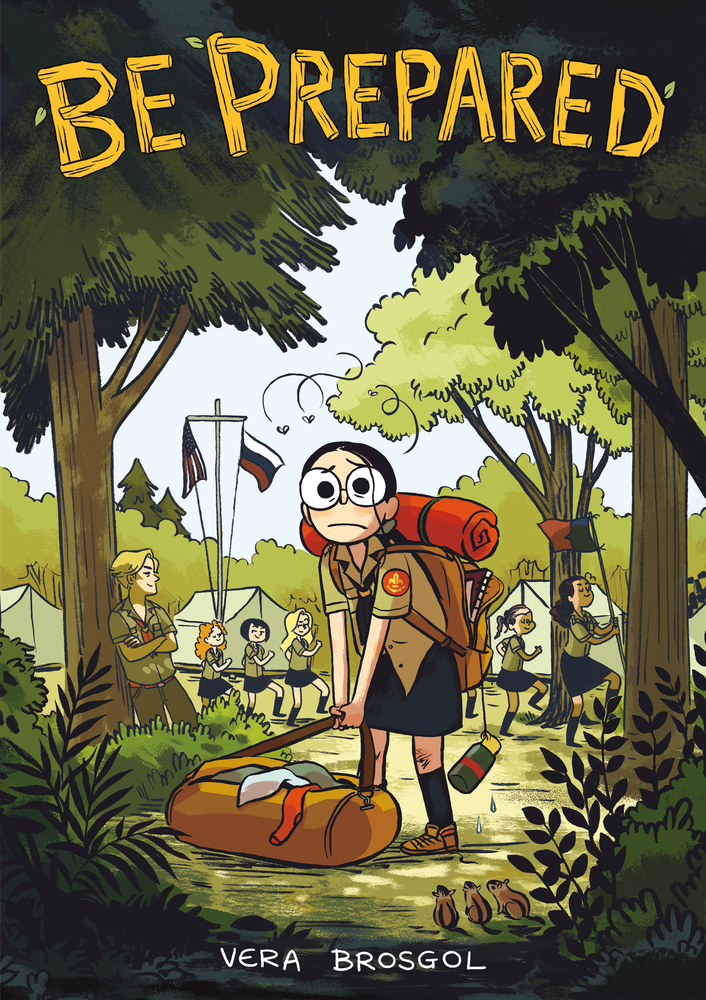

Be Prepared by Vera Brosgol
Shout out to all of us out there who feel as if we don’t fit in - Be Prepared’s for you! This comic focuses on Vera, a girl whose family and economic background doesn’t quite fit in with her other friends... They can afford the coveted (and expensive) "Historical Dolls". She decides to go to a summer camp and feels even MORE out of place then before. It’s a perfect story that is sure to give you some laughs while also acting as a gentle reminder that you aren’t alone. We all feel out of place sometimes. Not to mention, Vera Brosgol is able to capture the perfect summertime camp vibes.
Hoakes Island by Helen Friel and Ian Friel


Hoakes Island by Ian Friel and Helen Friel

Are you and your kiddo stuck inside when it’s hot enough to fry an egg outside? Have no fear! Hoakes Island will have you solving a mystery within one of the most interesting amusement parks ever. Complete with a fold out map and a detective magnifying glass, this book has you working your way through pages of puzzles with the help of some animal friends. What’s even cooler? Hoakes Island was written by a dad and daughter duo - Helen is a paper engineer and visual artist and Ian is a historian and has written books about ships. It inspires us to collab with our families and see the genius that comes out of it. So get your brains movin’ again and help save Hoakes Island!
The Great Dog by Davide Cali and Miguel Tanco


The Great Dog by Davide Cali and Miguel Tanco

The Great Dog is a playful and comforting picture book that is a great summer read. A father walks his child down a great hallway of ornate family portraits while retelling their stories. Descending from a policeman, an athlete, and an astronaut, the pup wonders what he will be when he grows up. This makes us reminiscent of the long, hot summer days when we pictured what our lives will look like in the future. *Cough* My bounce house castle might still be under construction. The important thing to know, relayed in this book, is that no matter what you are you will be great. Plus, there is more than meets the eye to all of our great heroes, as noted by the snarky and beautiful illustrations done by Miguel Tanco.
That Night, a Monster by Marzena Sowa and Berenika Kolomycka


That Night, a Monster by Marzena Sowa and Berenika Kolomycka

You know that feeling after watching a scary movie where everything feels spooky? Even the tree right outside your window? That’s what Tommy, the little boy who went to wake up his parents on a Saturday morning, felt; his mom turned into a fern! Of course, she did not turn into a fern, but rather had a bad hair day that got out of control. That Night, a Monster is a self-aware graphic novel that plays with our worst fears, but in a light-hearted way that makes you turn around an appreciate what you have. Plus, these painted panels by artist Berenika are so silly and relatable at the same time that they remind us that our fears can be the scariest thing of all! The book is on sale August 21, 2018, but is available for pre-order now.
If you're looking for even more, check out: Boats on the Bay, Book of Bones, Square (it would be an understatement to say we adore everything by the duo Mac Barnett and Jon Klassen!), and The Wild Robot Escapes.
So there you have it - enough books to fill those times when you are bored in the summer and need a creative pick-me-up. We hope you enjoyed them as much as we did and we want to see what books you've enjoyed this summer. Show us what you've been reading on Instagram @illustoria_mag and be on the lookout for the release of Issue 7: Black & White. You can pre-order it now!
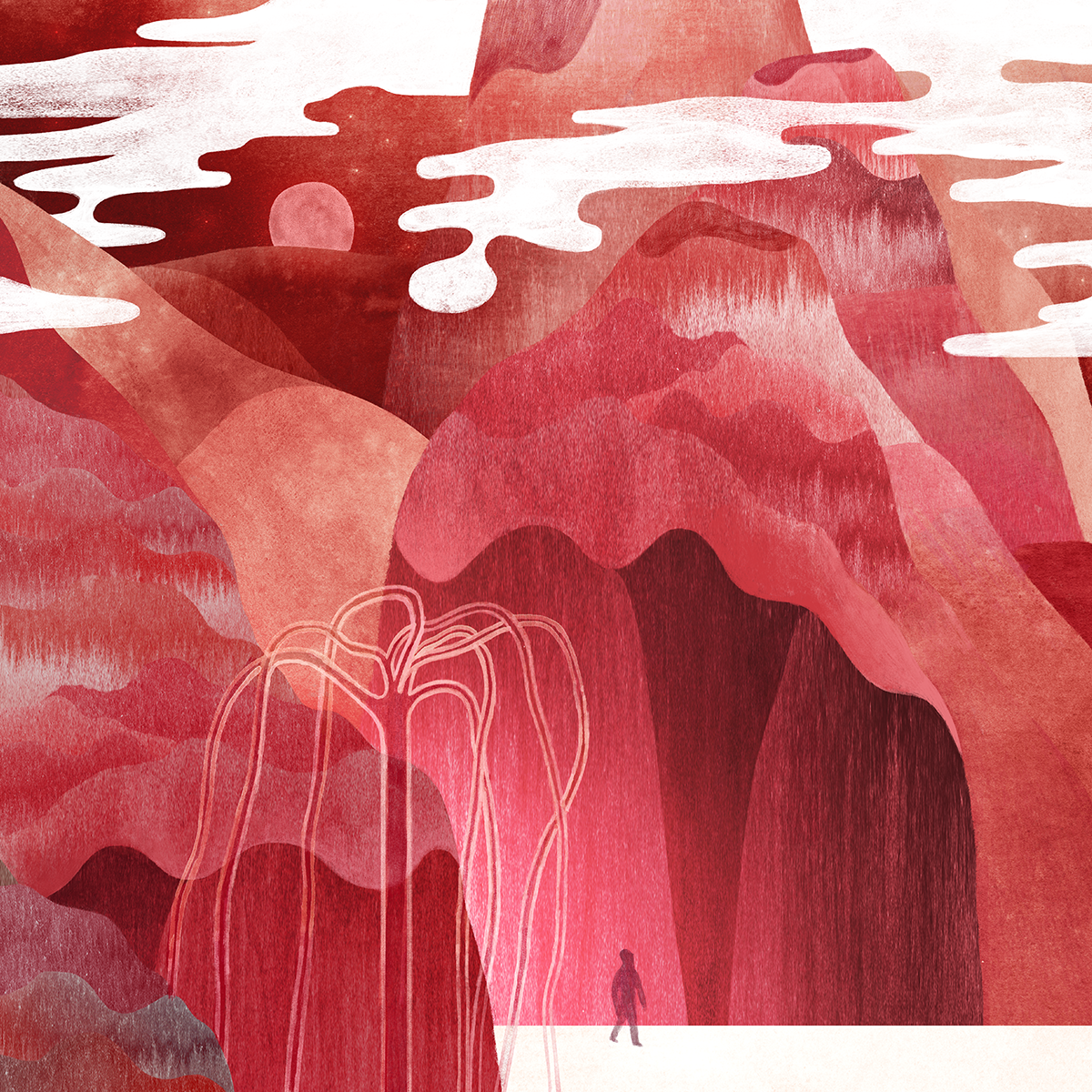
The Pipers Sneak Peek
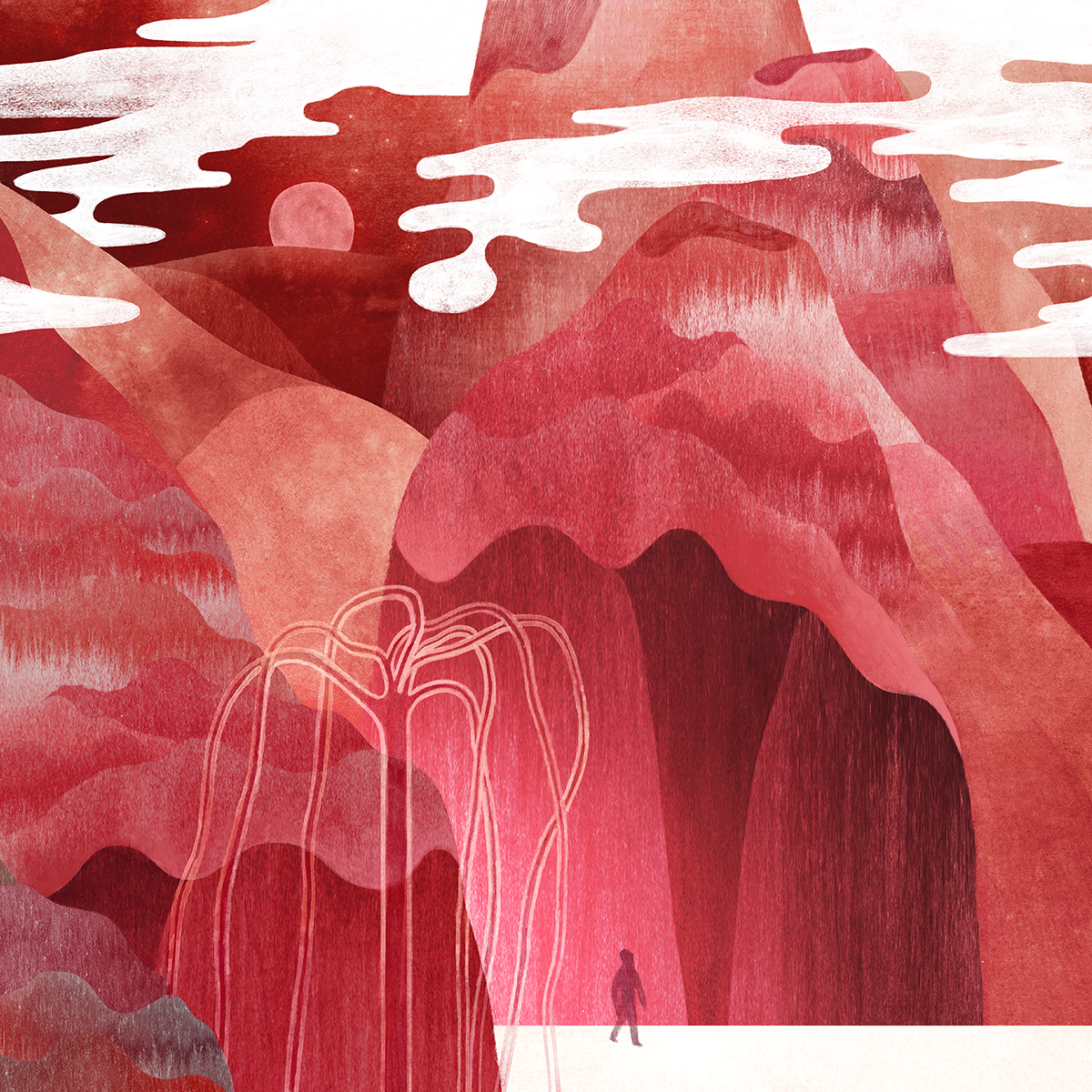
Art from The Pipers by Paul du Coudray and Beth Haidle
Did you know that Illustoria's very own creative director/art wizard Elizabeth Haidle and our longtime contributor and friend Paul du Coudray are collaborating on a project of otherworldly dimensions?
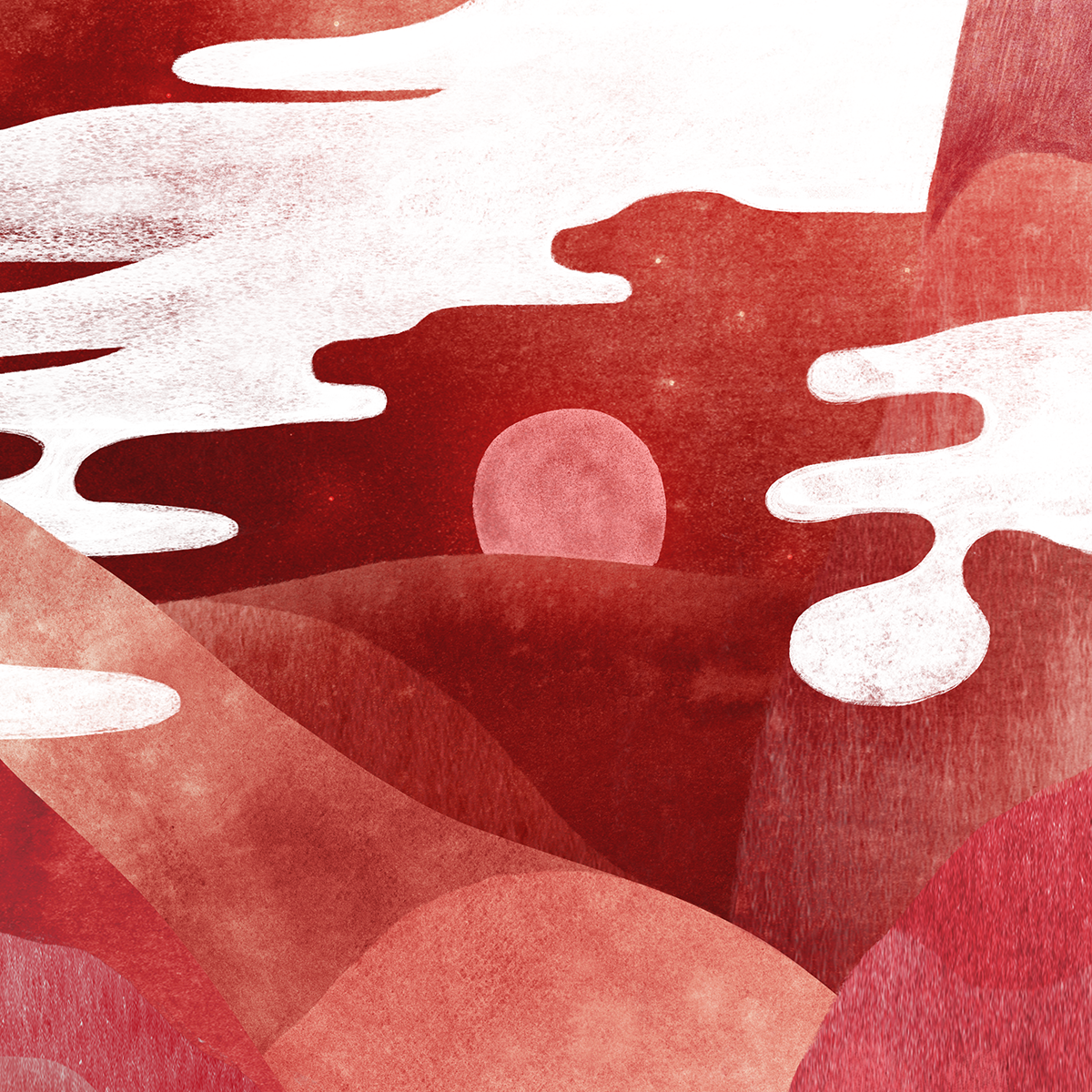
Art from The Pipers by Paul du Coudray and Beth Haidle
We're excited to share a few sneak peek images from The Pipers, a graphic-novel adaptation of a P.K. Dick short story from the 1950’s. Sci-fi lovers rejoice. Get updates on their progress, gain early access to their work, plus member perks and prizes at Studio Mascot. Far out ❕ 〰️

Art from The Pipers by Paul du Coudray and Beth Haidle
And don't miss out on Beth and Paul's gorgeous contributions to Illustoria. We're so honored to have their awe-inspiring artwork and insightful visual storytelling gracing the pages of our mag.
On Letter Writing and Activism

This April, we're celebrating Letter Writing Month with Andrew Aydin, co-author, with John Lewis himself, of the graphic memoir series March, which details the civil rights journey of congressman and activist icon John Lewis. In his foreword to the newly released MARCH: 30 Postcards to Make Change and Good Trouble, Andrew Aydin offers a heartfelt ode to the importance and beauty of letter writing. We're honored to share an excerpt from his foreword with our readers, and hope that it inspires you to get writing--to your loved ones and friends, or to your congressperson or the president--before the month's end.
INTRODUCTION BY ANDREW AYDIN
From March: 30 Postcards to Make Change and Good Trouble by Andrew Aydin, John Lewis, and Nate Powell (Chronicle Books, 2018).
If you know about Congressman John Lewis, or if you have read March, you probably know that John Lewis first met Martin Luther King, Jr., by writing Dr. King a letter asking for his help in desegregating Troy State College, now known as Troy University, in Alabama. Dr. King wrote back and sent John Lewis a round-trip Greyhound bus ticket to visit him in Montgomery. That letter, and its response, set John Lewis on a path that helped reshape the moral landscape of our nation.

segment from March: Book One by Congressman John Lewis, Andrew Aydin, and Nate Powell
Perhaps then you can understand my own trepidation when I started my first job working for Congressman Lewis: answering his mail. Even after serving on his staff for more than ten years, making “Good Trouble” into #goodtrouble, and writing three graphic novels with him, I can still remember the intimidating awesomeness of the sight of so many bins, boxes, and stacks of unopened envelopes from those first days. You might think of it as starting in the mail room, except you would be overstating the available space for such a task if you believe there is a whole room in a congressional office available to devote to opening, sorting, and responding to the mail that has poured into his office nearly every day of his more than thirty years in the U.S. House of Representatives. No; it was simply a desk, where the office refrigerator once sat, among nearly a dozen other desks, tightly packed and partitioned, in a room built more than a century ago.
Epistles arrived at the office in droves, filled with all-too-human stories of tragedy, pleas for help, and beautifully plainspoken descriptions of how the policies debated in Washington should be viewed in a context far larger than merely numbers on a page or entries in a ledger. It took a little while to find my way, but eventually I realized I had been training for this nearly all of my life.
My training began with thank-you notes. I’ve been told this is a distinctly Southern experience. My mother’s rules were unequivocal: handwritten and prompt. She had me start writing them nearly as soon as I could write anything. Even today they are a beneficial habit, which I should be better about. It’s not that I don’t often write thank-you notes. I write quite a few. But the ones I do not write—that I know my mother would insist I should write—loom over me like a dark cloud until it’s been so long since they were “due” that I absolve myself of their necessity by rationalizing that it would seem strange and discourteous to send a thank-you note now, after such a long time.

segment from March: Book One by Congressman John Lewis, Andrew Aydin, and Nate Powell
As I got older and my penmanship improved, my Uncle Hi continued my epistolary learning by exchanging letters with me. His name is actually Hiram, but my Aunt Jody always told me to call him Hi. That’s what everybody called him. “Hi! . . . Hi” was how I clumsily began most of our conversations. I remember having a hard time picking up any sort of meaningful conversational thread after botching the salutation, and phone calls would be quite formal. But when we wrote letters, it was much simpler. “Dear Hi.” There was a degree of sanctuary to it, and our written conversations took on a more vivid life full of honest questions and advice. In some ways, those letters did more to teach me how to write than anything else did. We still write to each other even now. I’m pretty sure I owe him a letter.
Once, when I visited Hi and Jody in Ohio at their home, Hi pulled out a yellowing stack of handwritten letters marked by varying degrees of what can best be described as block letters, then primitive cursive, and, eventually, a bizarrely imitative version of my mother’s own handwriting. I was equal parts deeply touched that he had been saving my letters to him all these years and terribly embarrassed that an archive of (let’s just call them “early”) writings had been so neatly preserved. In that moment at Hi’s house, I felt a sudden flush of gratitude that my youth existed there, on paper, both tangible and private, as if I were the last of a dying tribe born with privacy, about to be overtaken by the perpetual and public preservation of youth by the new Internet generations.

segment from March: Book One by Congressman John Lewis, Andrew Aydin, and Nate Powell
Don’t get me wrong; I believe the Internet can be a force for good. It is perhaps the greatest potential tool for organizing sustained campaigns of nonviolent civil disobedience that the world has ever seen. I like to ask students, What would Dr. King have tweeted? Or, What would Gandhi have posted? How could SNCC (Student Nonviolent Coordinating Committee) have used the Internet? By the end of the discussion, the students often realize that they would be using these tools as a means to get people to physically show up. It would be like giving Bayard Rustin a super–Swiss Army Knife of organizing tools; but it would not have changed the need for people to show up to the 1963 March on Washington to push for civil rights legislation.

segment from March: Book One by Congressman John Lewis, Andrew Aydin, and Nate Powell
And that’s how I feel about mailing letters and postcards in the era of instant communication. Human beings are social animals. We need human interaction, and the further removed from the personal those interactions become, the less meaningful they are. If you’re trying to change someone’s mind, you need to be personal; you need to establish a connection to share your ideas. You need to make sure a very real part of you shows up to make sure your voice and your ideas are heard.
That’s why I believe you should regularly write to your congressperson, or state legislator, governor, or the president to express your views on policies, and you should probably write by hand. It is no doubt simpler to throw some words into a contact form and hit Send, but having spent a good amount of time on the receiving end, I can tell you that a handwritten note will go a lot further. Some part of it certainly has to do with the personal intimacy of reading another person’s handwriting. But I’m also sure that some of it has to do with the spectacle of seeing thousands of pieces of paper, all individually constructed but united in purpose, laid out in support of or opposition to a particular position.
.
.
.
So, what letter will you write? What words will you choose? Get started, because we need you now more than ever.
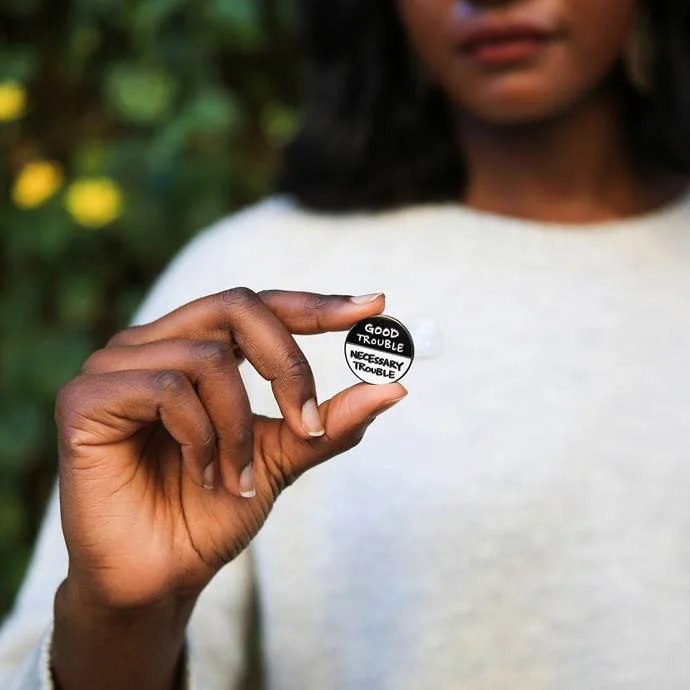
If you're an avid fan of March, or just learned about this incredible graphic novel series, be sure to check out our Instagram giveaway of newly released March: 30 Postcards to Make Change and Good Trouble, MARCH journal, and special edition Good Trouble / Necessary Trouble MARCH pins. Special thanks to Chronicle Books for partnering with us to make this giveaway possible!

MARCH pin, photograph taken by Chronicle Books
Creator Crush: Cece Bell!
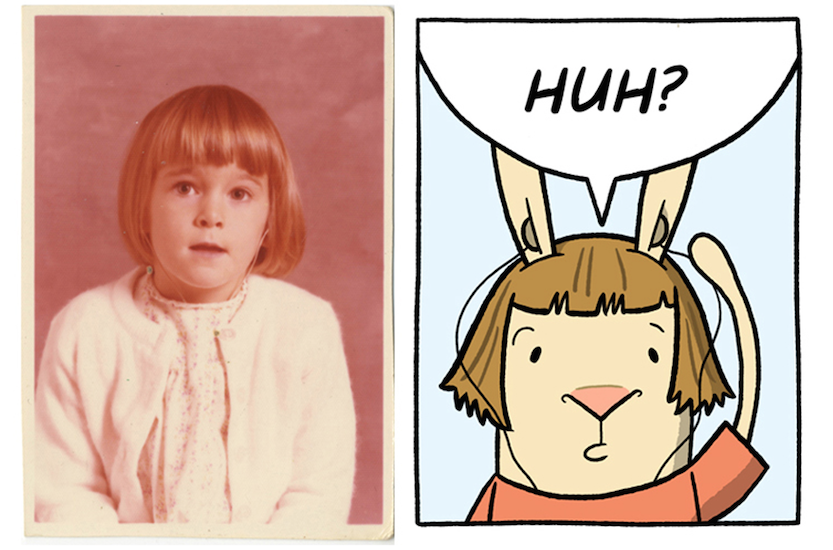
When the book EL DEAFO begins, Cece is 4. When it ends, she is about 10 or 11. Cece used these photos to help "age" the bunny version of herself as the book progresses. Photos and art © Cece Bell.
I first heard the adorable name "Cece Bell" spoken of while working as an editor at Lucasfilm. At the time, I was co-editing Tom Angleberger’s Origami Yoda series. I’ll never forget Tom visiting our offices and gifting me an origami R2-D2 that he folded himself. There were many perks of working at Lucasfilm, and receiving an origami Star Wars character by Tom in all his stookiness was most definitely, geekishly one of them. But I had no idea that I would soon meet Tom’s wife, Cece Bell, and be blown away by her own amazing work as a children’s book author and illustrator. I met Cece only briefly at a BEA in New York a couple years ago, where she was signing galleys of her book El Deafo. The booth was crowded with Cece fans and the galleys were quickly disappearing, but I was fortunate to snatch one up.
Illustration © 2014 by Cece Bell; Design by Caitlin Keegan and Chad W. Beckerman. Published by Amulet Books, an imprint of Abrams.
When I returned home to California, I couldn't wait to get El Deafo into the hands of my eight-year-old daughter. As I predicted, she gulped down the book in one sitting—meaning she did come up for air several times to point out some particularly hilarious excerpt from the book. (“Mom—look down your shirt and spell ‘attic’!”) The rest of the time she stayed quietly and contemplatively behind closed doors, unwilling to pull her eyes from the page—just as her mom did (sometimes teary-eyed with sadness sometimes teary-eyed with laughter) on that plane ride back to Oakland. When months later she and I discovered El Deafo in all its full-color, award-winning glory at the bookstore, we were overjoyed by its brilliance. It didn't occur to us that we had been missing anything at all in the uncolored proof.
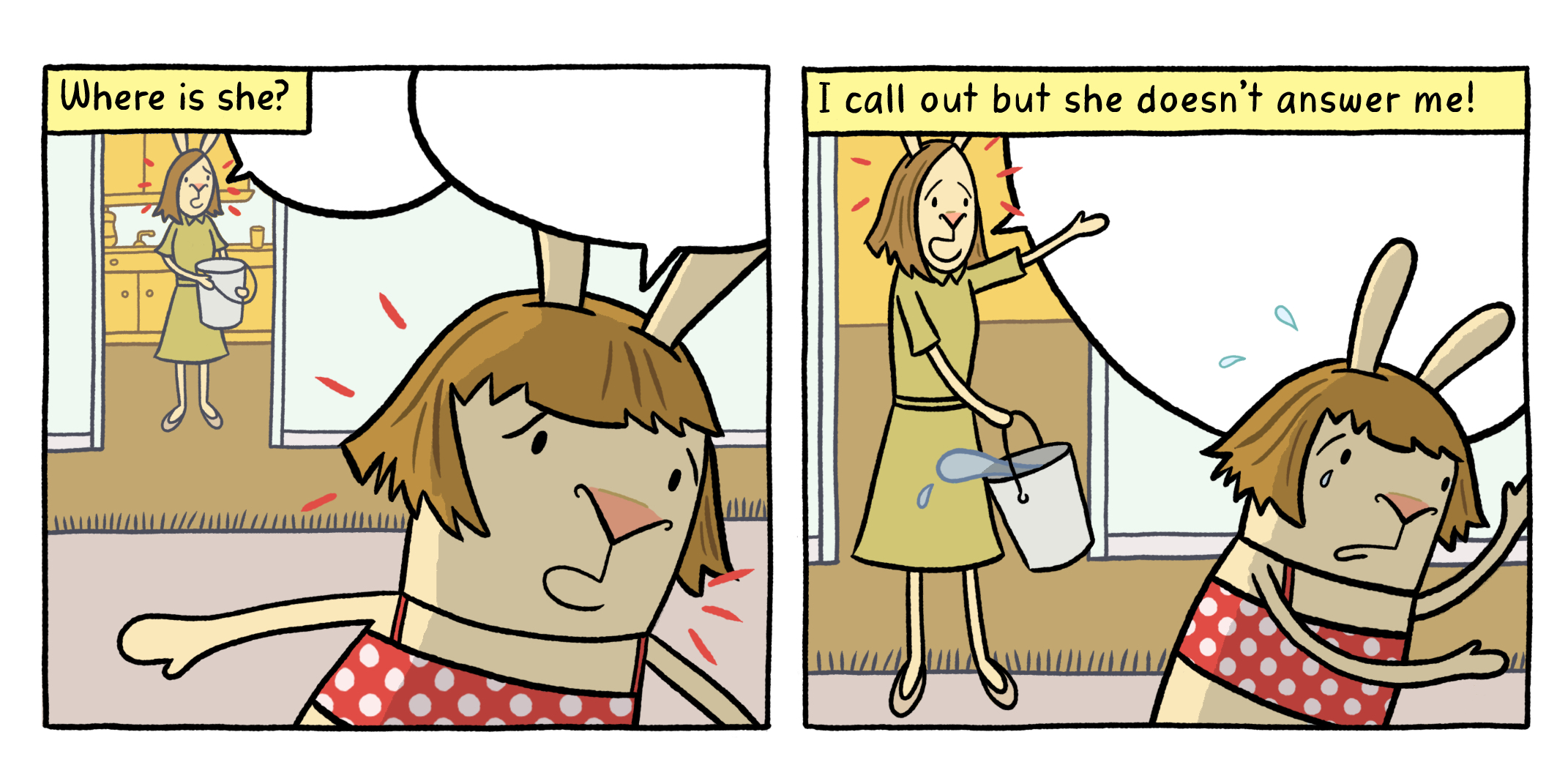
When Cece's character can't hear anything, the speech balloons are empty. Art © Cece Bell.
El Deafo is a phenomenal graphic novel memoir based on Cece’s childhood experiences with hearing loss and hearing aids. It also chronicles her quest to find true friendship. The graphic novel format is a perfect medium for Cece's story, where pictures and words (in some cases, the lack of words) powerfully demonstrate what her character is experiencing.

The elaborate Phonic Ear hearing aid and microphone set-up had Cece feeling like a superhero with superpowers! But most of the time she just felt like a confused kid. Was she deaf? And what did that mean? Art © Cece Bell.
Read Cece’s firsthand account on the making of El Deafo in our premiere issue and learn about her creative process as an artist and writer. In the meantime, here's an extended version of our Q&A with Cece.

Where did you grow up? Where do you live now?
I grew up in a little city called Salem, in the southwestern part of Virginia. Now I live in an old church just a half-an-hour away, but more in the mountains (and therefore, in the boonies!).
What were you like as a kid?
I was driven to do well and pushed myself hard. I wanted people to think of me as “that smart girl in our class” instead of as “that deaf girl in our class.” I loved making people laugh, especially my older siblings. My sense of humor veered toward the absurdist...and the naughty!
What were some of your favorite childhood books?
Our Animal Friends of Maple Hill Farm by the Provensens
The Meanest Squirrel I Ever Met by Gene Zion and Margaret Bloy Graham
The Snowy Day by Ezra Jack Keats
Ed Emberley’s drawing books
Arnold Lobel's Frog and Toad series
Judy Blume's books
Beverly Cleary's books
The Secret Garden by Frances Hodgson Burnett
The Little House books by Laura Ingalls Wilder
Caddie Woodlawn by Carol Ryrie Brink
When did you know you wanted to be an artist and writer?
I started to figure the art stuff out in college. I had always loved drawing, but never really saw a career in it until I saw other kids making a go of it. As to the writing, no one would hire me to illustrate their children’s books, so I realized I had to write my own books and make my own path.
Who or what inspires you?
My husband, author/illustrator Tom Angleberger, is a huge source of inspiration. He's so encouraging...and he's so good, which triggers my competitive reflexes to be better and to make more stuff.
When do you feel your most creative?
In the morning, when the house is quiet and nothing has happened yet.
Do you have a favorite type of pen, or brush, or paper for drawing with?
I like lots of media and have to admit that I love drawing on my Wacom Cintiq. I love to draw LINES so simple pen-and-ink is a favorite. Gouache! Watercolors! But no oil paints, ick. If I could make a book with illustrations made of felt and colored thread, I'd do it. Love that stuff.
What advice would you share with young aspiring artists?
If you aren't enjoying it, don't do it!
Thank you, Cece, for your words of wisdom and for sharing El Deafo with us!