

On Letter Writing and Activism

This April, we're celebrating Letter Writing Month with Andrew Aydin, co-author, with John Lewis himself, of the graphic memoir series March, which details the civil rights journey of congressman and activist icon John Lewis. In his foreword to the newly released MARCH: 30 Postcards to Make Change and Good Trouble, Andrew Aydin offers a heartfelt ode to the importance and beauty of letter writing. We're honored to share an excerpt from his foreword with our readers, and hope that it inspires you to get writing--to your loved ones and friends, or to your congressperson or the president--before the month's end.
INTRODUCTION BY ANDREW AYDIN
From March: 30 Postcards to Make Change and Good Trouble by Andrew Aydin, John Lewis, and Nate Powell (Chronicle Books, 2018).
If you know about Congressman John Lewis, or if you have read March, you probably know that John Lewis first met Martin Luther King, Jr., by writing Dr. King a letter asking for his help in desegregating Troy State College, now known as Troy University, in Alabama. Dr. King wrote back and sent John Lewis a round-trip Greyhound bus ticket to visit him in Montgomery. That letter, and its response, set John Lewis on a path that helped reshape the moral landscape of our nation.

segment from March: Book One by Congressman John Lewis, Andrew Aydin, and Nate Powell
Perhaps then you can understand my own trepidation when I started my first job working for Congressman Lewis: answering his mail. Even after serving on his staff for more than ten years, making “Good Trouble” into #goodtrouble, and writing three graphic novels with him, I can still remember the intimidating awesomeness of the sight of so many bins, boxes, and stacks of unopened envelopes from those first days. You might think of it as starting in the mail room, except you would be overstating the available space for such a task if you believe there is a whole room in a congressional office available to devote to opening, sorting, and responding to the mail that has poured into his office nearly every day of his more than thirty years in the U.S. House of Representatives. No; it was simply a desk, where the office refrigerator once sat, among nearly a dozen other desks, tightly packed and partitioned, in a room built more than a century ago.
Epistles arrived at the office in droves, filled with all-too-human stories of tragedy, pleas for help, and beautifully plainspoken descriptions of how the policies debated in Washington should be viewed in a context far larger than merely numbers on a page or entries in a ledger. It took a little while to find my way, but eventually I realized I had been training for this nearly all of my life.
My training began with thank-you notes. I’ve been told this is a distinctly Southern experience. My mother’s rules were unequivocal: handwritten and prompt. She had me start writing them nearly as soon as I could write anything. Even today they are a beneficial habit, which I should be better about. It’s not that I don’t often write thank-you notes. I write quite a few. But the ones I do not write—that I know my mother would insist I should write—loom over me like a dark cloud until it’s been so long since they were “due” that I absolve myself of their necessity by rationalizing that it would seem strange and discourteous to send a thank-you note now, after such a long time.

segment from March: Book One by Congressman John Lewis, Andrew Aydin, and Nate Powell
As I got older and my penmanship improved, my Uncle Hi continued my epistolary learning by exchanging letters with me. His name is actually Hiram, but my Aunt Jody always told me to call him Hi. That’s what everybody called him. “Hi! . . . Hi” was how I clumsily began most of our conversations. I remember having a hard time picking up any sort of meaningful conversational thread after botching the salutation, and phone calls would be quite formal. But when we wrote letters, it was much simpler. “Dear Hi.” There was a degree of sanctuary to it, and our written conversations took on a more vivid life full of honest questions and advice. In some ways, those letters did more to teach me how to write than anything else did. We still write to each other even now. I’m pretty sure I owe him a letter.
Once, when I visited Hi and Jody in Ohio at their home, Hi pulled out a yellowing stack of handwritten letters marked by varying degrees of what can best be described as block letters, then primitive cursive, and, eventually, a bizarrely imitative version of my mother’s own handwriting. I was equal parts deeply touched that he had been saving my letters to him all these years and terribly embarrassed that an archive of (let’s just call them “early”) writings had been so neatly preserved. In that moment at Hi’s house, I felt a sudden flush of gratitude that my youth existed there, on paper, both tangible and private, as if I were the last of a dying tribe born with privacy, about to be overtaken by the perpetual and public preservation of youth by the new Internet generations.

segment from March: Book One by Congressman John Lewis, Andrew Aydin, and Nate Powell
Don’t get me wrong; I believe the Internet can be a force for good. It is perhaps the greatest potential tool for organizing sustained campaigns of nonviolent civil disobedience that the world has ever seen. I like to ask students, What would Dr. King have tweeted? Or, What would Gandhi have posted? How could SNCC (Student Nonviolent Coordinating Committee) have used the Internet? By the end of the discussion, the students often realize that they would be using these tools as a means to get people to physically show up. It would be like giving Bayard Rustin a super–Swiss Army Knife of organizing tools; but it would not have changed the need for people to show up to the 1963 March on Washington to push for civil rights legislation.

segment from March: Book One by Congressman John Lewis, Andrew Aydin, and Nate Powell
And that’s how I feel about mailing letters and postcards in the era of instant communication. Human beings are social animals. We need human interaction, and the further removed from the personal those interactions become, the less meaningful they are. If you’re trying to change someone’s mind, you need to be personal; you need to establish a connection to share your ideas. You need to make sure a very real part of you shows up to make sure your voice and your ideas are heard.
That’s why I believe you should regularly write to your congressperson, or state legislator, governor, or the president to express your views on policies, and you should probably write by hand. It is no doubt simpler to throw some words into a contact form and hit Send, but having spent a good amount of time on the receiving end, I can tell you that a handwritten note will go a lot further. Some part of it certainly has to do with the personal intimacy of reading another person’s handwriting. But I’m also sure that some of it has to do with the spectacle of seeing thousands of pieces of paper, all individually constructed but united in purpose, laid out in support of or opposition to a particular position.
.
.
.
So, what letter will you write? What words will you choose? Get started, because we need you now more than ever.
If you're an avid fan of March, or just learned about this incredible graphic novel series, be sure to check out our Instagram giveaway of newly released March: 30 Postcards to Make Change and Good Trouble, MARCH journal, and special edition Good Trouble / Necessary Trouble MARCH pins. Special thanks to Chronicle Books for partnering with us to make this giveaway possible!

MARCH pin, photograph taken by Chronicle Books

Why You Ought to Join the Write_On Challenge
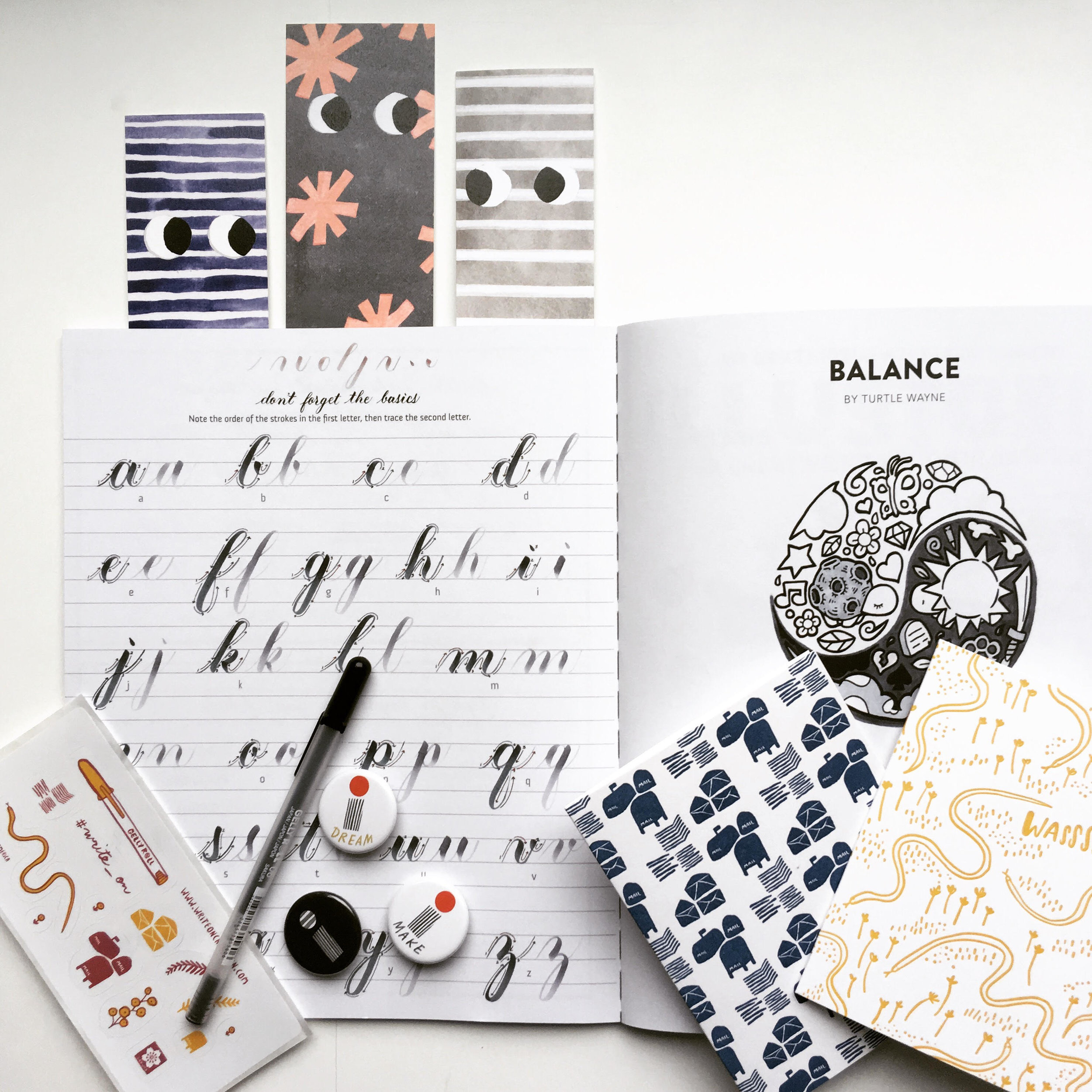
This week, we're offering a special giveaway in partnership with the #Write_On challenge, taking place throughout the month of April, which is National Letter Writing Month. The challenge is lead by Egg Press, a greeting card company, design studio and letterpress print shop based in Portland, Oregon. Founded in 1999, they’re pioneers in the resurgence of letterpress printing and are often noted for their sophisticated color palette, hand drawn illustrations, all-over textile inspired patterns, and sense of humor.
For our giveaway, we're setting up one lucky winner with supplies to practice their hand at calligraphy! The prize includes a copy of our Issue #6: Symbols, which features a guide to hand lettering by Michaela Yee, three collectable ILLUSTORIA pins and bookmarks, a Sakura Gelly Roll pen, very adorable Write_On stickers, and a stash of Write_On cards by Egg Press and Hello Lucky Cards. Check our Instagram post for entry guidelines! One winner will be picked at random on March 27th.

Photo by Christa Fowles
When was the last time you took time to write a handwritten letter? In today’s fast-paced, media-saturated world, letter writing offers a path for slowing down and engaging with others in a meaningful way, expressing ourselves, and noticing and savoring the present moment.
Write_On began when Egg Press Founder Tess Darrow realized that, despite having a studio full of beautiful greeting cards, she wasn’t devoting as much time as she’d like to correspondence. In 2014, she challenged to herself to write 30 letters in 30 days, about the amount of time it takes to develop a lasting habit. Tess invited the entire Egg Press staff as well as the co-founders of Hello!Lucky, Eunice and Sabrina Moyle, to join the fun. They all agreed that connecting with loved ones through a strong letter-writing practice was a great way to affirm their founding principles. What started as a humble effort has grown into a global movement!
Are you up for the challenge?
All you have to do is write 30 letters in 30 days, or as many as you can. Keep a log of your letters, and join the movement online by sharing your progress using #Write_On. Not sure what to write about? Here are some reasons to write to help get you started:
- Write to thank a friend for seeing you for who you are
- Write to tell someone that you just heard a song that reminded you of them
- Write to ask an older relative to record a memory
- Write to send a letter from your pet to a friend's pet
- Write to a company that makes a product you like
The possibilities for your letters are endless. For more inspiration, visit the resources page of the Write_On website here.
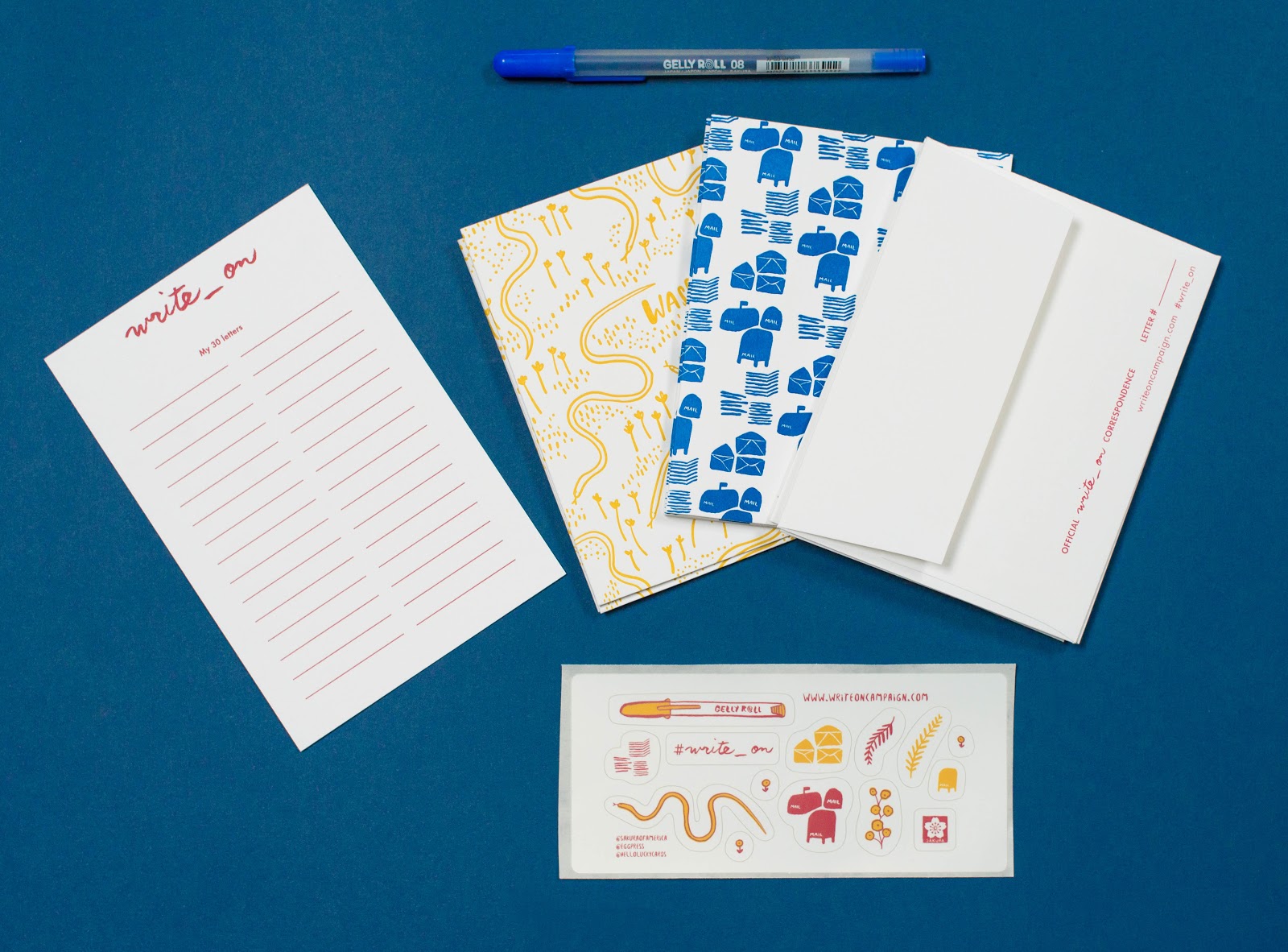
Photo by Christa Fowles
Stock up before April 1st!
With the help of our Write_On partners Hello!Lucky, Sakura of America, and Mohawk papers, we’ve got a collection of writing prompts, tips, and resources available at writeoncampaign.com as well as a shop full of custom designed and printed goodies to make participation in the challenge easy and fun. We're also offering two different Party Pack variations, packed with everything you need to host a letter-writing shindig for 10 to kick off the Write_On Challenge. For every purchase of a Letter-Writing Kit, we’re able to donate a kit to someone in need, including educational and under-resourced community programs across the country. Visit the Write_On shop and stock up before we sell out!
Let’s stay in touch!
We welcome your correspondence and creative mail all year round. Your suggestions and feedback help inform the direction of the Write_On Challenge each April, so please, be in touch!
Write_On
℅: Egg Press
2181 NW Nicolai Street, 3rd Floor
Portland Oregon 97210
write_on@eggpress.com
For more details on the campaign, visit the Write_On website at writeoncampaign.com.

Why Making Cards Makes us Happy
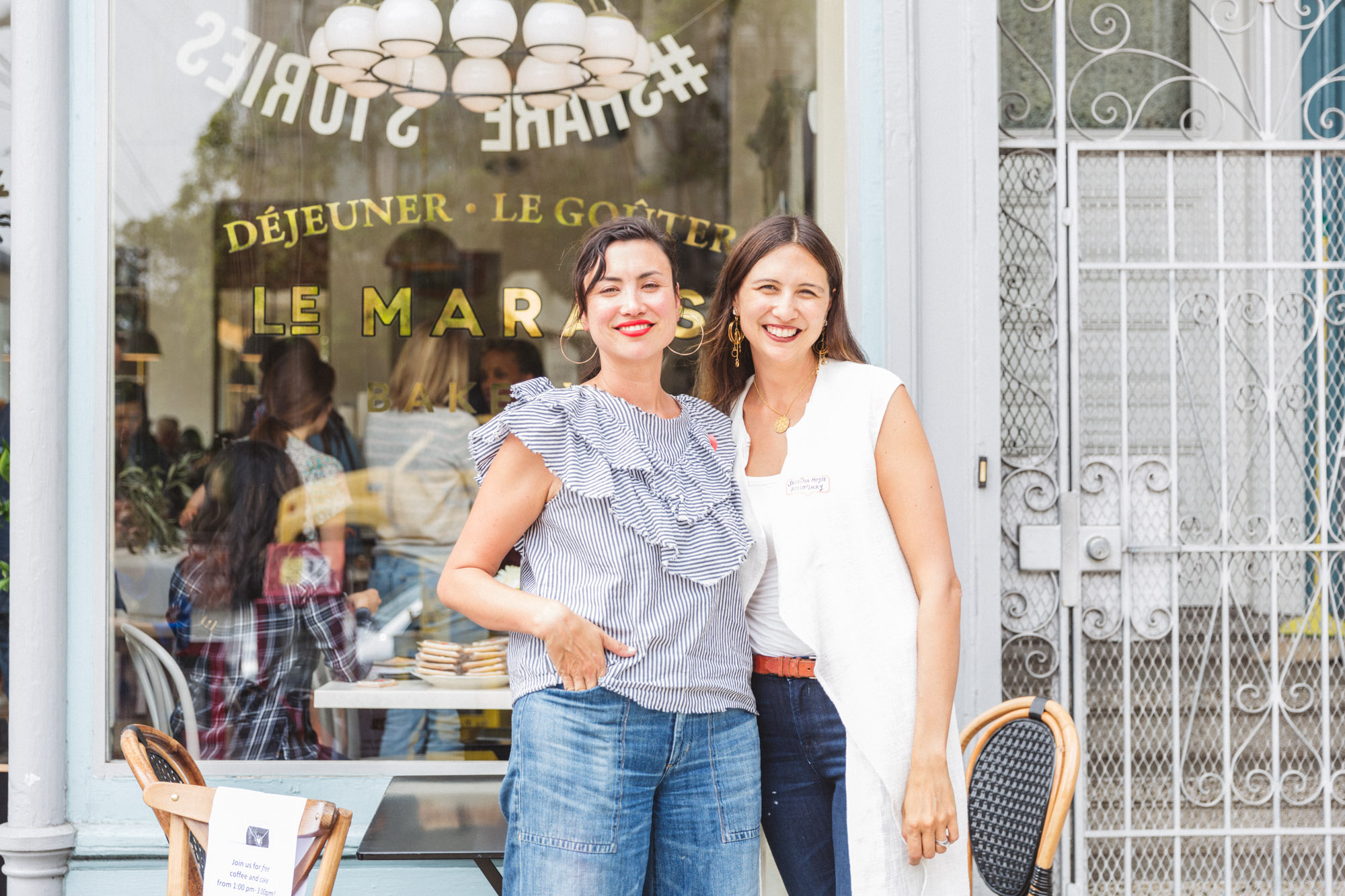
Sisters Eunice and Sabrina Moyle are founders of Hello!Lucky, a San Francisco-based, award-winning purveyor of letterpress greeting cards and other doodled objects. They’re also authors of several books including their latest, Happy Mail and the forthcoming Be the Change.
This week, Eunice and Sabrina join Illustoria to share some insight into their art style and why they love to doodle, hand-letter and send snail mail!
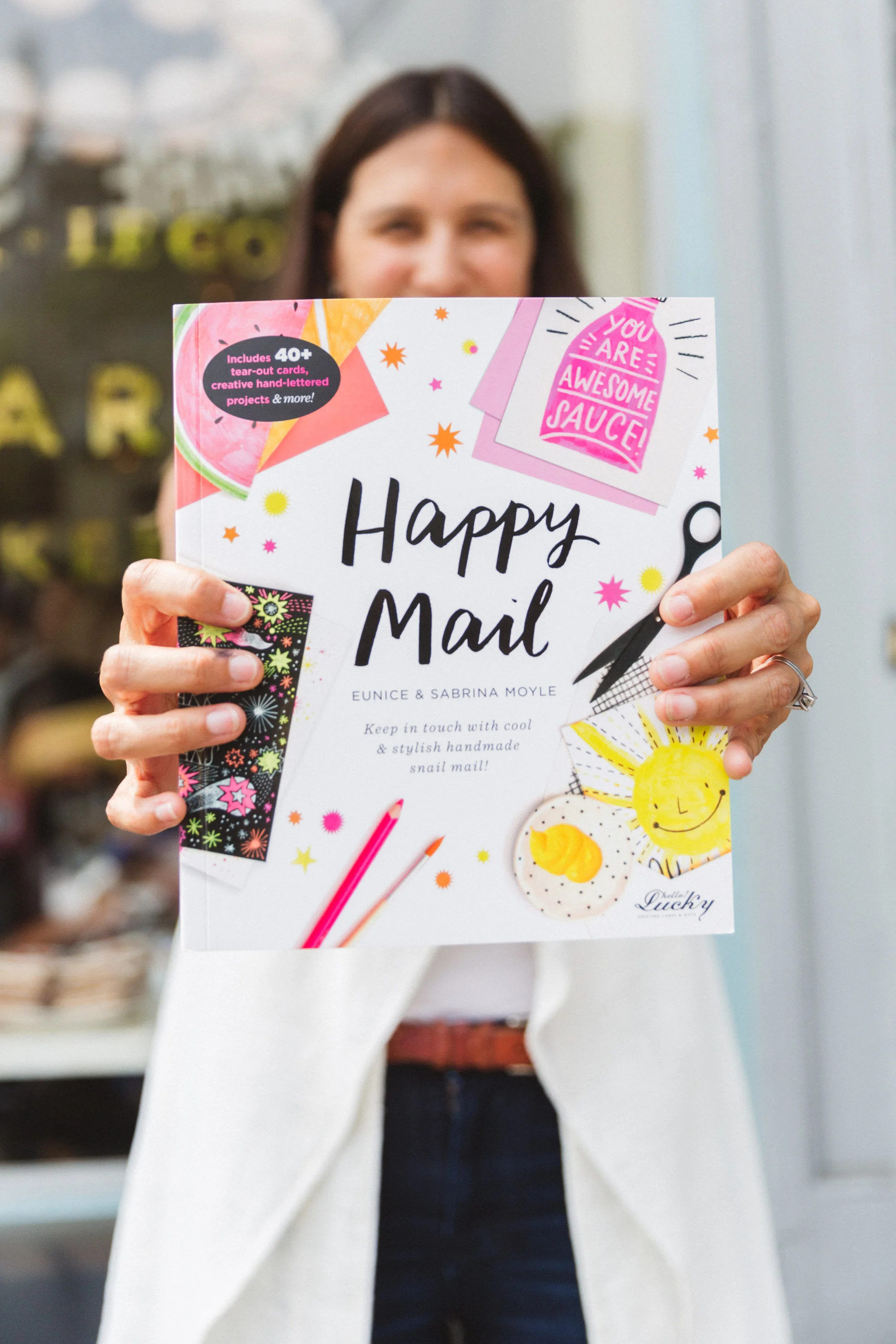
Happy Mail just launched! Enter to win a copy, details at the end of this post. Photo by Zoe Larkin Photography
There are lots of reasons why doodling and writing snail mail cards makes us happy. For one thing, Eunice loves to draw and Sabrina loves to write, so cards are a perfect way to team up!
We also love cards because they’re fun and social. Since cards have a clear purpose -- to say hi, thank you, happy birthday, etc. -- they can be less daunting than drawing for no reason on a blank piece of paper. Kind of like bowling with bumpers!

When we make a card, we usually start with the occasion and person in mind. Then, we brainstorm concepts -- the combination of words and images that we think will create a good vibe, a smile, or a laugh. We love to look on Pinterest for inspiration. Sometimes a cool pattern or illustration gives us a great idea that we can apply in a new way. There’s nothing wrong with looking for artists you like and trying to learn their styles, just as long as you make it your own!

Doodling cards is simple. They don’t take a lot of time to draw. Since they’re small, you can easily try different ideas or start over. Sometimes the simplest cards are the best!


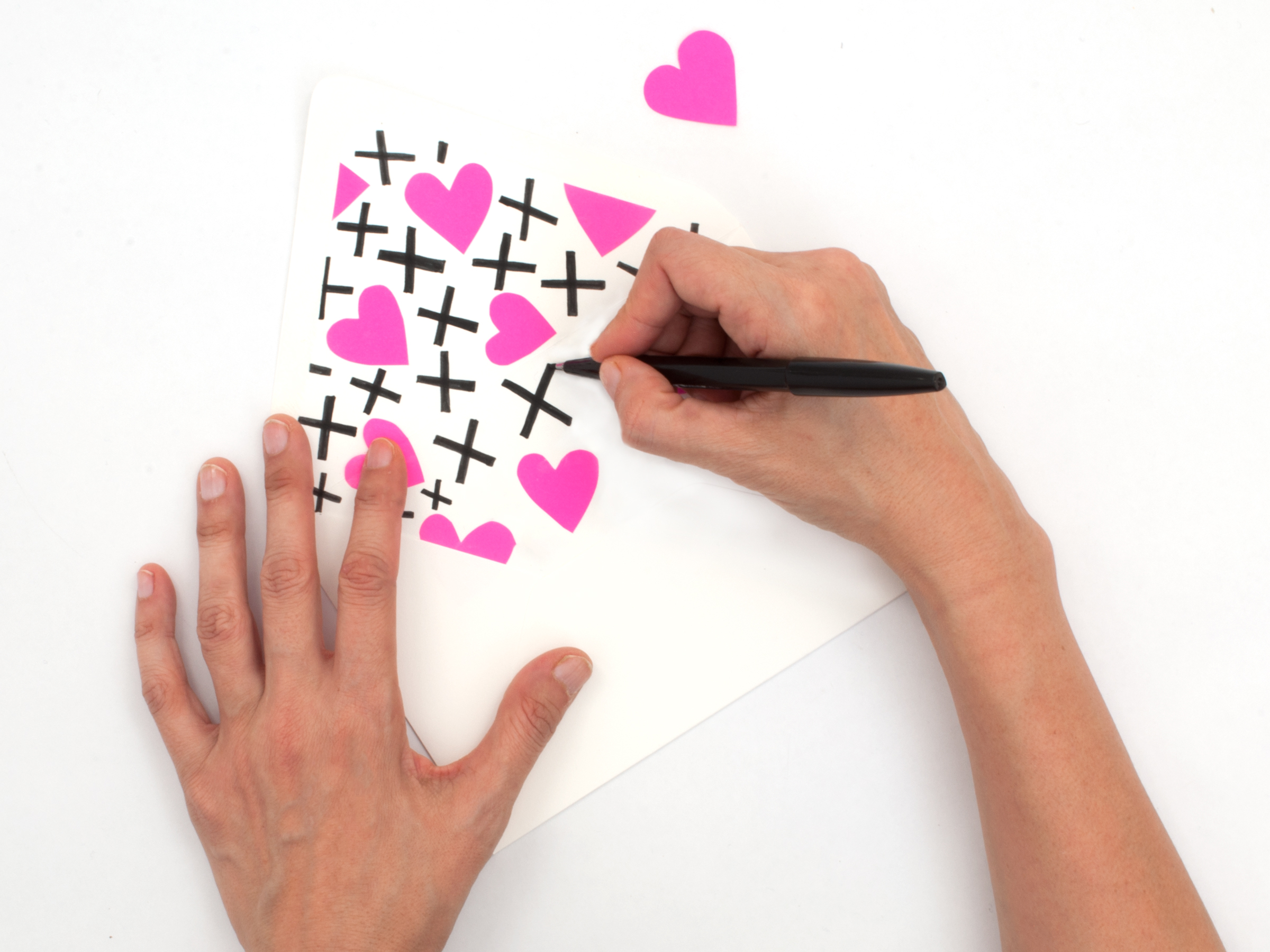
We love cards because they combine words and pictures. We like to think of these as two different languages. Many of us are more comfortable with words than pictures (ahem, Sabrina!), so cards give us a way to use both -- it’s not so scary to draw when you also have words to fall back on. We’ve seen great cards that are only hand-lettering or hilarious one-liners, and we’ve also seen great cards that are all picture with no words. Our favorite? A pun paired with fun illustration! Cat puns, especially!
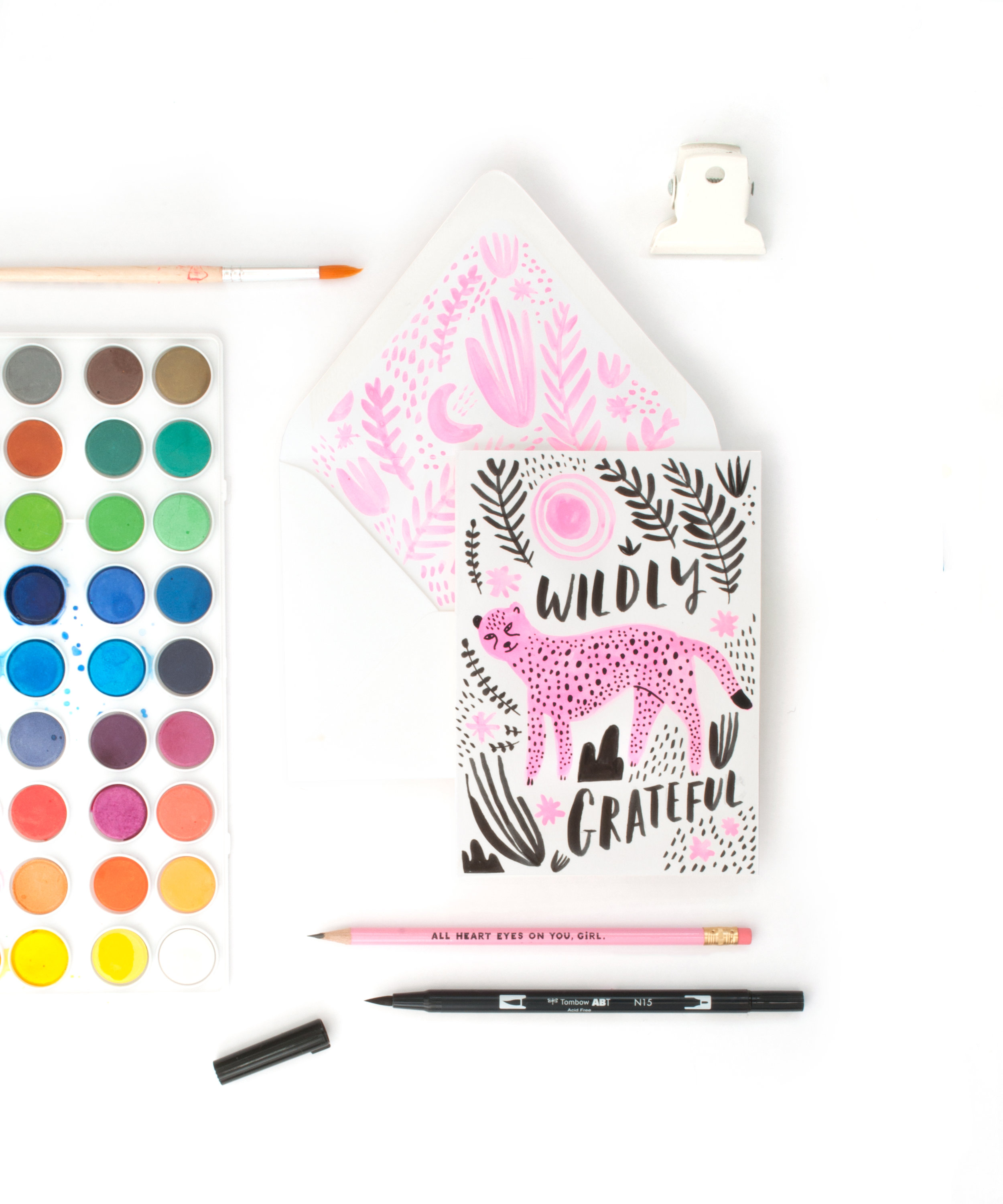
Our rule of thumb for card-writing is keep it short, light, and sincere. We love the fill up the page with hand-lettering and add doodle flare, like rainbows, stars, and hearts. Writing short messages lets us try different styles without worrying too much about messing up or rambling! That said, we also love hunkering down to write a multi-page letter to a pen pal -- it’s an amazing way to catch up when you have a lot to say, and way better than a multi-part IM! :D

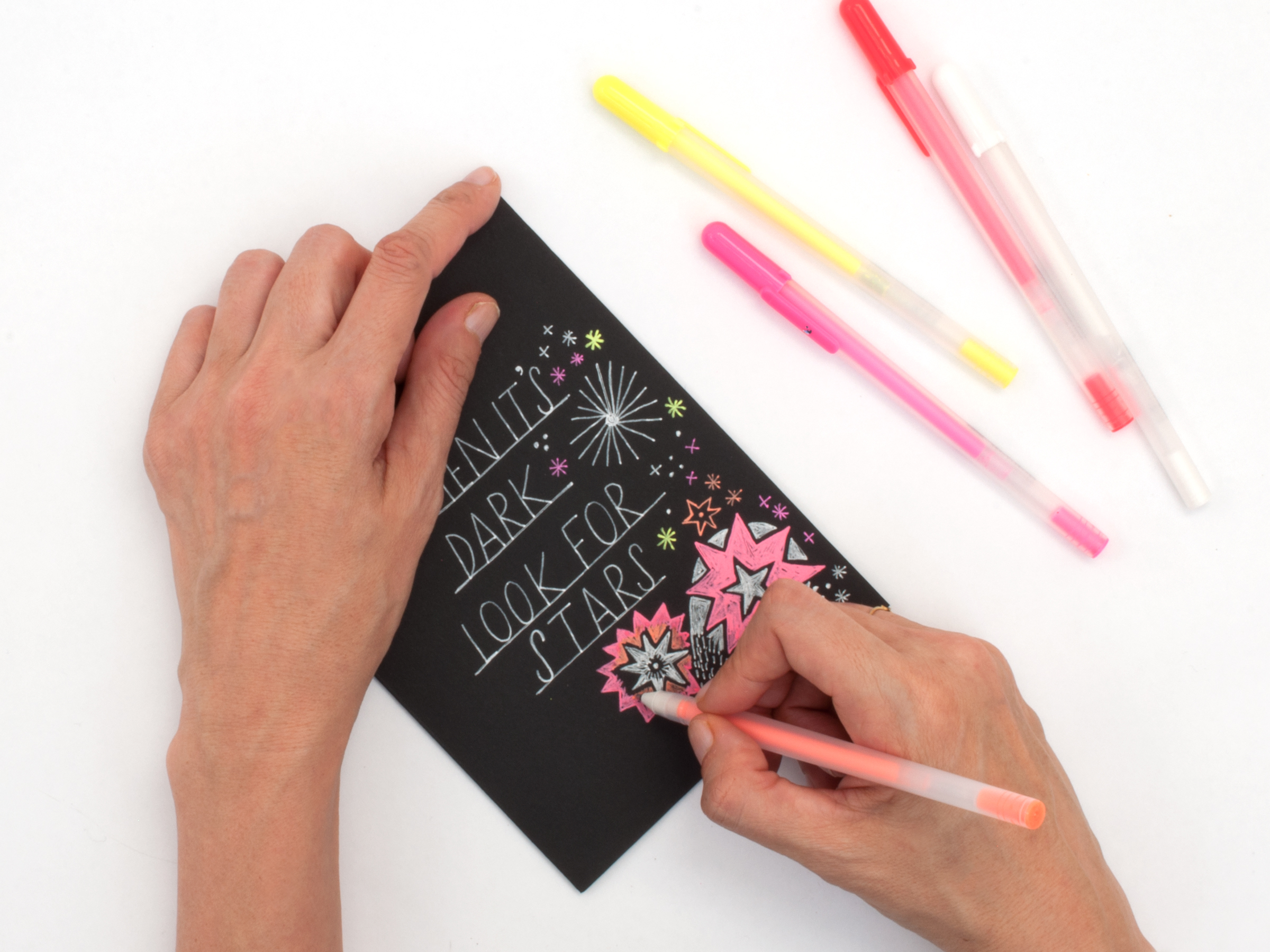
You might think that in today’s tech-enabled world, handmade cards and handwritten letters aren’t important. In our personal experience, that’s not true. Handmade cards and letters are another form of communicating, just like texting, calling, or sending an email. Each one has its place, and a handmade card makes a great impression.

We like to think of snail mail cards like slow food or home-cooking. They take a while to prepare, but they’re satisfying and unique to the cook or sender. Social media has its place, too, just like fast food. Sometimes you’re in a hurry and you just need to get a message sent (we love french fries but try not to eat them for every meal ;))
Nothing beats getting a handwritten card in the mail, personally addressed to you. These days, it’s a memorable experience. It’s something you can hold, read, re-read, and keep forever. (Sabrina still has letters she exchanged with her BFF in high school! Amazing time capsules!).

Making cards makes us feel more connected. We like to make cards for friends, family, and even strangers because it allows us focus our attention on relationships. To us, relationships matter most in life, more than material things. Cards remind us of what really counts!
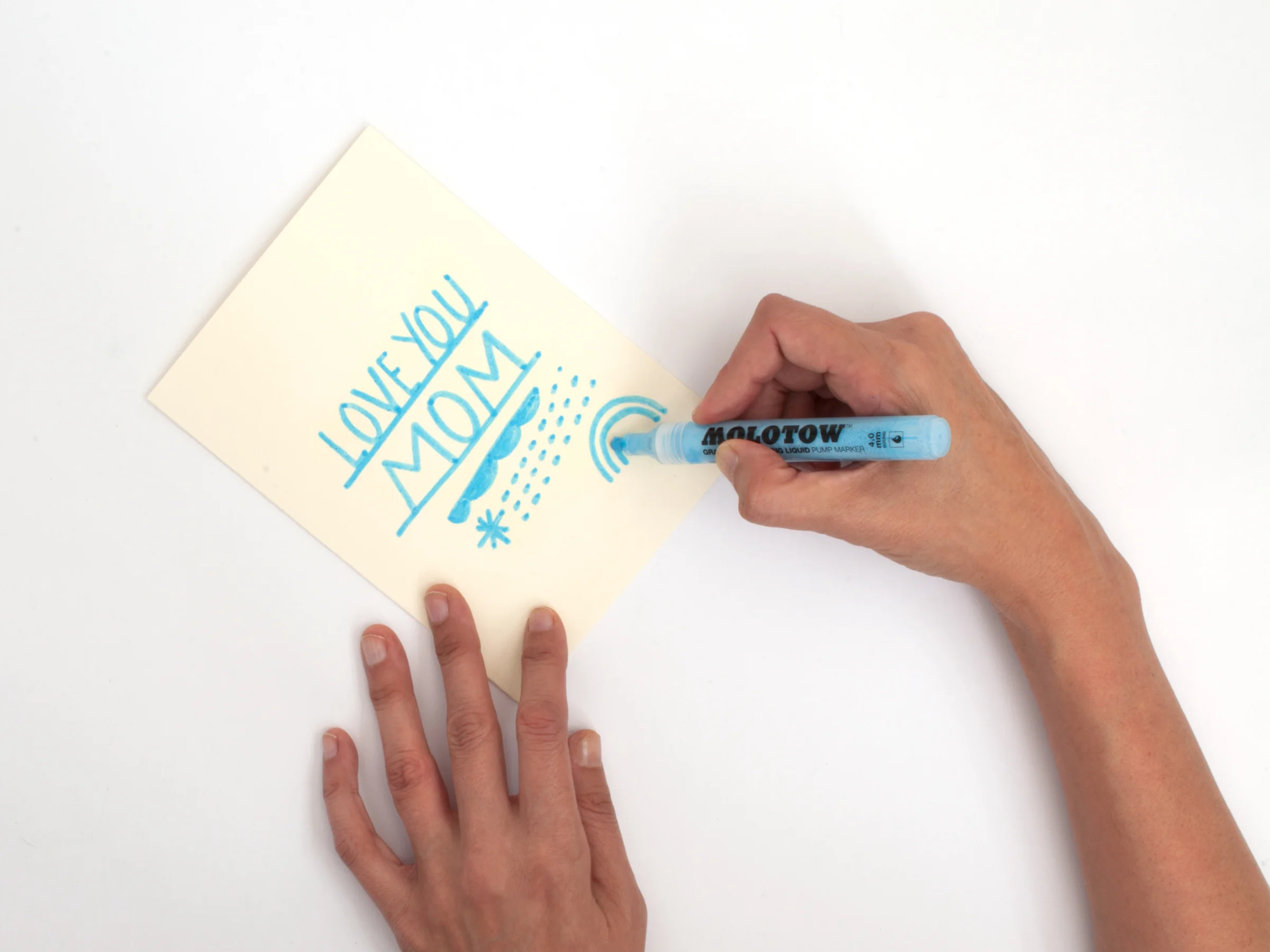
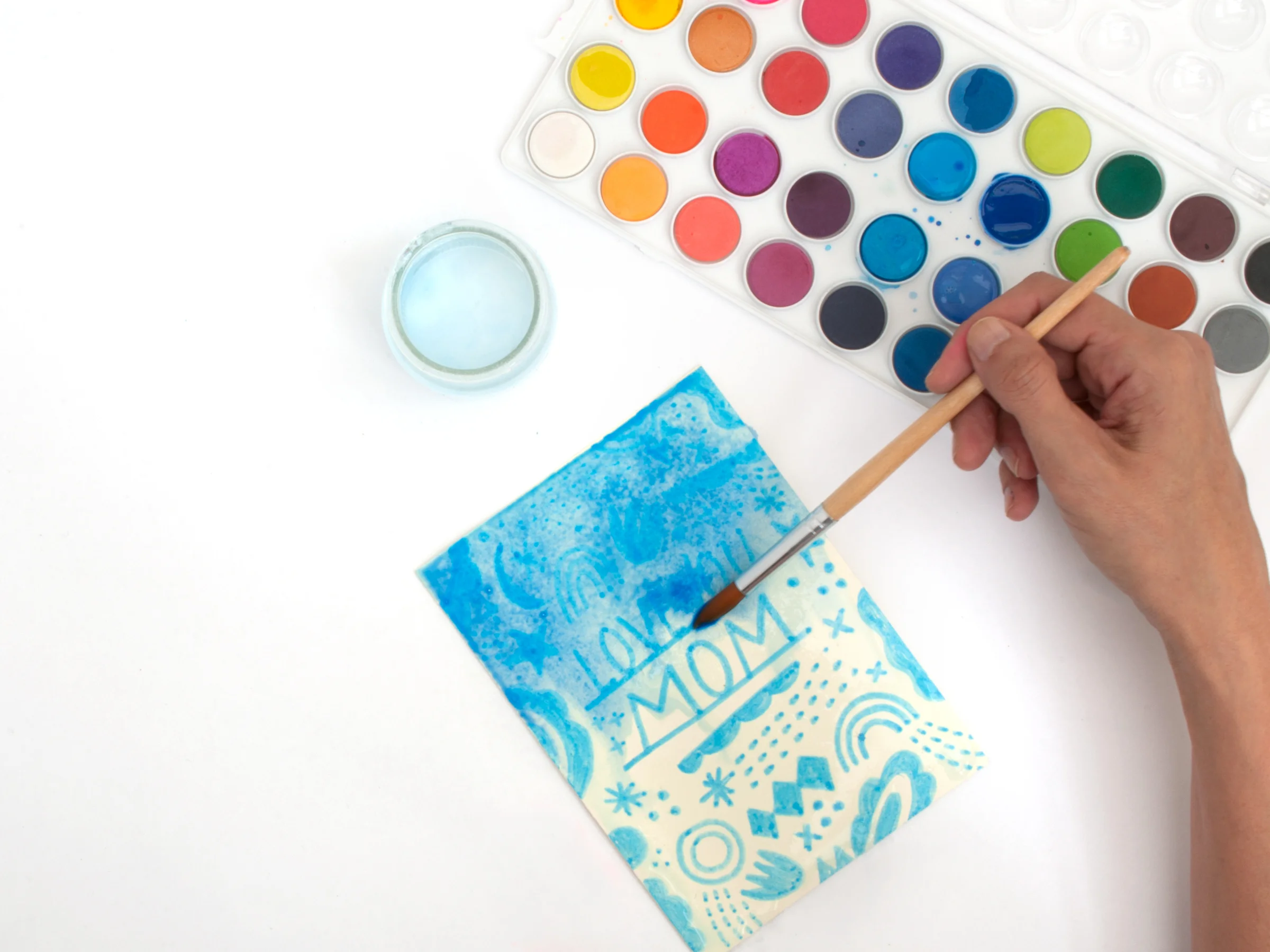

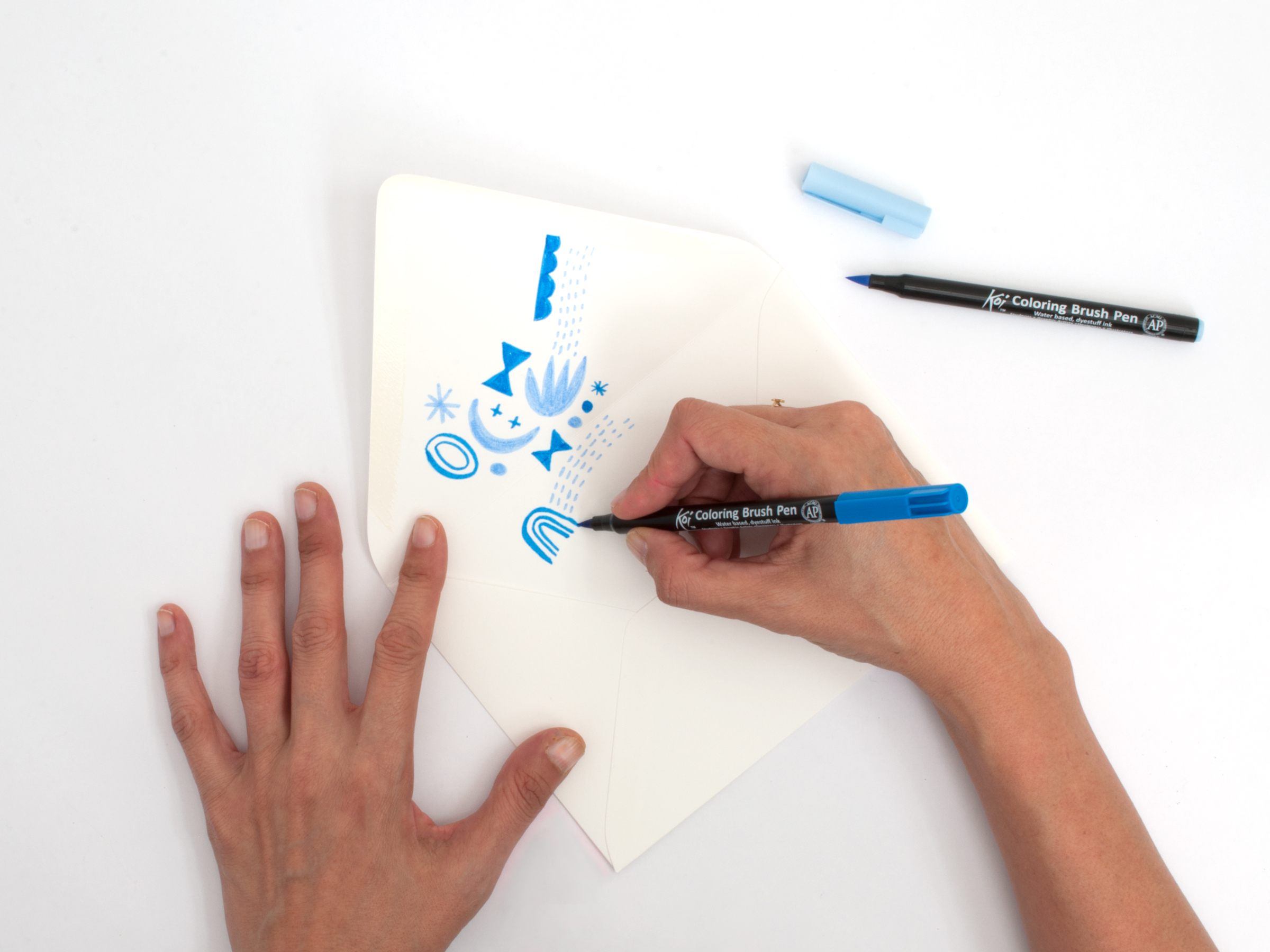
Sending cards or letters can be like a meditation or gratitude practice. When we sit down to draw a card or write a letter, it immediately puts us in a happy place. Why? Because we’re focusing all our imagination and energy on how we can make people happy. What hilarious idea would make them snort with laughter? What would make them feel warm fuzzies? Thinking about these things gives us a real high, like planning a surprise party!

You can almost always find a good reason to send a card. Birthdays, Mother’s Day and Father’s Day, holidays, and or any time you receive a kind action, gift or letter. We especially love sending cards to grandparents and people who might not be as tech-savvy. You might even keep a calendar of card-sending occasions, or a list of people you want to write to along with their snail mail addresses.

Most importantly, though, making and sending cards is just good fun. We crack ourselves up coming up with funny, punny card ideas and we have even more fun sending them to our friends. So the next opportunity that comes up, grab a pen and some paper, and start doodling! Pop your creation in the mail and see what happens!

You can pick up lots of card and hand-lettering ideas and inspiration, letter-writing prompts, and even ready-to-write tear-out cards and self-mailing letters in our new book, Happy Mail. So have fun making your own cards! We know they’ll be totally paw-some! :D
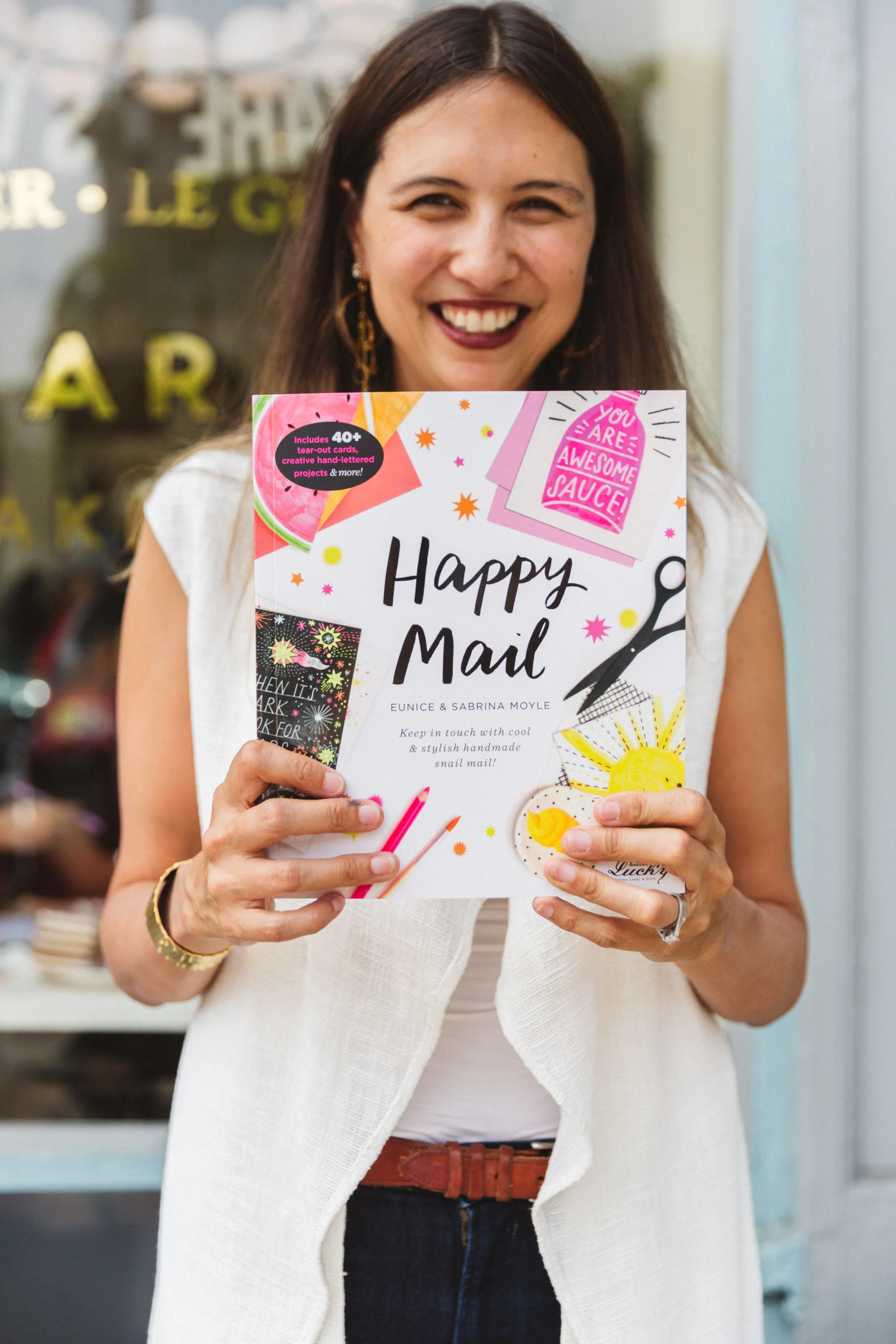
To celebrate the official Happy Mail launch, we’d like to offer one of you your own copy! Follow @illustoria_mag and @helloluckycards on Instagram and tag a friend you would send handmade happy mail to and we’ll pick a winner at random!