

Food for Thought
A guest post by Elizabeth Haidle, Illustoria’s art director.
I was recently visiting the Kansas City Art Institute, as a guest artist this fall. I ran a special assignment, asking students to illustrate a topic related to food & to pair words with their images in any style of their choosing. I was pleased with their surprising variety of responses—family recipes, history of food, cultural traditions, comic journalism featuring food, and food-related ethical concerns. Some went the scientific route, with food diagrams and food traveling through the digestive tract. (Yuck, but fascinating!) Here are some of my favorites, with comments by the artists about their choice of imagery / subject matter:
————————

Art by Nicole Richardson
@crimsonrib

“With my piece, I wanted to illustrate some things you might find in your kitchen that you might not want to eat. I chose to do this in a style like a medieval herbal manuscript.” — Nina Gookin
@NinaGookin
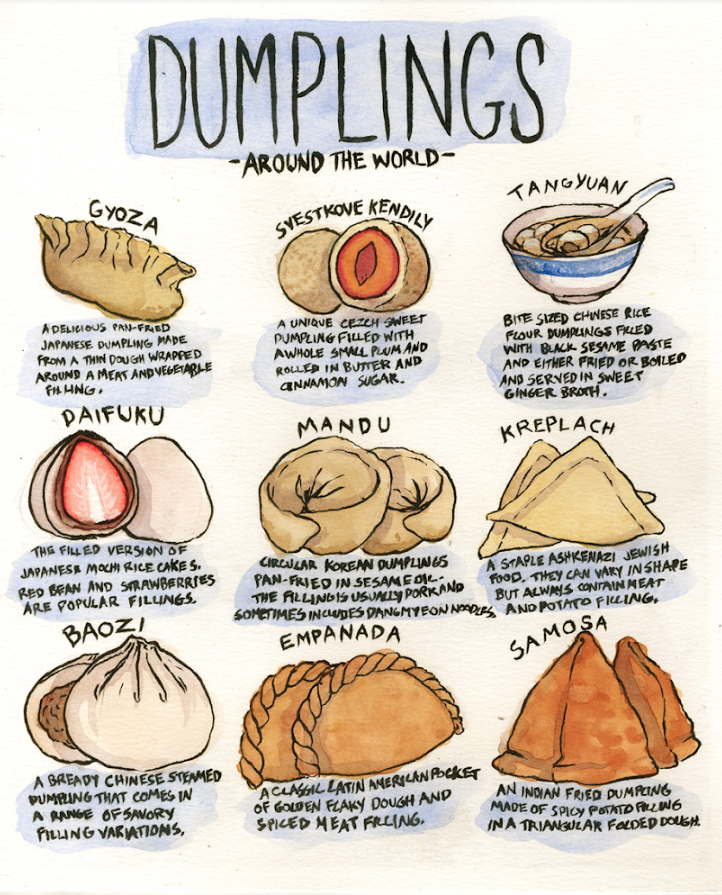
"This illustration was inspired by an emotional revelation i had late one night about how dumplings mirror the human experience. Despite the vast differences in food around the world, nearly every culture has some variation of the dumpling, as diverse in form as the cultures they come from, but all the same in their basic form. It is nice to remember that no matter where you come from or who you are that we all understand the universal comfort and appeal of a small packet of dough." — CJ Nelson
@crowclub
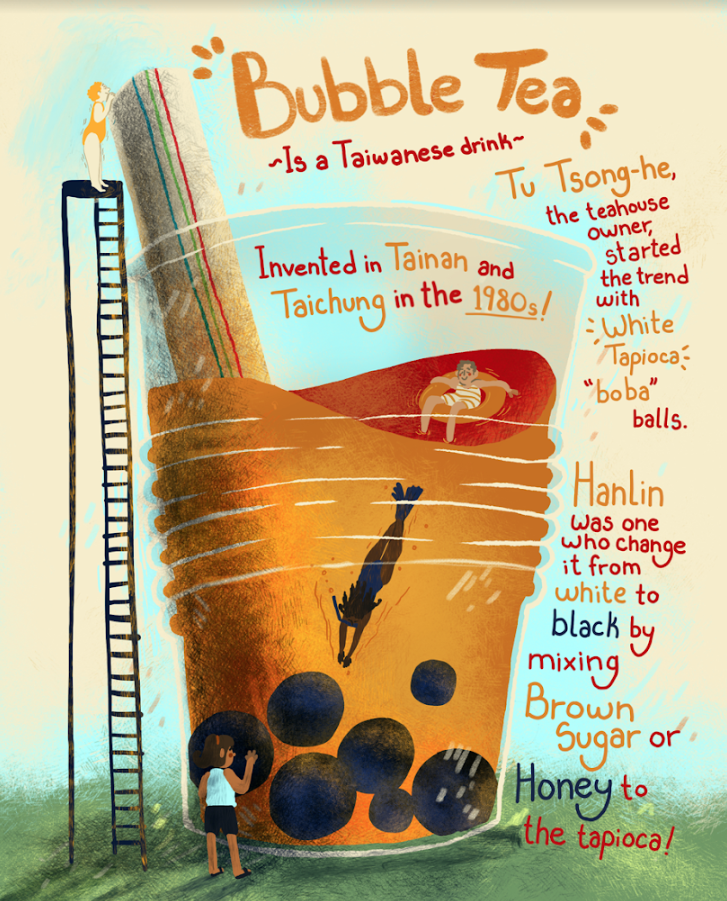
“For the Illustration, I was struggling to create a fun artwork for anyone to learn and appreciate. Then I got inspired by my nostalgia for bubble tea when my friends and I recalled our memories. I remembered that I almost always go to a Bubble Tea booth to get a tea with my friend weekly. It was one of my favorite memories. Yet that hangout time with my friend led me to a new drink that I grew very fond of. I realized that I barely know anything about my own favorite drink, thus the informative illustration!” —Lacey Vonderschmidt
@Impossibmax

“The recipe I chose to illustrate is a very important one. During the holidays my family and I always make this yummy tea together as a way to bond. We take turns juicing the fruit while mom gets the other ingredients ready. Its always a wonderful time and the house is always left smelling delicious!” —Lana Laughlin
@lanalaughlinillustration

“Because I'm originally from Oklahoma, I chose to bring up one of the wackiest facts I know about the state! Most people don't believe me when I tell them about my state vegetable, so I created a colorful comic about it!” — Parker
@Hardcoreparker

"When people think about the ethics of eating, they normally think about vegetarianism and animal abuse. I grew up knowing that my extended family were produce farmers that used migrant labor, grew up worrying about the human rights abuses that farm workers have suffered since the days of Cesar Chavez. The food industry is a huge, wasteful, looming titan that consumes workers and animals alike, and I wanted nothing more than to illustrate exactly why it took up so much space in my head." — Malachi Peters
@malachi_makes

“My interest in honey began with by my agricultural roots. My aunt and uncle are beekeepers. When I moved to the city, I was surprised to learn that some people don't know where food comes from. Migrant workers and small family farms perform the difficult labor that makes our food possible. I love honey in particular because it has beneficial medicinal properties and because beekeeping directly improves the health of the environment. We rely on farmers as much as farmers rely on bees!” —Casper Warren
@Holytheft
We at Illustoria are always so amazed to see how various artists and writers interpret a theme—often in ways that we would have never imagined ourselves, and certainly in styles and voices that are original and captivating. Thanks to Elizabeth and the students at the Kansas City Art Institute for sharing their beautiful, thoughtful, and inspired illustrations with us!

Day in the Life of Jess Smart Smiley
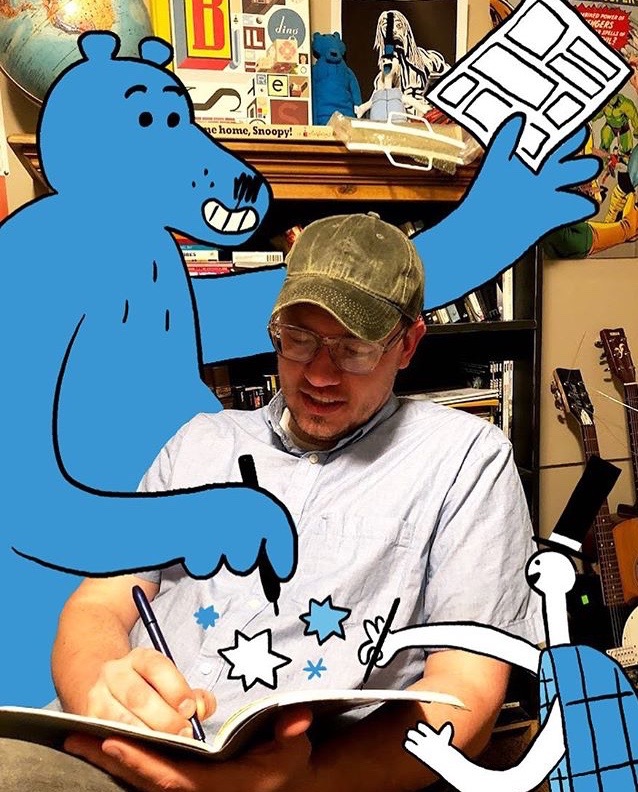
photograph courtesy of Jess Smart Smiley
If you haven't heard of the multi-talented, rad cartoonist, teacher, illustrator, and writer Jess Smart Smiley, you're in for a treat. Smiley is based in Utah and has created six rad kid's books including Upside Down: A Vampire Tale and Rude Dude Book of Food. His bold drawing style and witty characters are not only smile-inducing, they're approachable. By creating hilarious, instantly love-able personalities out of simple shapes and lines, Smiley makes illustration inviting for readers of all ages and drawing skill. In his latest book Let's Make Comics Smiley leads readers through a roller-coaster ride of 90 jam-packed activity pages that offers a foundation for any budding cartoonist. Best friends Peanut (a turtle donning a top hat) and Bramble (a lady-bug loving bear) star as the teachers of the activity book, creating mischief and adventure on every page. Because the book is set up with its own comic book narrative, Smiley makes learning the ins-and-outs of drawing feel just like watching Sunday morning cartoons. And for kids and grownups that have a paralyzing fear of picking up a pen, this book is a refreshing antidote. We were lucky enough to pick Jess Smart Smiley's brain a bit about the joys and challenges of being a professional artist, the process of making Let's Make Comics, and some of his favorite graphic novel and comic recommendations. We hope you enjoy, and don't forget to check out ILLUSTORIA's Instagram giveaway of the book running now until June 31st!

Let's Make Comics! by Jess Smart Smiley
Hi Jess! Tell us about yourself.
Jess Smart Smiley is a joke. Seriously. He makes rad pictures with his bare hands and has helped more than 1,000 children, teenagers, and adults create their very first comics. See more at jess-smiley.com.
What was the last thing you made with your hands?
I drew this tiger face in my sketchbook.

art by Jess Smart Smiley
In your latest release, Let’s Make Comics, you offer tons of creative, engaging ways for comic book beginners to start creating their own story lines. What was the inspiration behind this book?
6 years ago I was invited to teach a week-long comics workshop to teenagers. I came up with the activity pages as a way for students to complete a comic while also exploring the nature of comics, the role of words and pictures, and a variety of tools, methods, and techniques for creating comics. Since that very first workshop, I’ve used the activity pages to introduce children and their parents to the exciting world of storytelling through comics!


Let's Make Comics by Jess Smart Smiley
What do you love most about creating comic books?
Because a comic can display several illustrations on a single page, it gives me the opportunity to draw a character I love from a bunch of different angles, in a variety of situations, and with a range of emotional expressions.

art by Jess Smart Smiley
Can you talk about your process of creating Let’s Make Comics from start to finish, and share some process pics with us?
Sure! Once I had created a handful of activity pages for my workshop and had seen how helpful they were for beginning creators, I started writing ideas for other possible pages onto index cards. I used something like 350 index cards and then picked my favorite 100 or so from the stack.


From here, I grabbed a bunch of blank 8.5" x 11" copy paper and spent some time drawing very rough versions of each activity. The drawings were sloppy and the writing wasn’t usually well-thought-out, but my goal was to get the idea down on paper in a way that I could understand and make a final version from.

art by Jess Smart Smiley
I scanned each rough activity page and pulled them one at a time into Photoshop, where I created new layers for my final drawings, colors, and text.

art by Jess Smart Smiley
(As a side note, there was one Sunday when I still had something like 20 activity pages to rough out. I was starting to lose steam from so much drawing, but there was a sudden rainstorm and our power went out. I love a good rainstorm, so I sat on the porch and drew the final 20 pages, charged by the energy of the storm.)

Let's Make Comics by Jess Smart Smiley
If you could be any comic book character from history, who would you be and why?
Probably Snoopy. Now THERE’S a dog who knows how to have a good time! Plus, his dog house can fly!

What were you like as a kid?
Quiet. Timid. Always drawing in class. I loved playing basketball and kickball at recess and reading everything from Roald Dahl and Beverly Cleary.

art by Quentin Blake from Roald Dahl's Fantastic Mr. Fox

art by Louis Darling from Beverly Cleary's Ramona
What is the most challenging part about being an artist/writer/maker?
Pitching a new idea. Publishers want to make great books, but they can’t just trust a creator to do whatever they want. Publishers want to know what your next book will be before you’ve made it. That means a creator has to prepare some illustrations and writing that demonstrate and describe a book before it ever exists. If I don’t put enough thought into the drawings and writing in my pitch, then I leave too many gaps in the story and holes in the idea for publishers to guess at. It’s like not finishing a sentence—and how often do people guess at exactly what you were trying to say?

art by Jess Smart Smiley
Where/ do you feel your most creative?
When I’m working on a project I’m really enjoying, but also have time to explore doodling in my sketchbook and time to read.
What is your favorite activity from Let’s Make Comics?
I love watching children, teenagers, and adults complete the “Let’s Take a Walk” activity on page 26. The comic is missing backgrounds and environments, so it’s up to the reader to draw their own into the comic.

Let's Make Comics by Jess Smart Smiley, page 26
What are some comics every kid should get their hands on, ASAP?
There are so many great comics out there and I’ll never be able to list them all. That being said, here are some of my favorites that I often recommend:


Bone by Jeff Smith is a wonderful fantasy adventure centered around a lovable cast of friendly cousins who find themselves in a magical and terrifying forest, where they encounter horrific creatures, the Great Red Dragon, and a host of mysteries.
The Hazardous Tales series by Nathan Hale recount true tales from history in an incredibly informative and entertaining way. There are currently 7 books in the series, covering everything from the Revolutionary War to the Donner party and World War II.
The Unsinkable Walker Bean by Aaron Renier is the book I’ve gifted the most—to young readers, to my cartoonist friends, and to anyone who enjoys a good story. Walker Bean is a young boy who takes to the high-seas in an attempt to relieve his grandfather from an ancient curse. Along the way, Walker Bean encounters pirates, sea witches, mysterious machines, and a magical glowing skull. Do yourself a favor and read it before the sequel comes out this October!


Raina Telgemeier’s Smile tells the story of the author’s sixth-grade experience with injuring her front teeth, getting braces, trying to understand boys, and finding her true friends.
Luke Pearson’s Hilda books are incredibly charming, filled with beautiful illustrations, giants, sprites, trolls, and hounds, adventurous stories, idyllic landscapes, and a curious blue-haired girl named Hilda. (Did I mention Hilda is coming to Netflix this Fall?!)
What is the day in the life of Jess Smart Smiley?
On any given day I might be working on a new comic, illustrating a picture book, designing a video game, creating character designs, developing story ideas, drawing in my sketchbook, teaching a comics workshop, or doing some combination of these things.
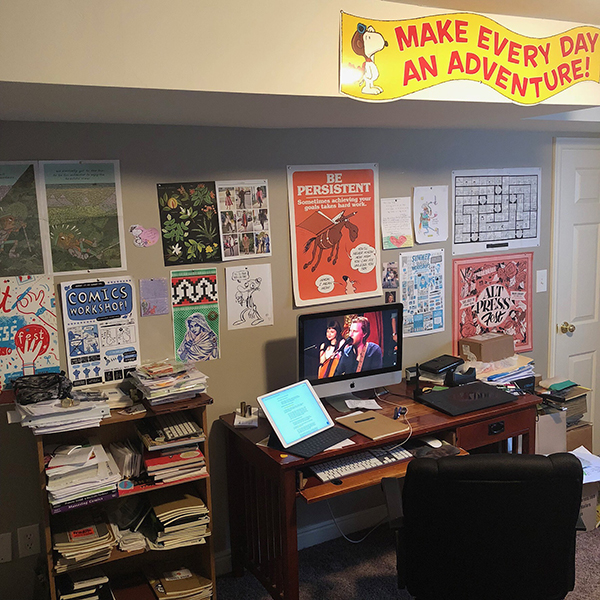
I prefer to wake up and get right to work, usually by finishing something I started the night before. (It’s helpful for me to finish something early in the day, so I can stay motivated to keep going.) I keep a to-do list in my sketchbook of different things that need to be done for each of my projects, which makes it easy for me to know what to do next. I’ll often prioritize my projects by ranking them in the order they should be completed, and then I’ll try to come up with a rough idea of how much time any one task with take. I never have to ask myself What should I do next?, because I’ve already thought through what needs to be done.

art by Jess Smart Smiley
After writing, drawing, and planning at home, I might spend a few hours working at the library, the local Barnes & Noble, or my neighborhood comic shop, Dragon’s Keep. I meet up with local business owners, friends, and fellow creators to talk about upcoming projects, or I might take the role of consultant, offering what I hope are helpful thoughts for writers, artists, comic book creators, and others in the community.
In-person events are also a big part of my schedule. Over the last few years I’ve been able to help more than 1,000 children, teenagers, and adults complete their first comics. I started with a week-long comics workshop, and have since introduced others to making comics at school visits, library events, Girl Scout meetings, comic conventions, book festivals, writing and art symposiums, and Skype visits. Last month I was able to visit a group of schoolchildren in Pakistan and a comic festival in England, all thanks to the magic of Skype!
I love seeing people’s reactions to Let’s Make Comics, and knowing that I’ll be teaching others about the things I’m learning about making comics helps me stay committed and really consider what I’m doing and how I’m doing it.
My family and I spend time together and I like to get a little reading in, maybe go for a walk, and then I do a little more drawing or writing before bed. Pretty exciting!
We hope you enjoyed this interview with Jess Smart Smiley! Don't forget to head on over to our Instagram for a chance to win Let's Make Comics in our giveaway (closes 7/31).
If you've got the comic-loving-bug, you will obsess over ILLUSTORIA's Issues #1 - #7. Each issue of ILLUSTORIA is filled to the brim with comics, illustrated short stories, interviews with artists, coloring pages, DIYs and more. Order an issue or a subscription today and fill your days with creativity!

Creating Cover Art for #7: The Black & White Issue
Hi All!
Rebecca Green here (you can call me Becca!). I had the pleasure of creating the cover for Illustoria Issue #7, The Black and White Issue, and today we're going to walk through a bit of the creative process behind the illustration.
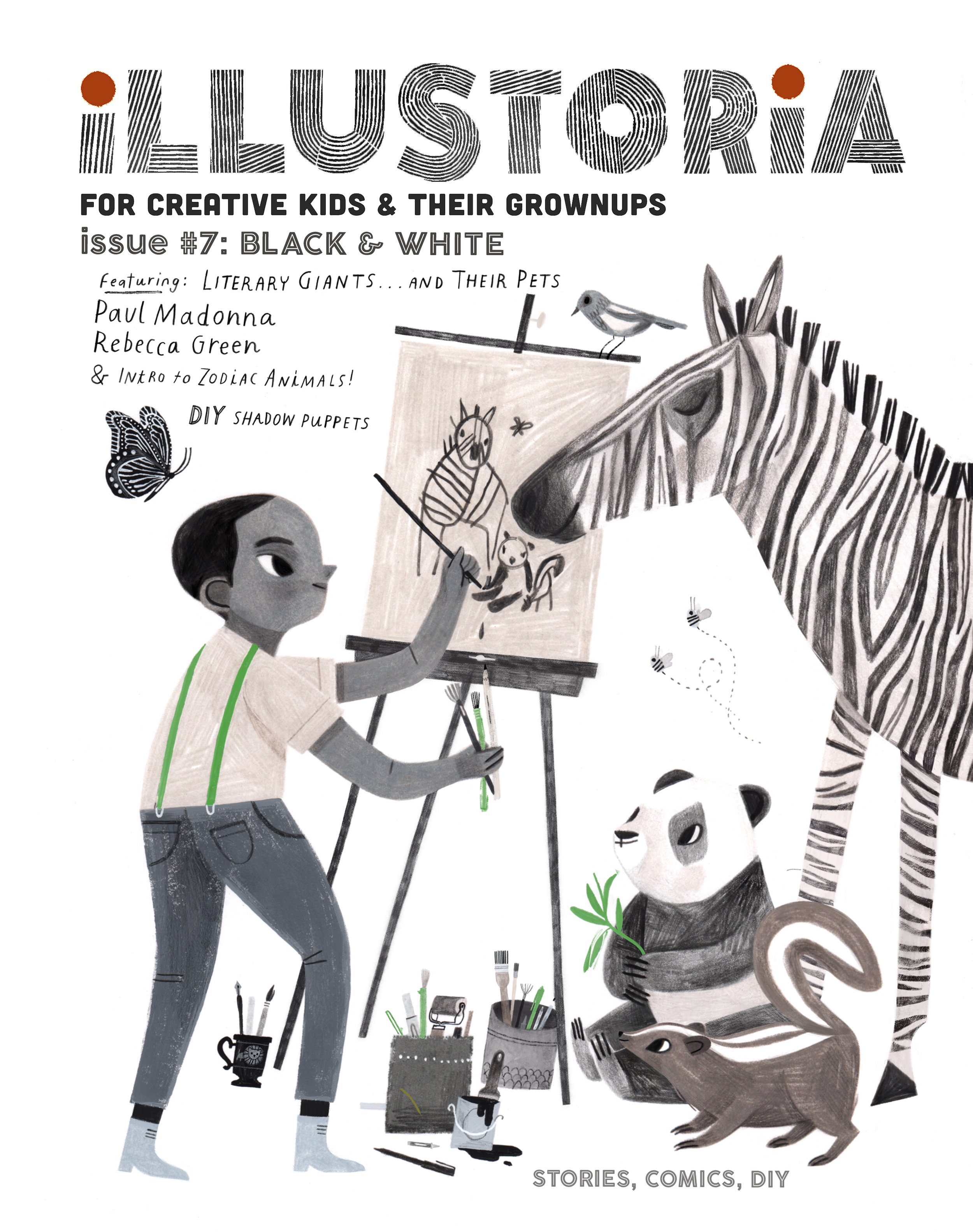
Illustration by © Rebecca Green
Besides sending along keywords, details about the features, and some of my previous art they were drawn to, Joanne and Beth of Illustoria gave me a lot of freedom to choose which direction I wanted to go with the artwork. Immediately, I knew I wanted to draw a little boy with black and white animals. I started with this simple sketch.

Illustration by © Rebecca Green
The drawing, I decided, needed something more. The boy would be...an artist! Complete with an easel and lots of brushes and markers. One thing I did like in the first drawing was the use of one simple color. Green felt right. (and not because it's my last name!) The sketch was drawn in colored pencil (I use Faber-Castell and Prismacolor).


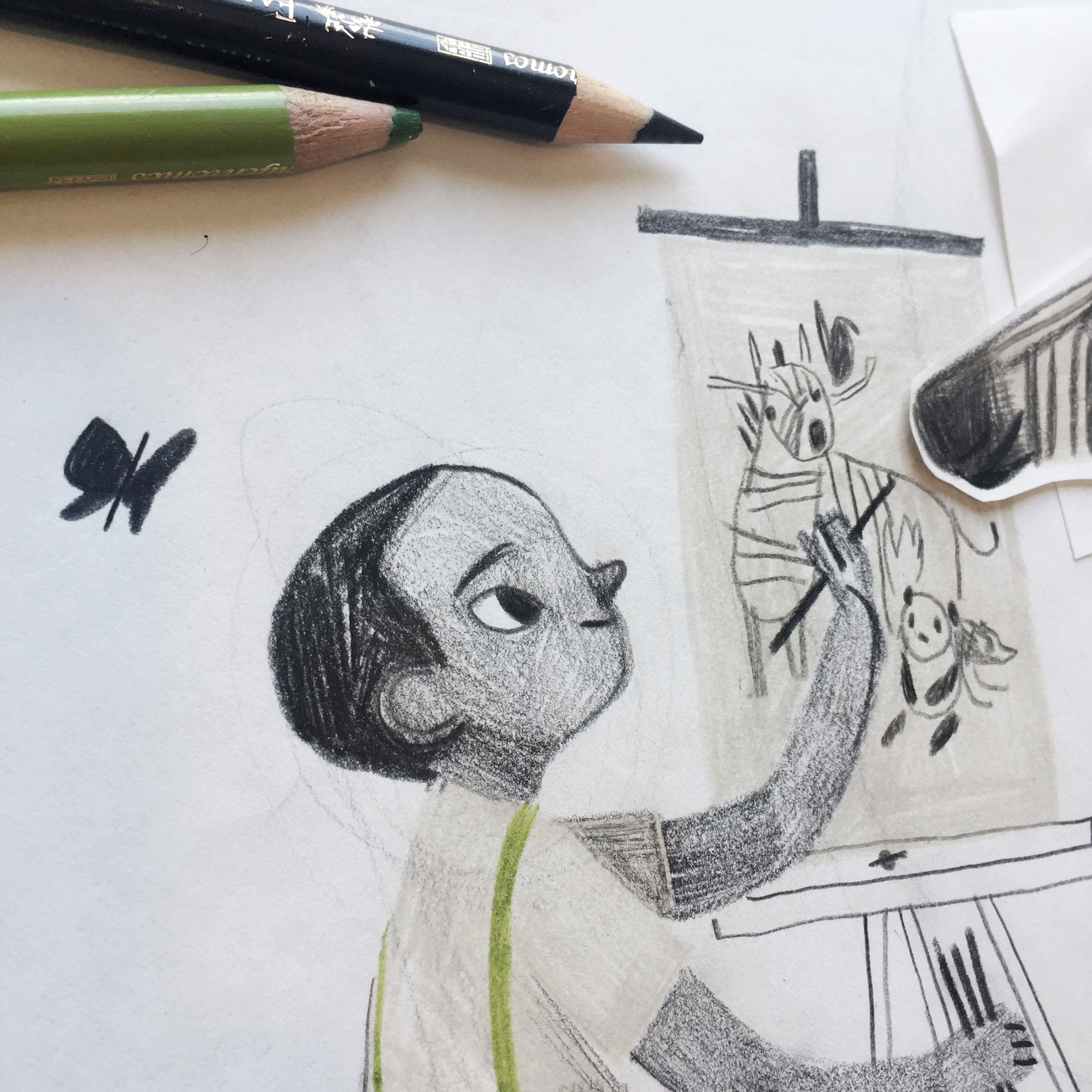
Illustrations by © Rebecca Green
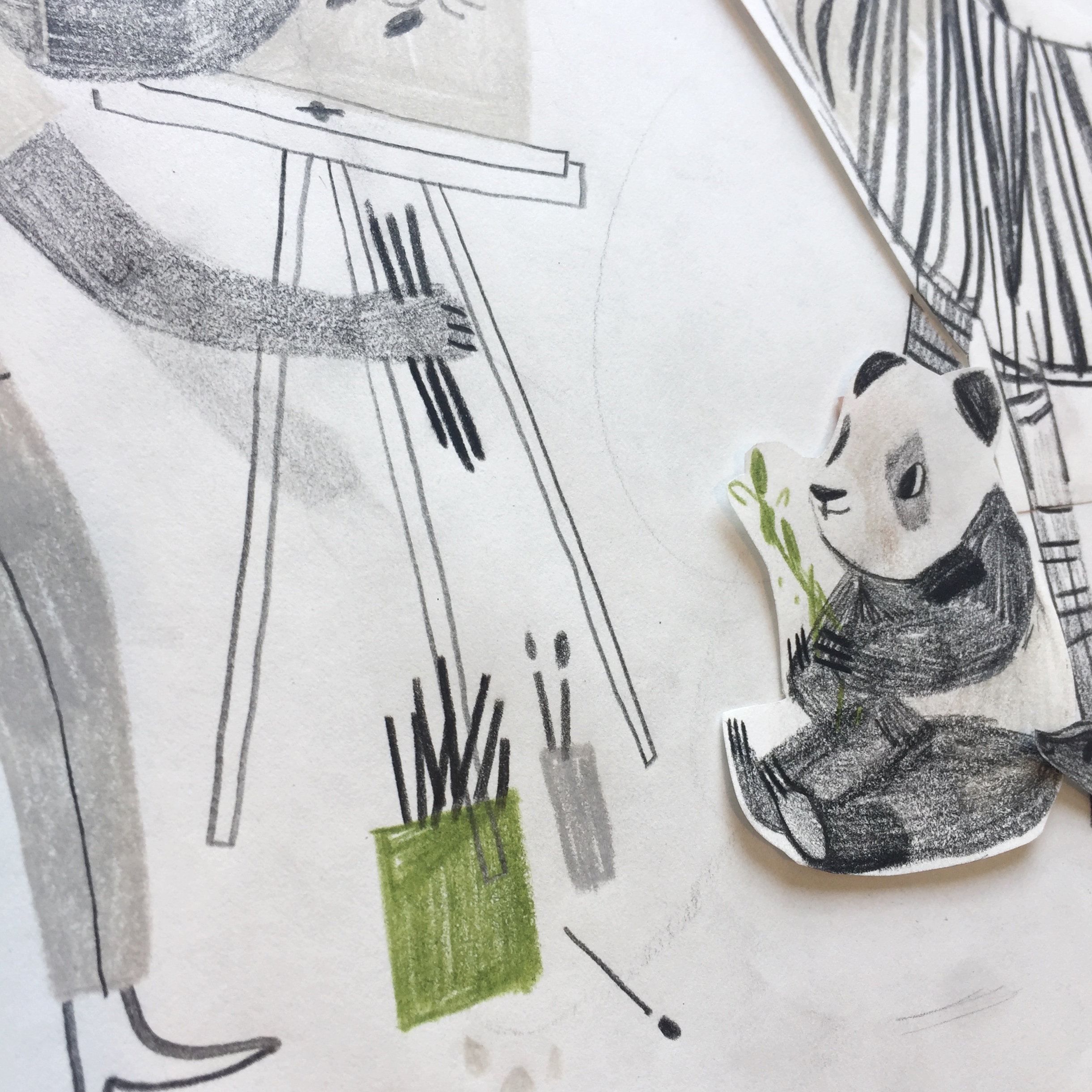
As you can see, I drew some of the elements on a separate piece of paper and cut them out so I could try out placing them in multiple places. One I had my complete sketch, I scanned it, cleaned it up a bit in Procreate (on my IPad), and send it in for approval.

Illustration by © Rebecca Green
Once the sketch was approved (this meant making the image a little bigger and enhancing the butterfly), I went to work on the final. I created the final illustration in gouache and colored pencil. Here are some peeks of the cover before it was edited!

Illustrations by © Rebecca Green


The final illustration was edited in Procreate and Photoshop, along with the hand-lettered text. When finished, it was sent to the kind folks at Illustoria and voilà! A cover was born!
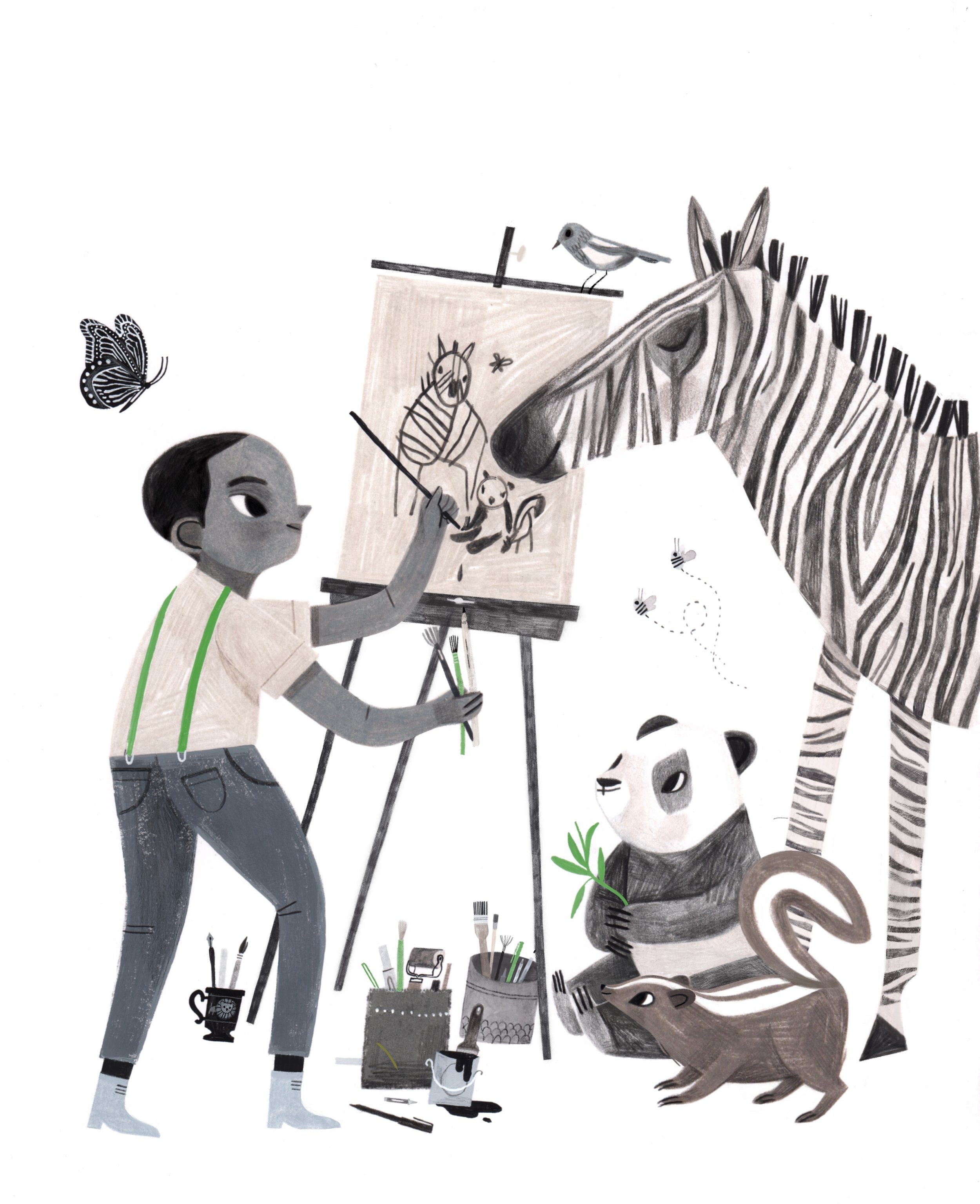
Illustration by © Rebecca Green
There you have it - a glimpse into the world of the cover creation. Hope you guys enjoy the issue, and thanks for letting me share a peek into my process. And thanks to Illustoria for having me!

Creator Crush: Kickliy
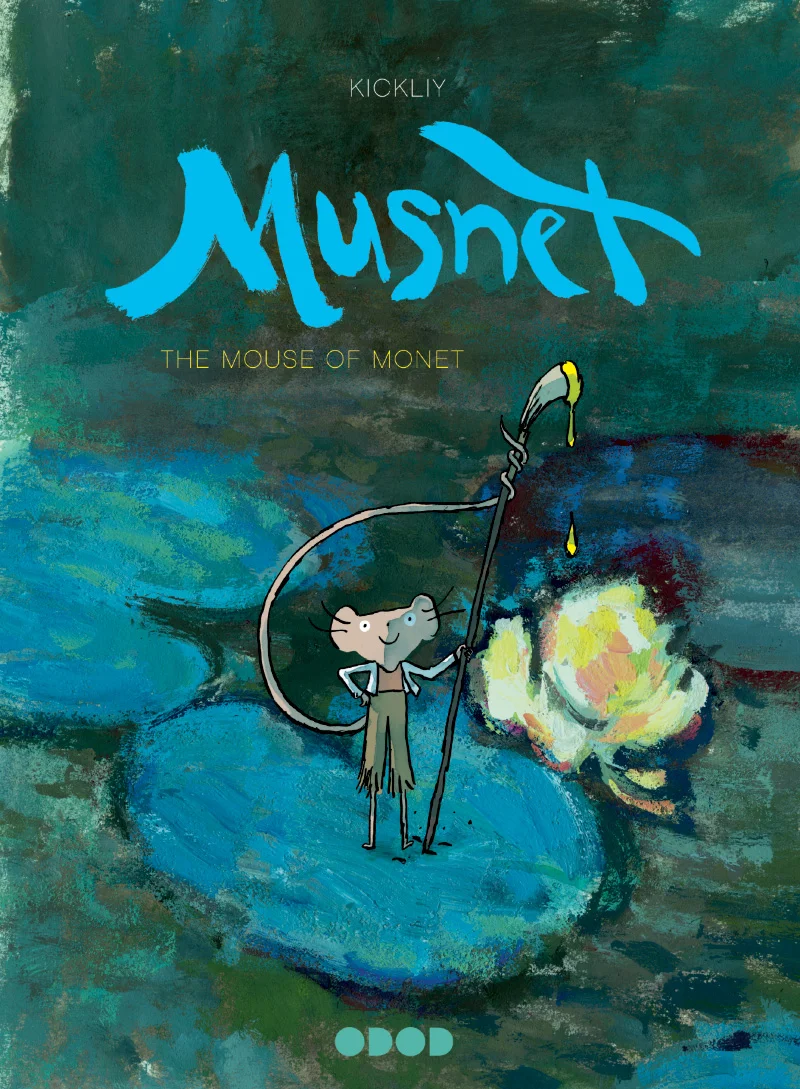
Cover art for Musnet; The Mouse of Monet by © Kickliy
Kickliy is a French storyteller, esteemed oil painter, and creator of the award-winning graphic novel series Musnet. This tale, recently translated from French to English by Uncivilized Books, is set in 19th century France and stars a nameless mouse who happens upon Monet's garden in Giverny. He soon becomes enchanted by Monet's work and resolves to become a master artist himself. This sensational, darling book will have young readers absorbed with the story of an artist's self discovery, as told through beautiful watercolor, ink, and oil illustrations. This week, Kickliy joins Illustoria to share drawing tips for budding artists, and offers a sneak peak inside his sketchbook and studio.
-----------
DRAWING IS SEEING

Illustration by © Kickliy
They say that Monet had the BEST EYES. They say that he saw EVERYTHING.
Drawing is the foundation of the arts. When you put pencil to paper, the drawing will show you what you understand and what you do not. If you want to get good at drawing, it is easy- You just have to be very dedicated and draw every day.

Page from Musnet; The Mouse of Monet by © Kickliy
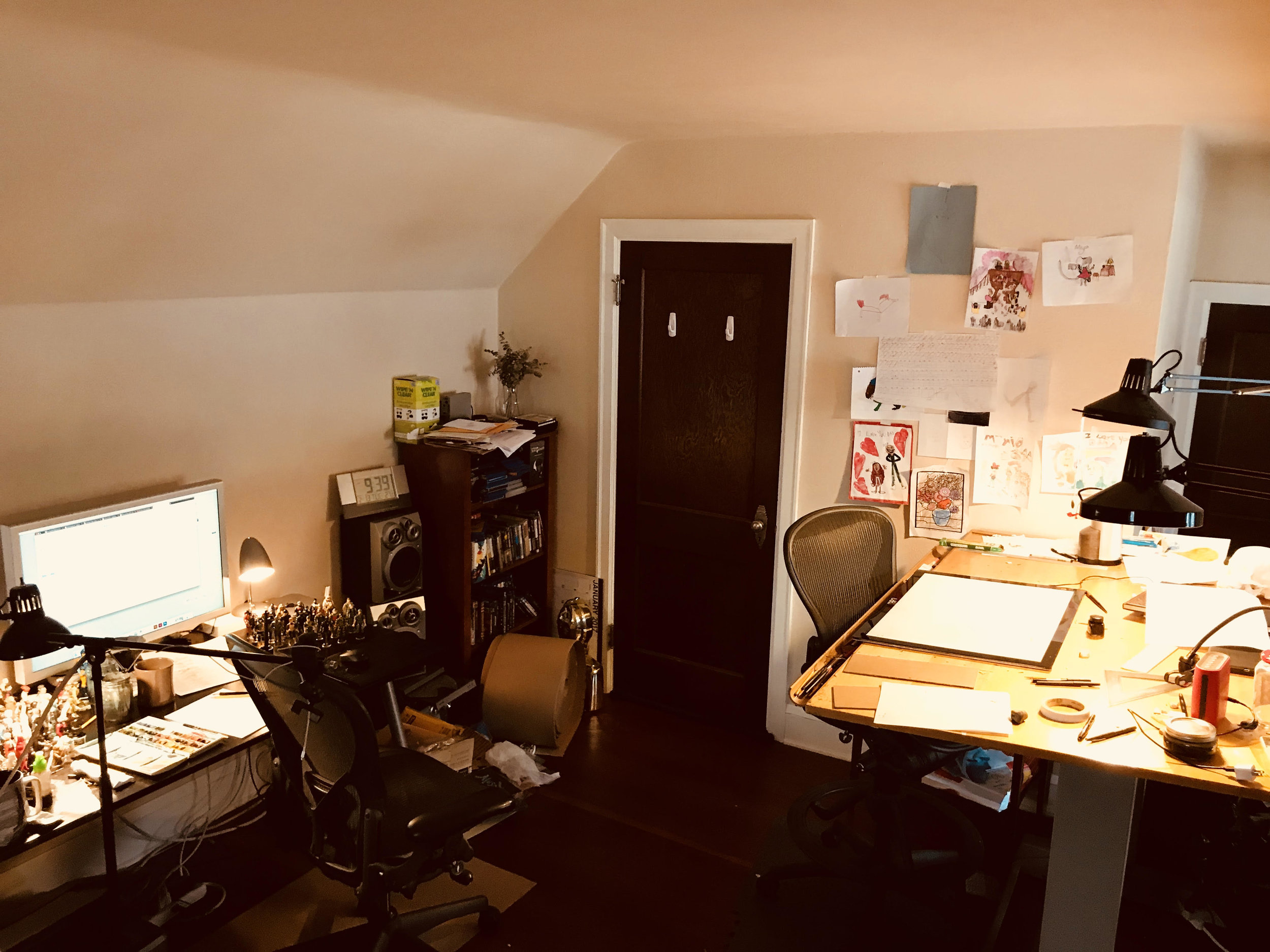
"This is my studio. Where I write, draw, paint, make comics, draw toys, drink tea, and day dream. It is kind of messy, but that's what happens when you make art. Luckily my mom and dad aren't here to yell at me to clean it up. " — Kickliy
I carry a small sketchbook with me wherever I go. I stop whenever I see something interesting. I have even learned how to walk and draw at the same time. I look for light and dark areas- Those are the best places to find good drawings. I watch how people sit, stand, and move. Those make good drawings too. I draw plants, toys, cars, hair, whatever. I even make drawings up, like a mouse that can paint.

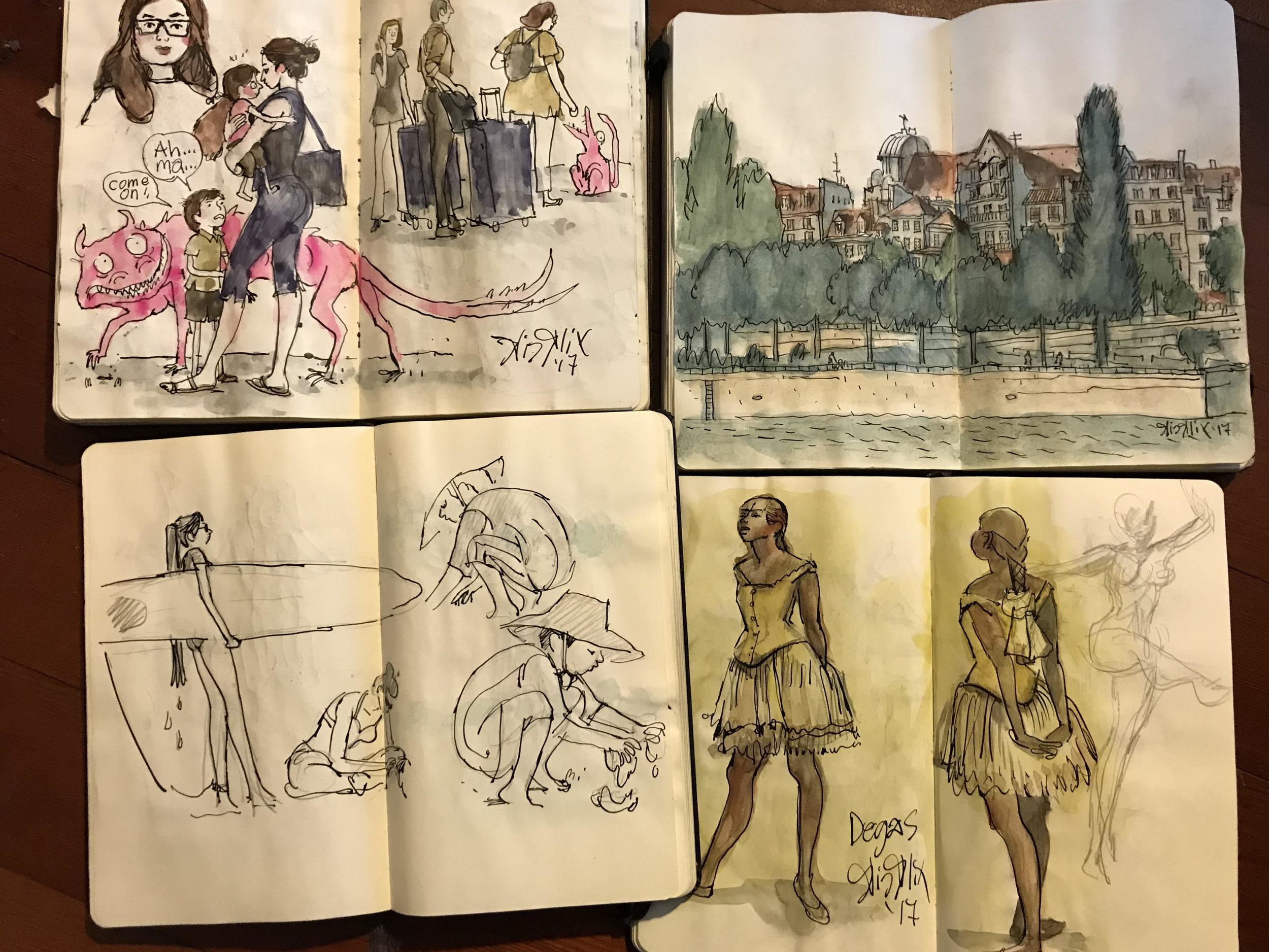
"These are my sketch books. They are all filled up with drawings for "the field." (That's a cool way to say that you draw on the location of the drawing.) " — Kickliy
The only wrong way to draw is to not draw at all.
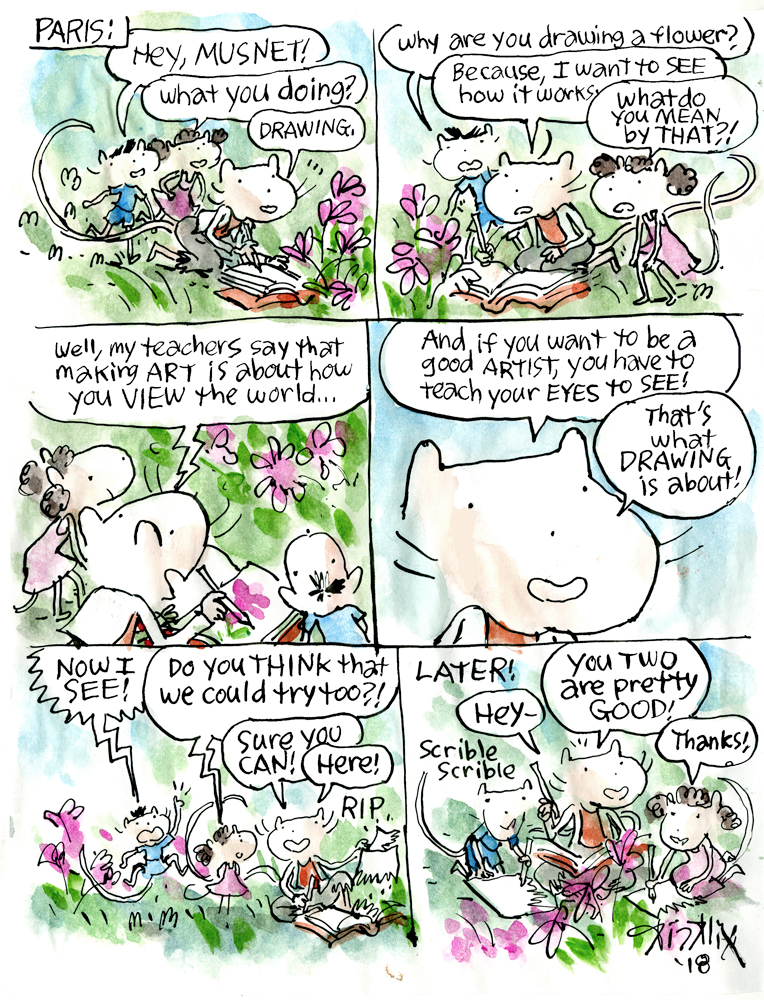
comic by © Kickliy
-----------
Feeling inspired? Head to your local library or bookstore and check out the whole Musnet series 1-4! And be sure to enter our Instagram giveaway to win all four of Kickliy's head-over-heels charming books from Uncivilized Books plus a copy of Illustoria Issue 6 Symbols! To see more of Kickliy's work, follow him on Twitter at @kickily.

The Making of a Mural
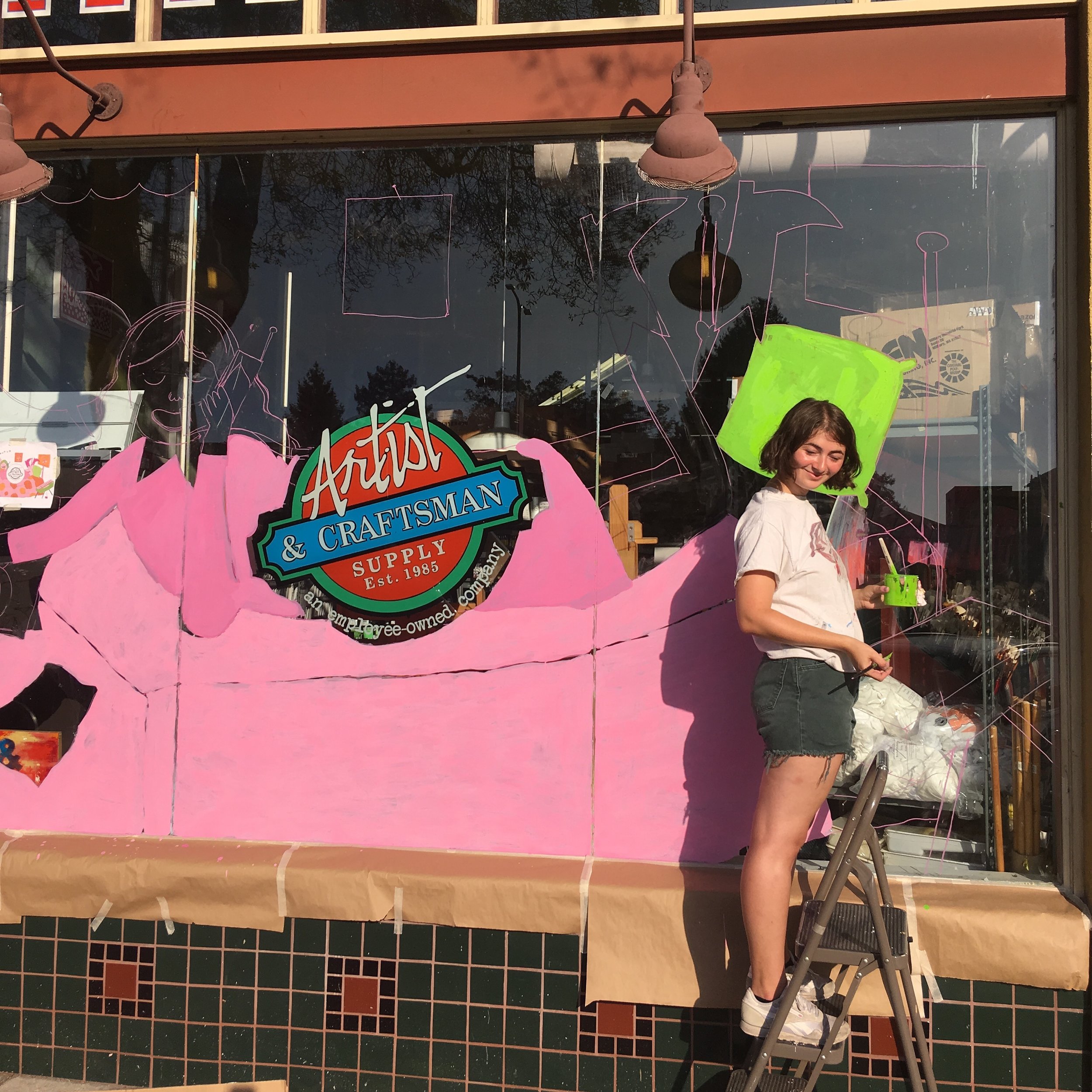
I visit the Artist and Craftsman in Berkeley (on 2573 Shattuck Ave, to be specific) more than any other store in the whole world. I kid you not, I'm there running errands for my various art related jobs at least once a week. If you've never been, I implore you to hop on your moped, bike, scooter, or heck even Boeing 747 and check it out. Never have been to an art store with cooler vibes, nicer people or more expansive color selection of gouache paints. After a solid year of hard crushin' on A&C (visiting every week, sometimes twice in the same day, and lingering too long in the paint brush section, where I would philosophize on the benefits of the filbert brush) they finally popped the big Q: Would I be interested in painting their Fall window mural? "I'm so down!!" I most likely said, after mopping up the puddle of profound honor and excitement my body melted into.

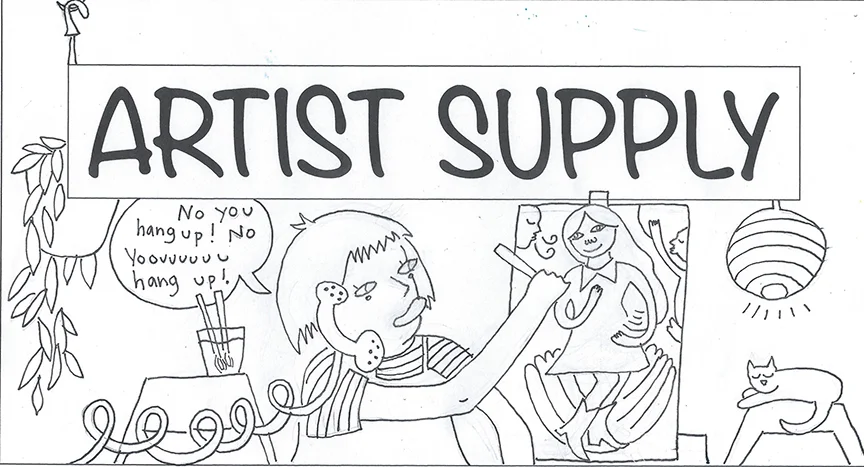
After proposing a couple sketches, we landed on the one I made of two best friends talking on the phone while making art in their rooms, which is by no coincidence how I spend the majority of my time.


After making a sketch, I scanned it onto my computer and played around with the color in Photoshop.
The initial inspiration for the mural, titled No You Hang Up, was the playfulness and kitschy nostalgia of early 2000s TV friendships like Lindsay Mcguire, as well as my gratitude for my creative group of friends. As I finalized my sketches, I realized I also wanted the mural to be a celebration of the brilliant, loving, and inclusive Bay Area art community that I feel lucky to be apart of. For me, celebrating this community meant paying homage to the vital artists and organizers who dedicated their lives to supporting and building it.

No You Hang Up references Ara Jo, a radiant human being who supported, welcomed and befriended countless artists in the Bay Area and beyond. The mural also makes reference to Aaron Curry, commonly known as ORFN, a prolific and raw creative who influenced generations of street artists. Both artists passed away a year ago, in December 2016. This mural is dedicated to them, as well as artist Jeffery Chung, founder of Unity Press who continues to build and grow community for queer and POC folks in the East Bay.
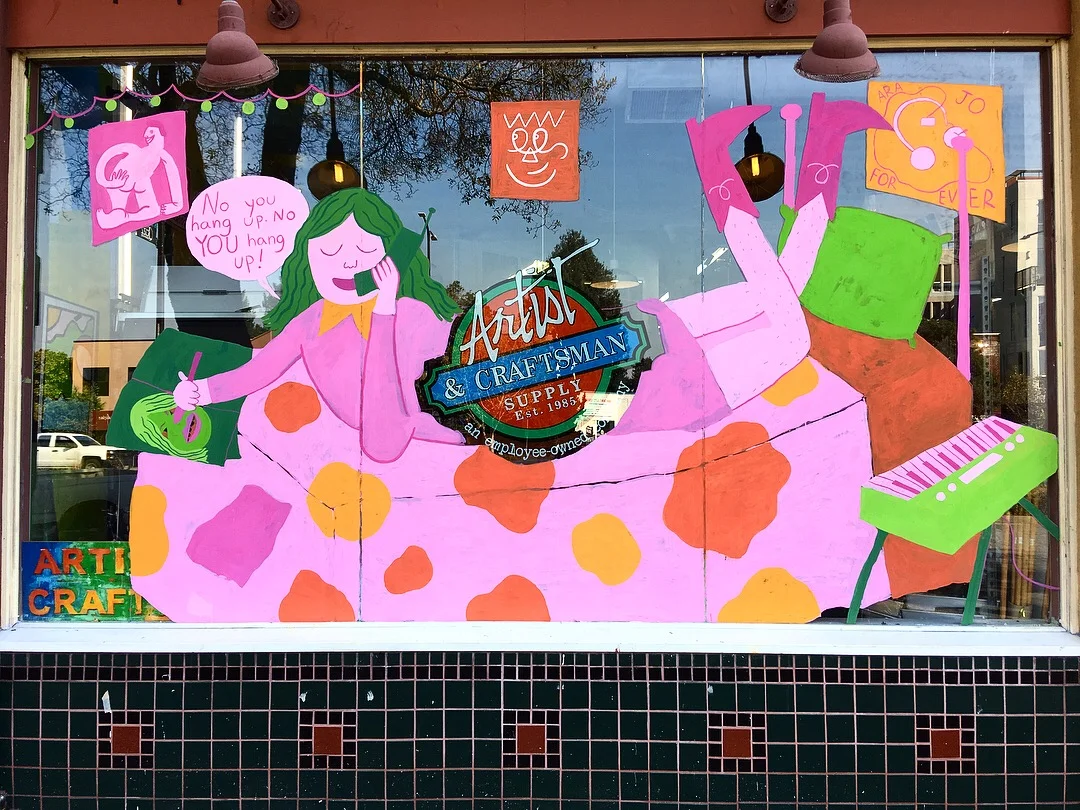

Painting the mural was such a blast and tremendous privilege to paint, and I couldn't have done without the help of my friends and the awesome crew at A&C. If you're in the area, come stop by! It will be up until the end of December. And if you're an East Bay resident, stay tuned for a zine workshop I'll be teaching there on December 10th!

Why Making Cards Makes us Happy
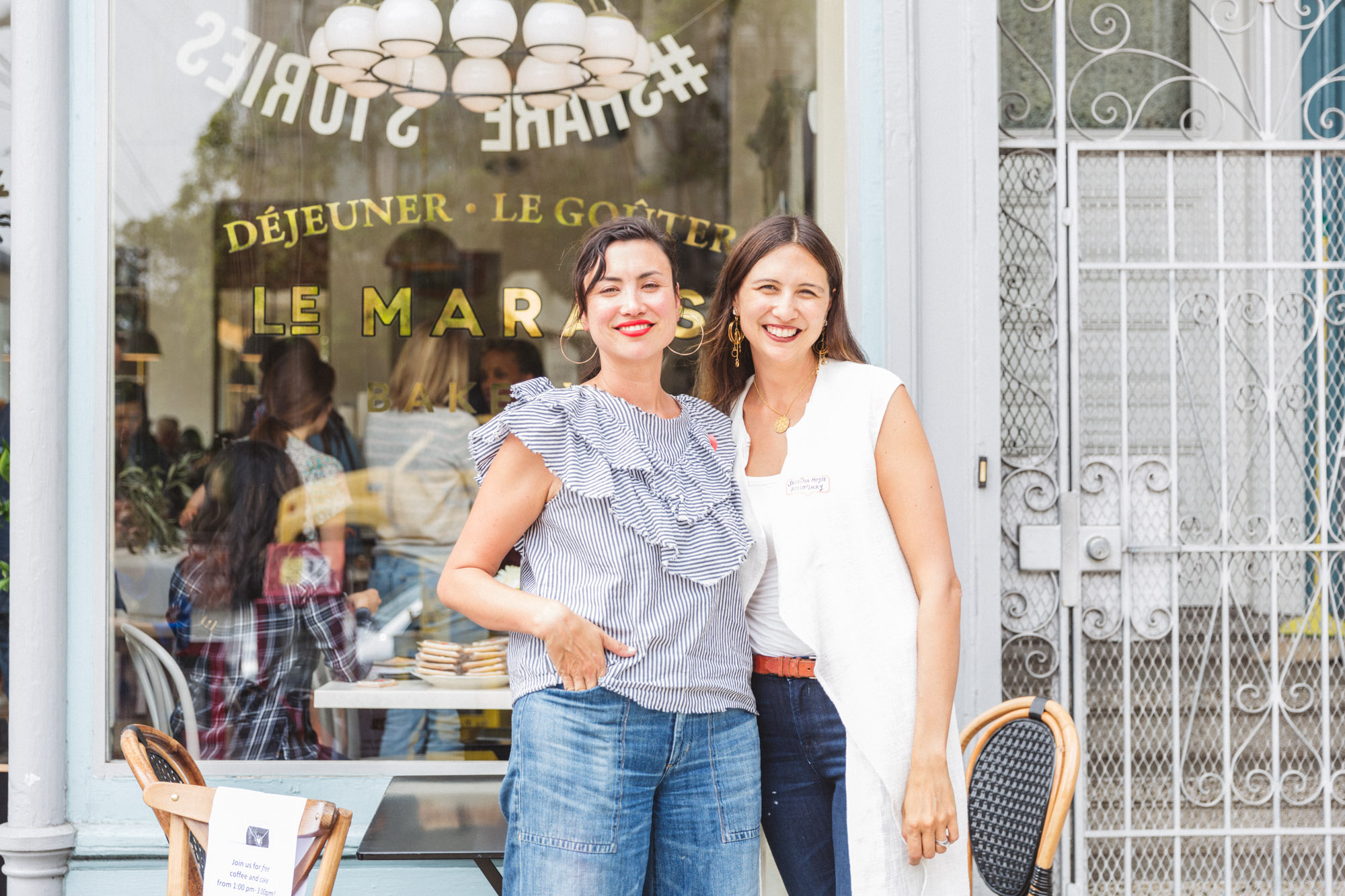
Sisters Eunice and Sabrina Moyle are founders of Hello!Lucky, a San Francisco-based, award-winning purveyor of letterpress greeting cards and other doodled objects. They’re also authors of several books including their latest, Happy Mail and the forthcoming Be the Change.
This week, Eunice and Sabrina join Illustoria to share some insight into their art style and why they love to doodle, hand-letter and send snail mail!
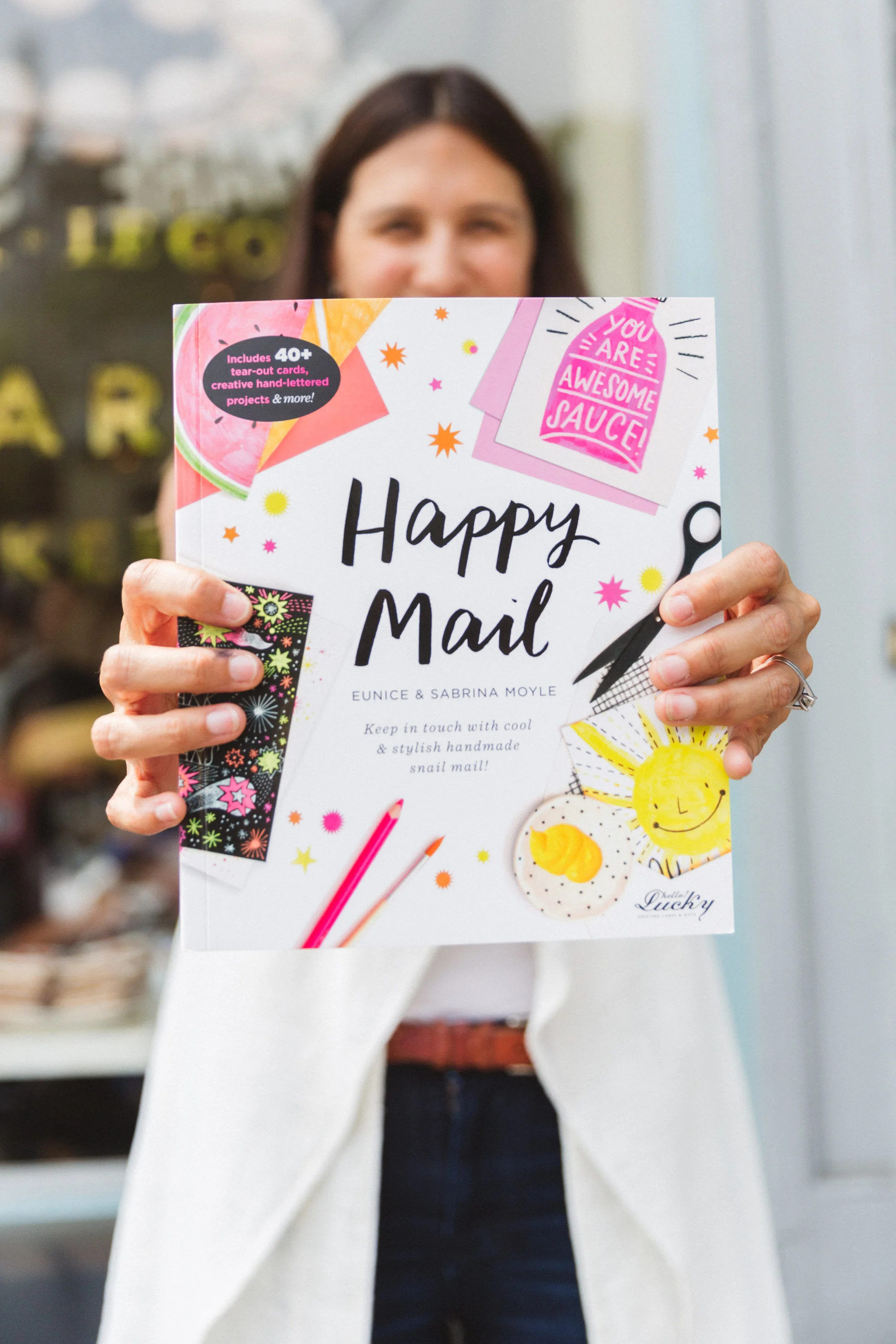
Happy Mail just launched! Enter to win a copy, details at the end of this post. Photo by Zoe Larkin Photography
There are lots of reasons why doodling and writing snail mail cards makes us happy. For one thing, Eunice loves to draw and Sabrina loves to write, so cards are a perfect way to team up!
We also love cards because they’re fun and social. Since cards have a clear purpose -- to say hi, thank you, happy birthday, etc. -- they can be less daunting than drawing for no reason on a blank piece of paper. Kind of like bowling with bumpers!

When we make a card, we usually start with the occasion and person in mind. Then, we brainstorm concepts -- the combination of words and images that we think will create a good vibe, a smile, or a laugh. We love to look on Pinterest for inspiration. Sometimes a cool pattern or illustration gives us a great idea that we can apply in a new way. There’s nothing wrong with looking for artists you like and trying to learn their styles, just as long as you make it your own!

Doodling cards is simple. They don’t take a lot of time to draw. Since they’re small, you can easily try different ideas or start over. Sometimes the simplest cards are the best!


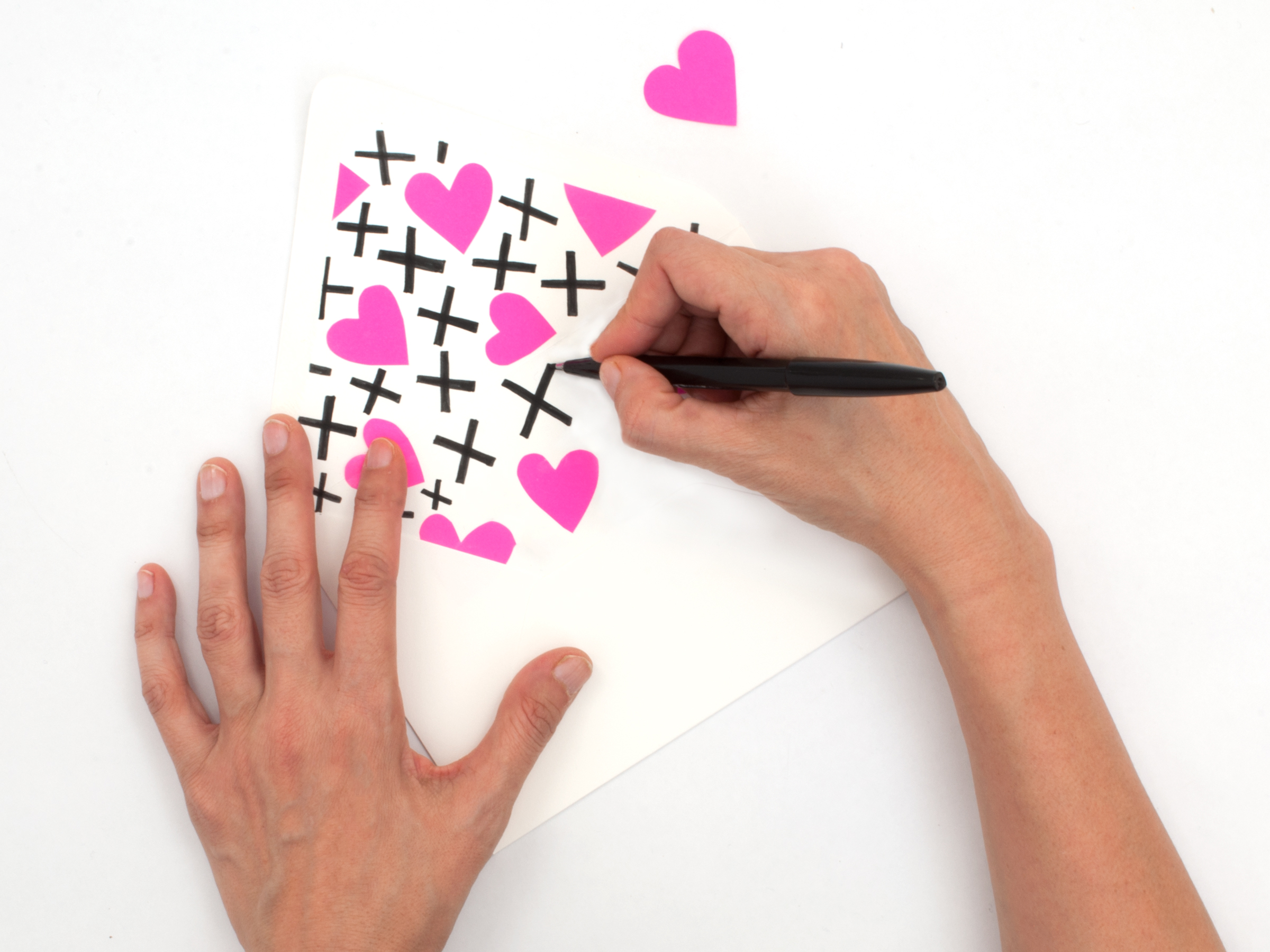
We love cards because they combine words and pictures. We like to think of these as two different languages. Many of us are more comfortable with words than pictures (ahem, Sabrina!), so cards give us a way to use both -- it’s not so scary to draw when you also have words to fall back on. We’ve seen great cards that are only hand-lettering or hilarious one-liners, and we’ve also seen great cards that are all picture with no words. Our favorite? A pun paired with fun illustration! Cat puns, especially!
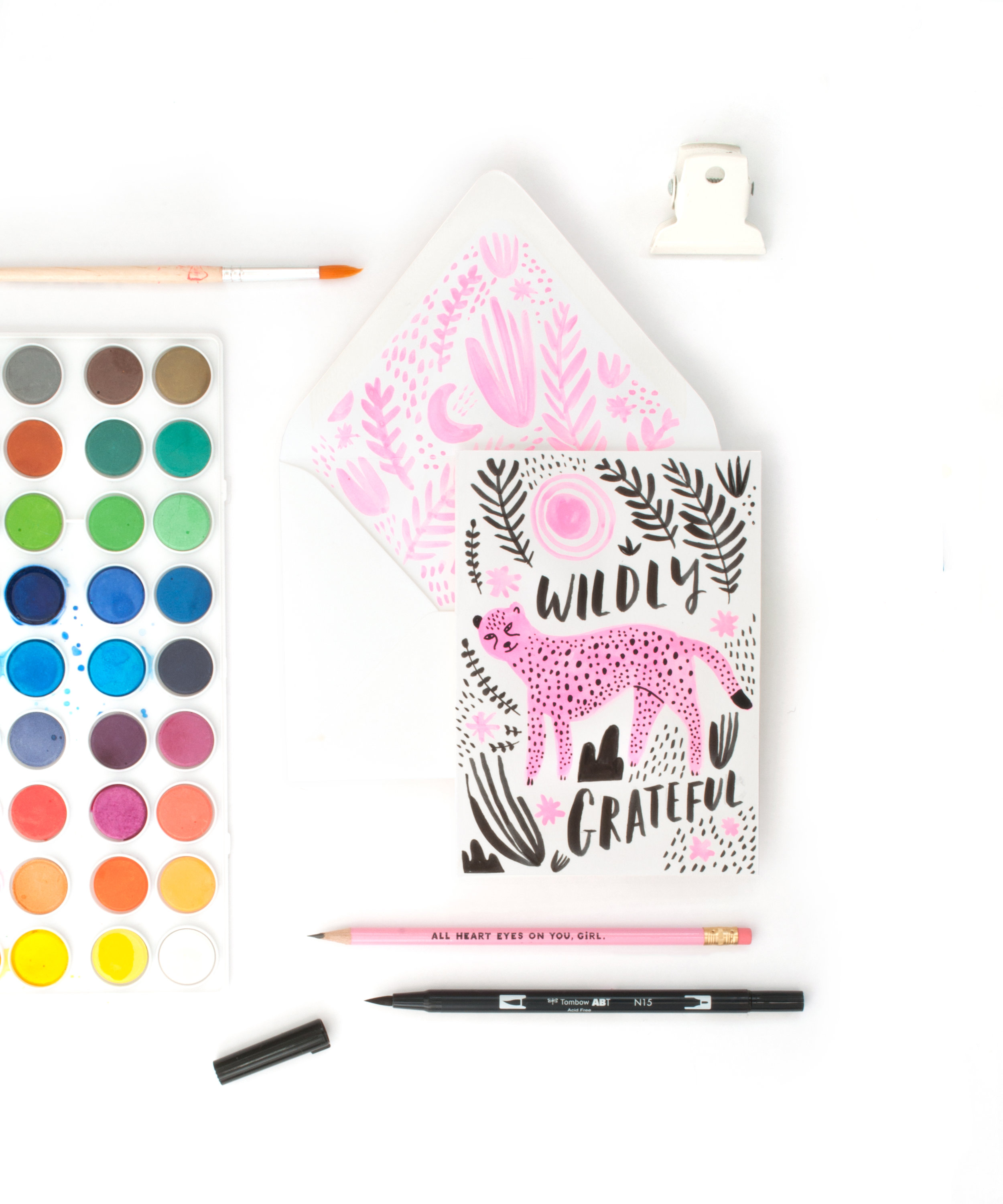
Our rule of thumb for card-writing is keep it short, light, and sincere. We love the fill up the page with hand-lettering and add doodle flare, like rainbows, stars, and hearts. Writing short messages lets us try different styles without worrying too much about messing up or rambling! That said, we also love hunkering down to write a multi-page letter to a pen pal -- it’s an amazing way to catch up when you have a lot to say, and way better than a multi-part IM! :D

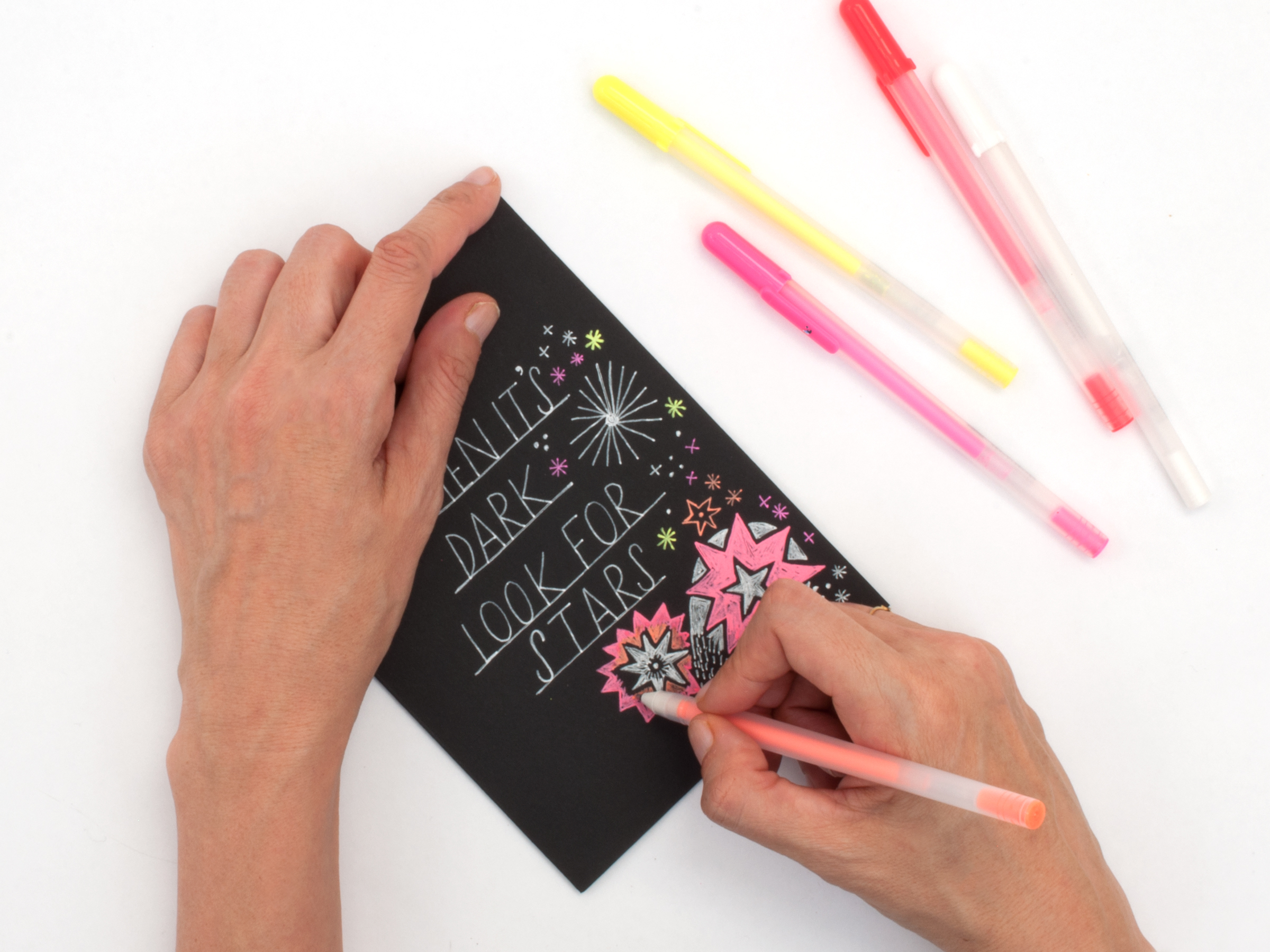
You might think that in today’s tech-enabled world, handmade cards and handwritten letters aren’t important. In our personal experience, that’s not true. Handmade cards and letters are another form of communicating, just like texting, calling, or sending an email. Each one has its place, and a handmade card makes a great impression.

We like to think of snail mail cards like slow food or home-cooking. They take a while to prepare, but they’re satisfying and unique to the cook or sender. Social media has its place, too, just like fast food. Sometimes you’re in a hurry and you just need to get a message sent (we love french fries but try not to eat them for every meal ;))
Nothing beats getting a handwritten card in the mail, personally addressed to you. These days, it’s a memorable experience. It’s something you can hold, read, re-read, and keep forever. (Sabrina still has letters she exchanged with her BFF in high school! Amazing time capsules!).

Making cards makes us feel more connected. We like to make cards for friends, family, and even strangers because it allows us focus our attention on relationships. To us, relationships matter most in life, more than material things. Cards remind us of what really counts!
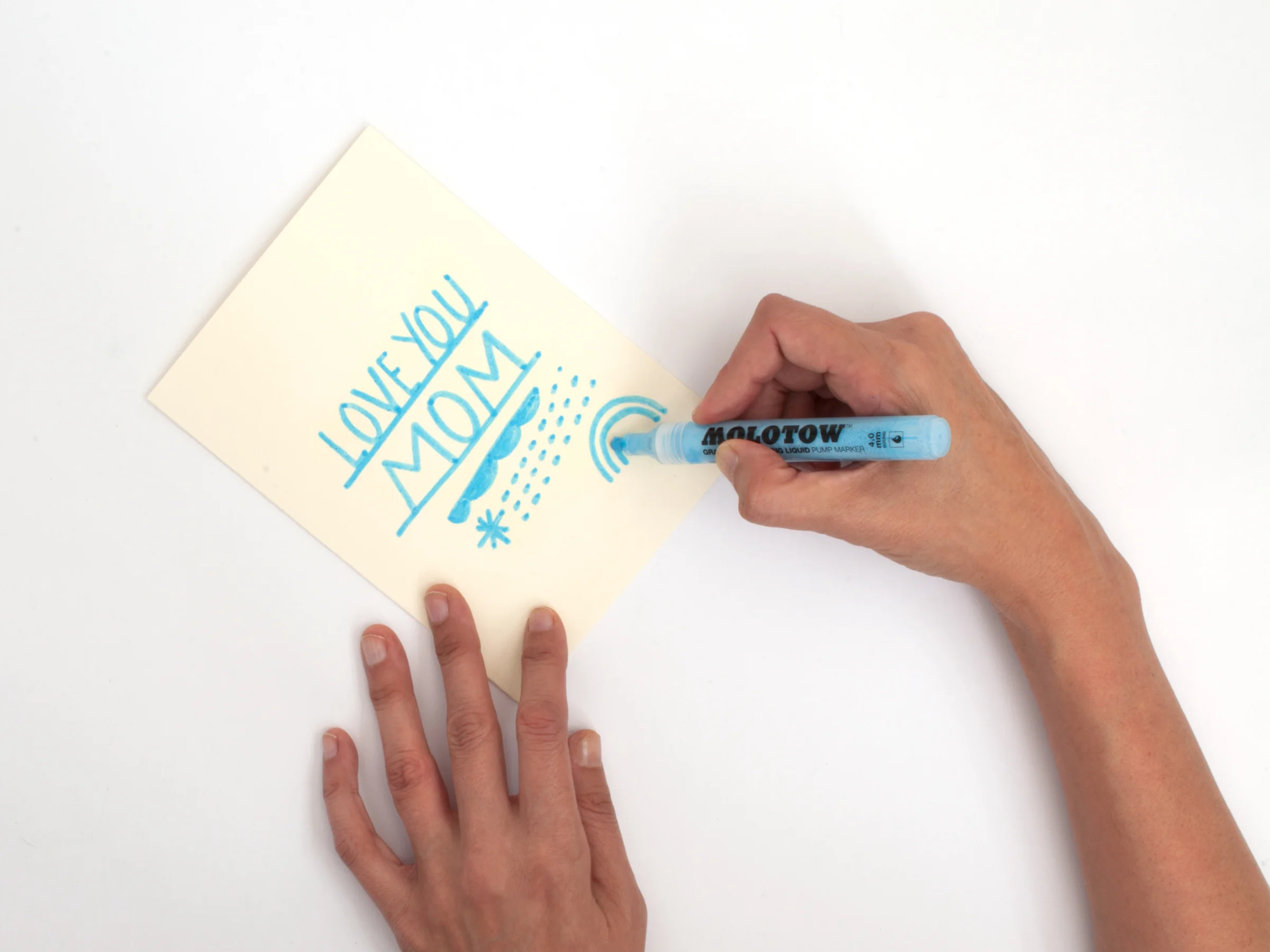
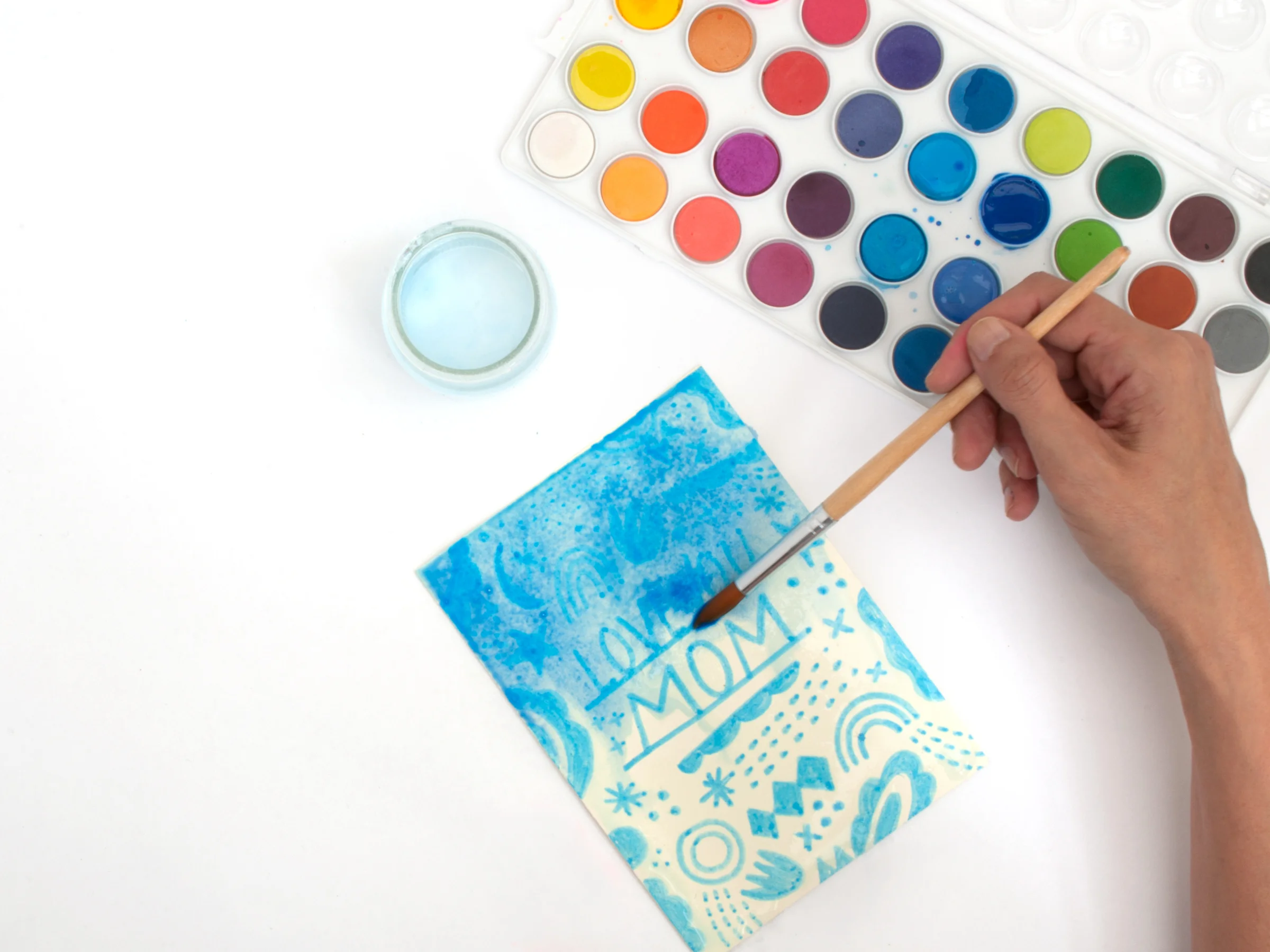

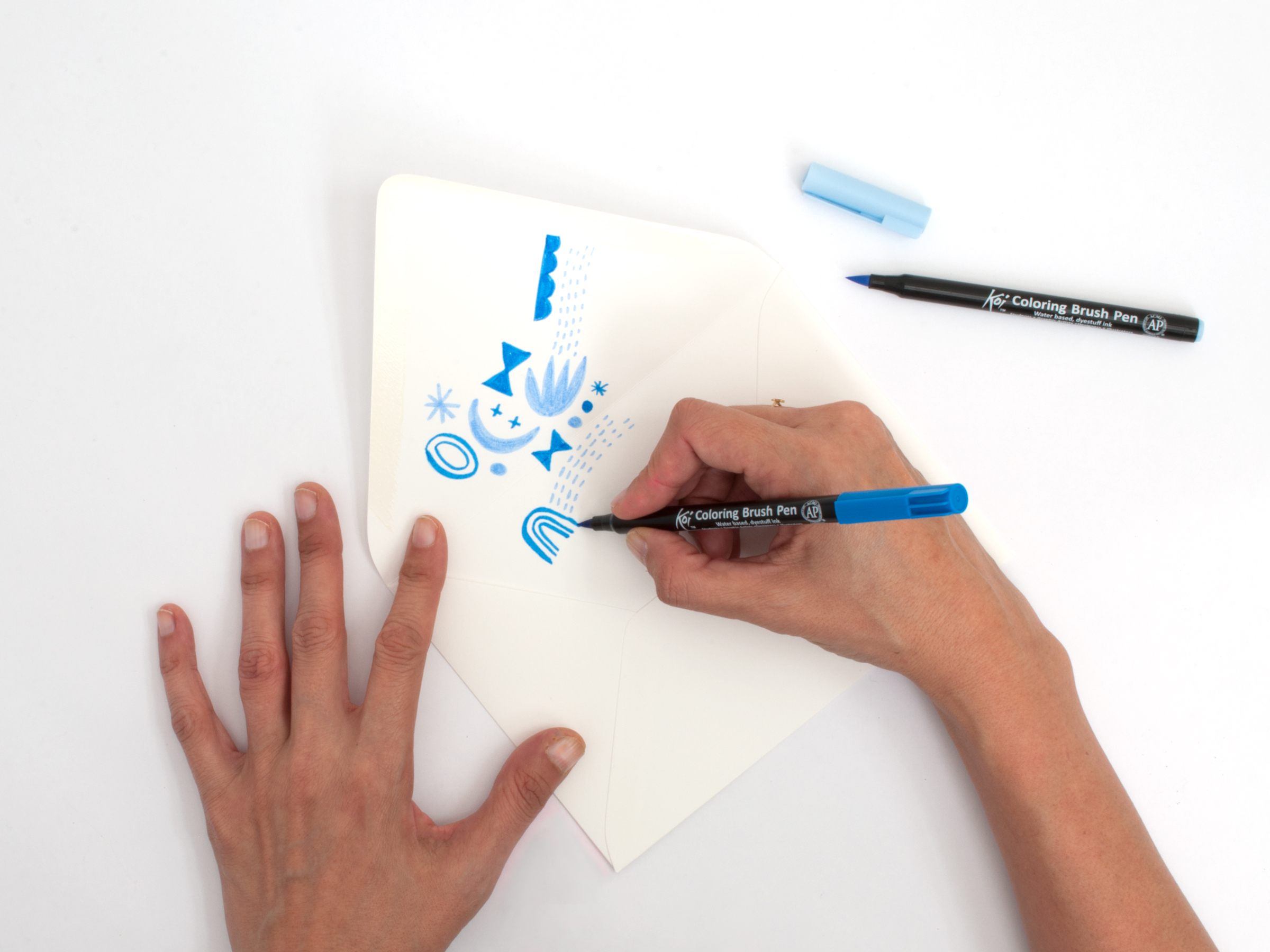
Sending cards or letters can be like a meditation or gratitude practice. When we sit down to draw a card or write a letter, it immediately puts us in a happy place. Why? Because we’re focusing all our imagination and energy on how we can make people happy. What hilarious idea would make them snort with laughter? What would make them feel warm fuzzies? Thinking about these things gives us a real high, like planning a surprise party!

You can almost always find a good reason to send a card. Birthdays, Mother’s Day and Father’s Day, holidays, and or any time you receive a kind action, gift or letter. We especially love sending cards to grandparents and people who might not be as tech-savvy. You might even keep a calendar of card-sending occasions, or a list of people you want to write to along with their snail mail addresses.

Most importantly, though, making and sending cards is just good fun. We crack ourselves up coming up with funny, punny card ideas and we have even more fun sending them to our friends. So the next opportunity that comes up, grab a pen and some paper, and start doodling! Pop your creation in the mail and see what happens!

You can pick up lots of card and hand-lettering ideas and inspiration, letter-writing prompts, and even ready-to-write tear-out cards and self-mailing letters in our new book, Happy Mail. So have fun making your own cards! We know they’ll be totally paw-some! :D
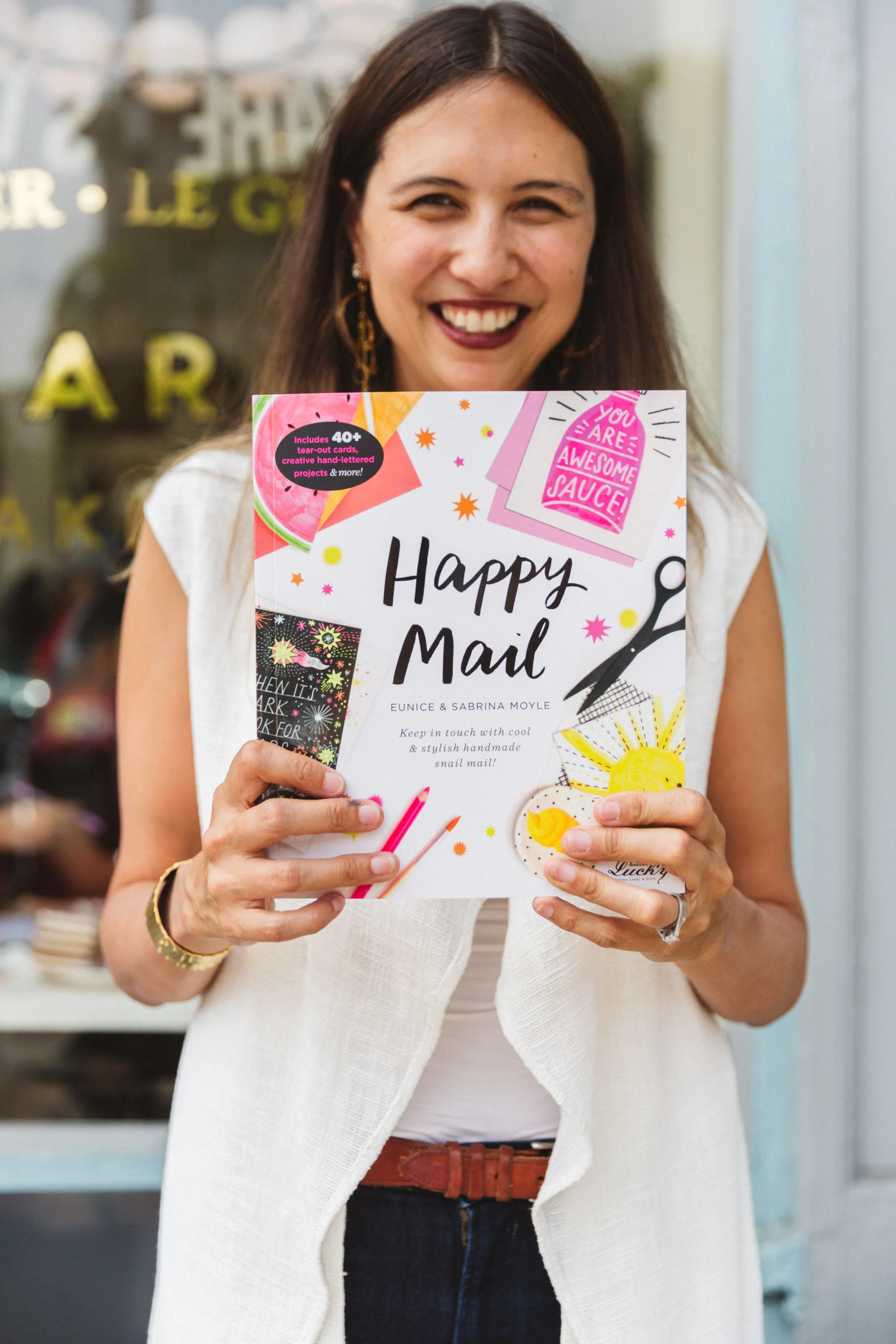
To celebrate the official Happy Mail launch, we’d like to offer one of you your own copy! Follow @illustoria_mag and @helloluckycards on Instagram and tag a friend you would send handmade happy mail to and we’ll pick a winner at random!

Cray-Pas Oil Pastels
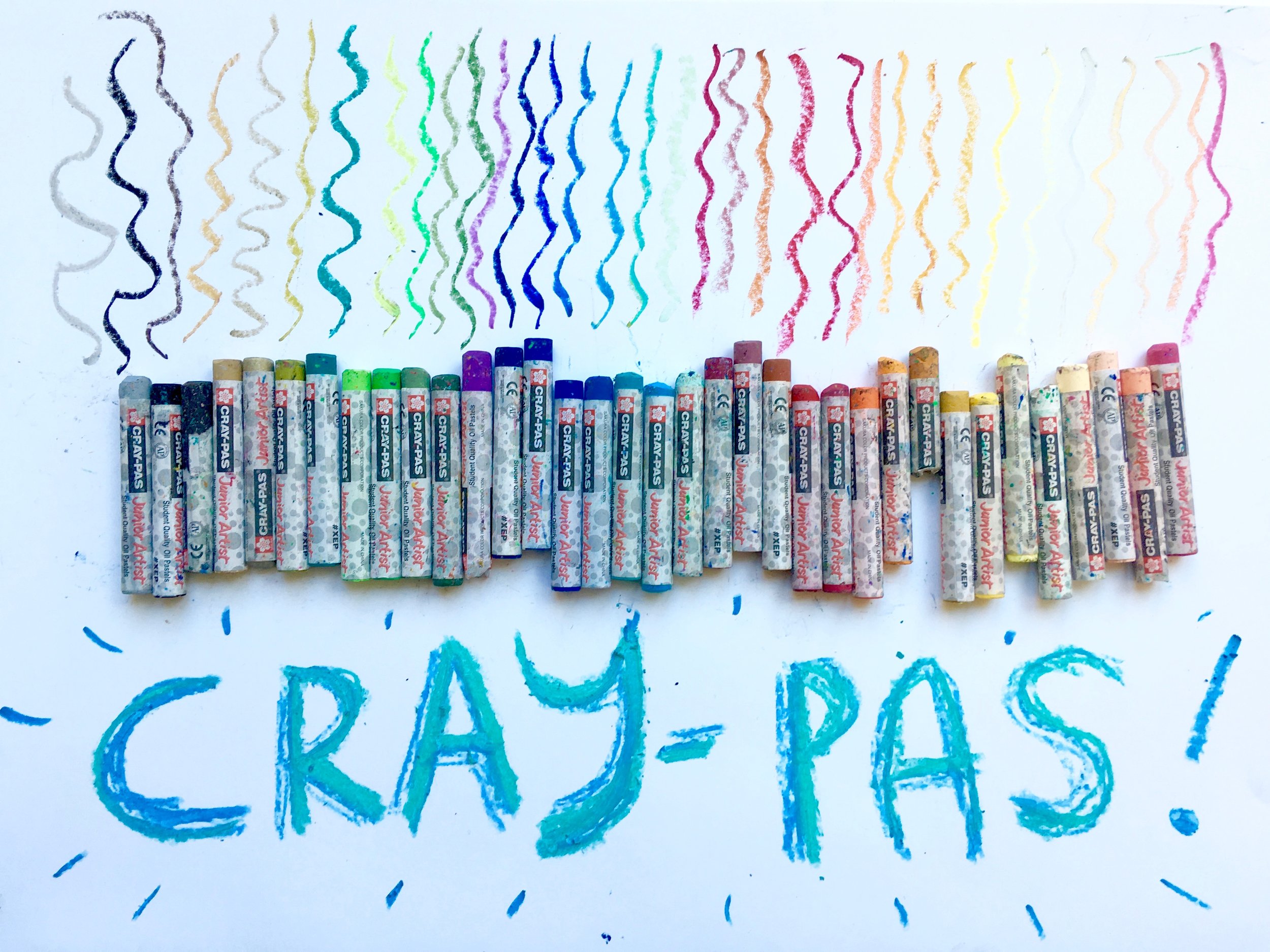
The first time I picked up an oil pastel was in the fourth grade, when I fell head-over-heels in love with the notoriously shorty of Post-Impressionist fame, Henri de Toulouse-Lautrec. If I recall, it all started with an assignment to create a class report on a famous artist that I took far too seriously. When the project was assigned, there was no doubt in my mind that I would report on Toulouse-Lautrec. Just the weekend before my grandma and I had visited the Norton Simon Museum in Pasadena, where I became hypnotized by the artist's boisterous cabaret ladies drawn fanatically in day-glo colors I never knew we were allowed to use. That a lady's face could be colored absinthe green and her legs neon purple simply blew my mind.

Seated Dancer in the Pink Tights, Henri de Toulouse-Lautrec, 1890.
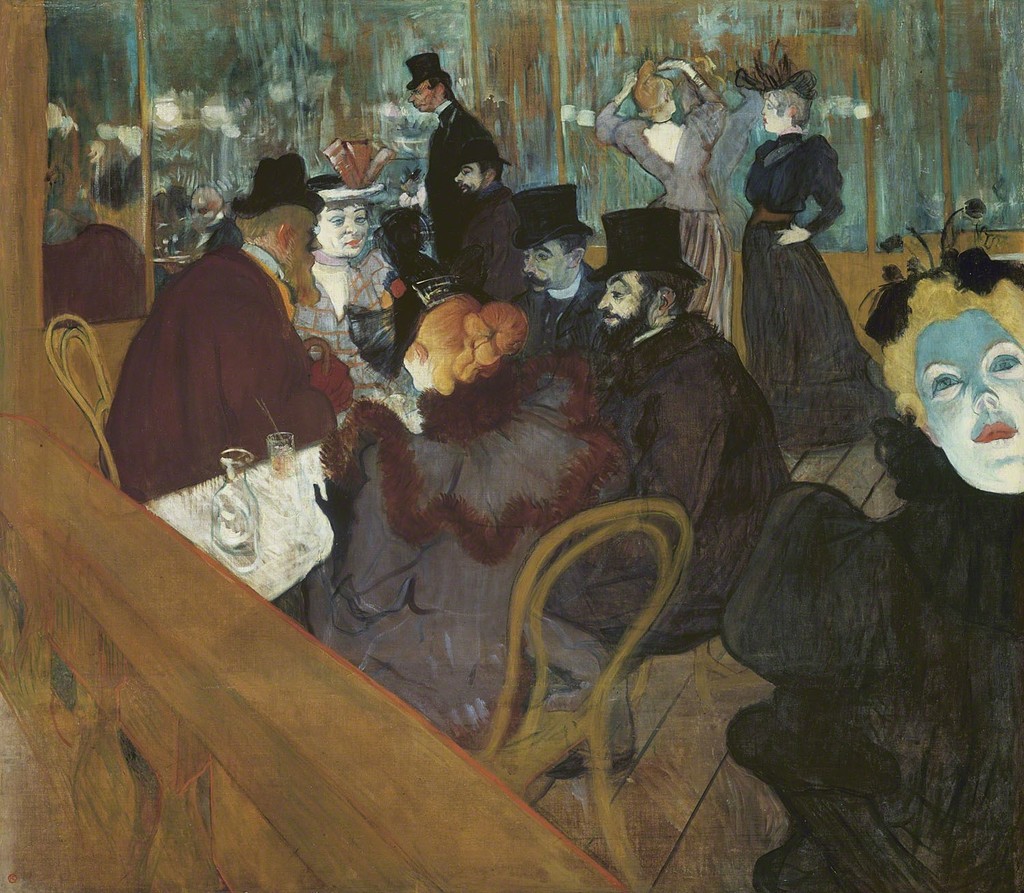
At the Moulin Rouge, Henri de Toulouse-Lautrec, 1895.
I came away from the museum knowing two things:
1. Henri de Toulouse-Lautrec was my new favorite artist of all time.
2. Oil pastels, Toulouse-Lautrec's art material of choice, were the coolest thing ever.
Fast-forward thirteen years later, and I still feel the same way. If you ask me, oil pastels, specifically Sakura of America's Cray-Pas Junior Artist Oil Pastels, are an essential in any art class or creative home. Why, you ask? Well if Toulouse-Lautrec's paintings aren't proof enough, get this: oil pastels are so incredibly waxy and smooth that when you drag a stick across the page it feels like drawing with butter. It's insanely satisfying!
Also, Cray-Pas are filled to the brim with delicious pigment, and are exceedingly more rich and vibrant than your run-of-the-mill oil pastels. The smooth quality of the sticks allows Cray-Pas colors to be super easy to mix and blend. There's many different styles and techniques for drawing and blending, and it's fun to experiment with oil pastels to see what works.
Some helpful tips and tricks for using Cray-Pas oil pastels that I've learned over the years:
1. Mixing colors with your fingers (like you easily can with chalk pastels) is fun, but pretty messy. Try using a palette knife to mix, or experiment with the amount of pressure you use when you press down your pastel.
2. Experiment with different drawing surfaces. Grey and dark beige heavy weight paper amplify the vibrance of the pastels. Pastels also look ultra-cool on cardboard!
3. There are many different stroke methods you can use to create interesting effects with oil pastels. You can layer colors to create unique color combinations, or try sgraffito, a method of scratching lines through thick layers of colors to reveal the color underneath.
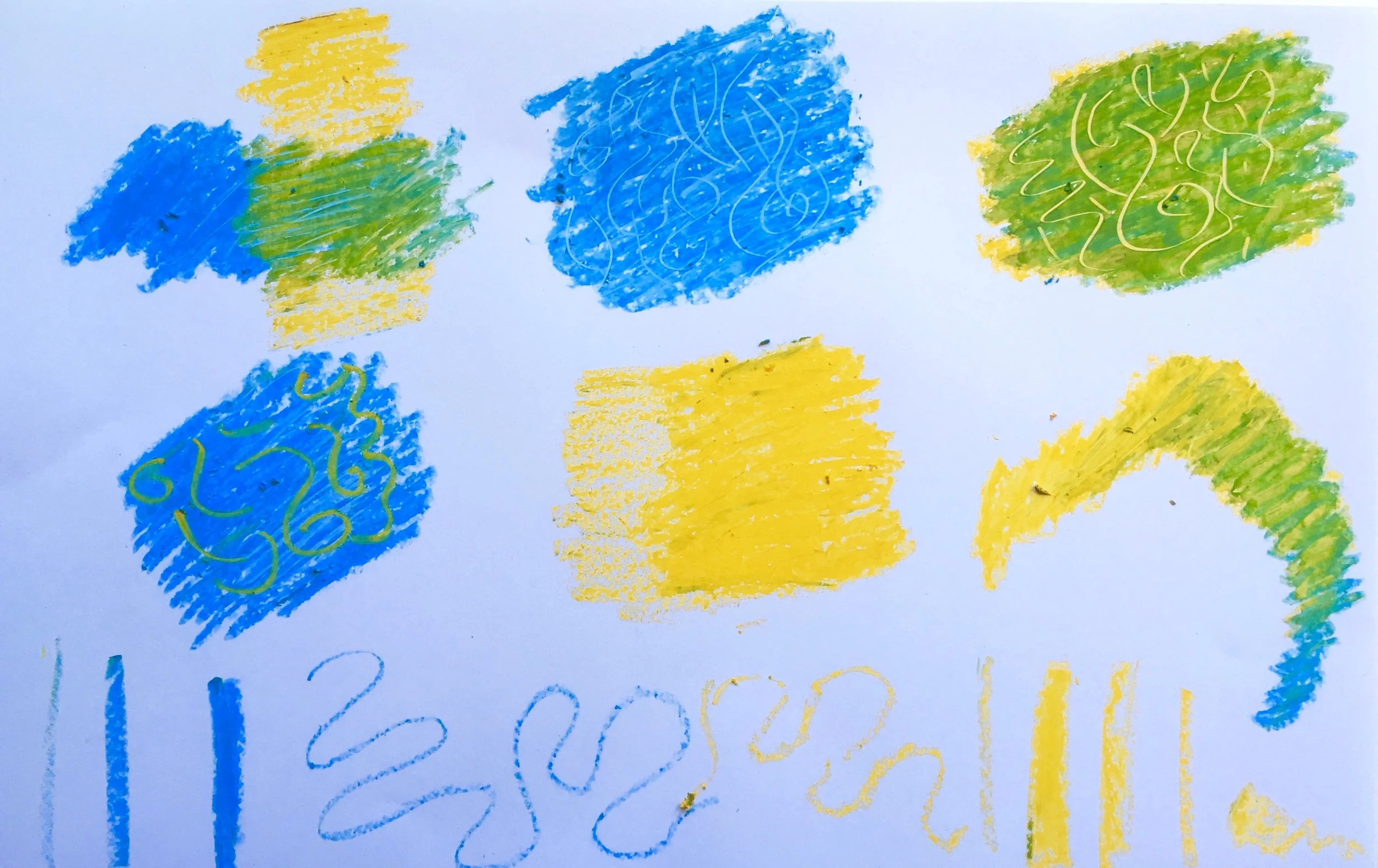
You can also try stippling, a method where you use short, quick strokes or dots of color to create an optical effect when seen from far away, as in Georges Seurat's Pointillism paintings. To create a soft, defused effect like Claude Monet, try scumbling by creating controlled scribbled marks.

Close-Up of Circus Slideshow, George Seurat, 1888

Impression, Sunrise, Claude Monet, 1872
4. For inspiration, make sure to check out Toulouse-Lautrec's gorgeous oil pastel sketches of everyday life.

Henri Toulouse-Lautrec

Henri Toulouse-Lautrec

We're so excited to have Sakura sponsor Issue #4 of Illustoria, which is on shelves and available now. We hope you enjoy our Cray-Pas oil pastel tips, now get out there and start sketching!

Making a picture book: An Apple and An Adventure

An Apple and An Adventure comes out in June 2017. Win a signed copy + original art by Martin Cendreda here!
Today, guest blogger Martin Cendreda, illustrator, animator, comic book maker, and author, shares with us a behind-the-scenes look at the inspiration behind and the making of his latest picture book, An Apple and An Adventure. Win a signed copy of his book and an original print by Martin by entering our drawing contest.
Without further ado, here's Martin!
This was one of the earliest drawings of the cave girl and her triceratops pal. I added the text sometime later, when I decided I wanted to make a self-published zine using them as the main characters. When I first drew them, I was thinking of making a comic, but at the time, my kids were learning how to read. Consequently, I was reading a lot to them, and vice versa, so I thought why not make it a kids zine (the book thing came later) My friend John has a risograph machine, which is like a fancy color printer, and he agreed to help me print the zines. My friend Dave owns a comic book, The Secret Headquarters, here in LA and he could sell them there. Perfect!

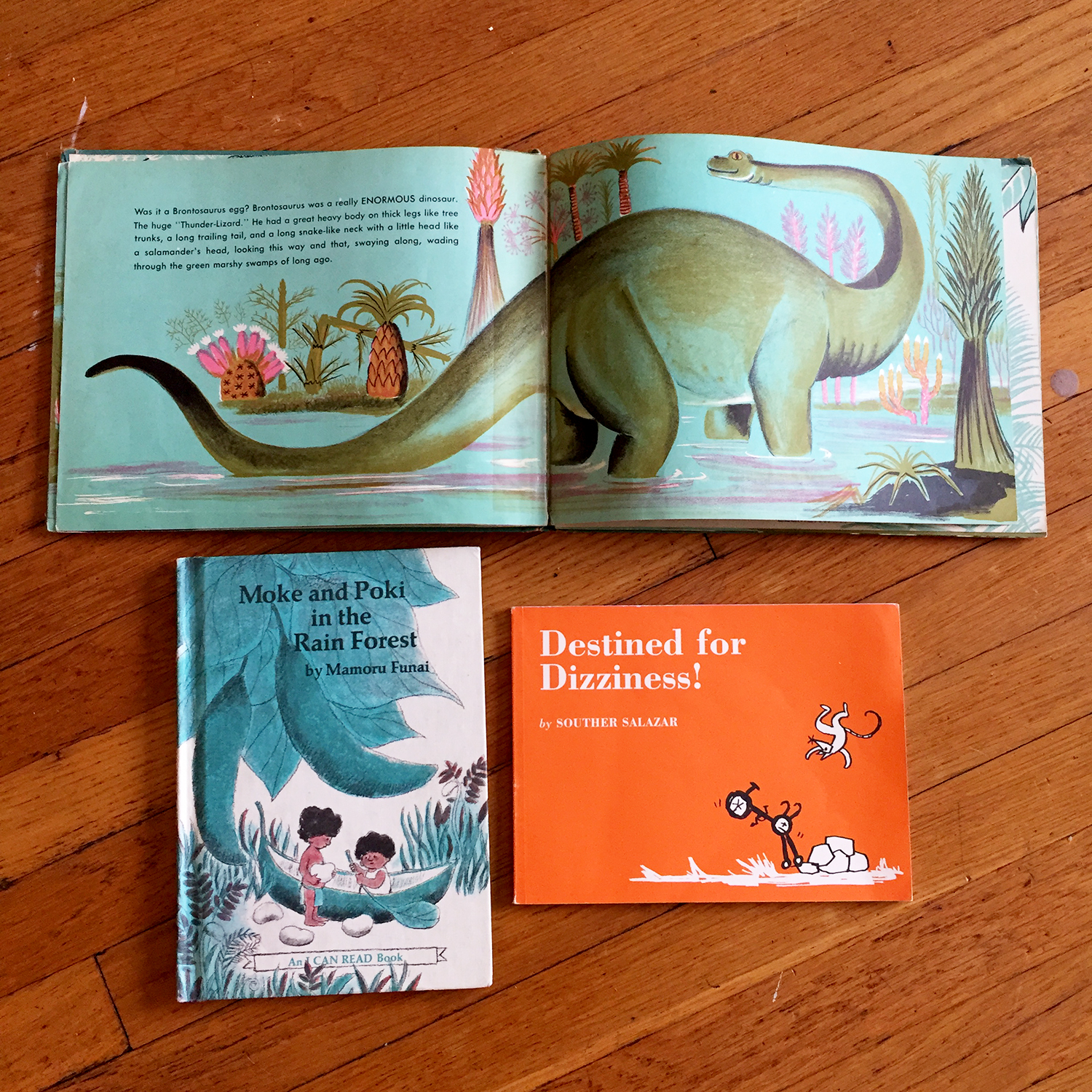
These are 3 books that were huge inspirations to me, when I started. TOP: The Wonderful Egg by Dahlov Ipcar, bottom left: Moke and Poki in the Rain Forest by Mamoru Fuani, bottom right: Destined for Dizziness by Souther Salazar. Dahlov Ipcar is one of my all time favorites! Sadly, she died a few months at age 99. She was working right up until her last day, one of the hardest working artists around.
I made little booklets from regular old copy paper (folded over, stapled through the middle, then cut in half). In them, I would write a whole bunch of alliterative sentences using the letters of the alphabet. Then I would sketch out scenes to match them. I would do these sketches at a cafe for 30 minutes before work started. It was my favorite time of day, just drawing and drinking coffee. Nothing better!

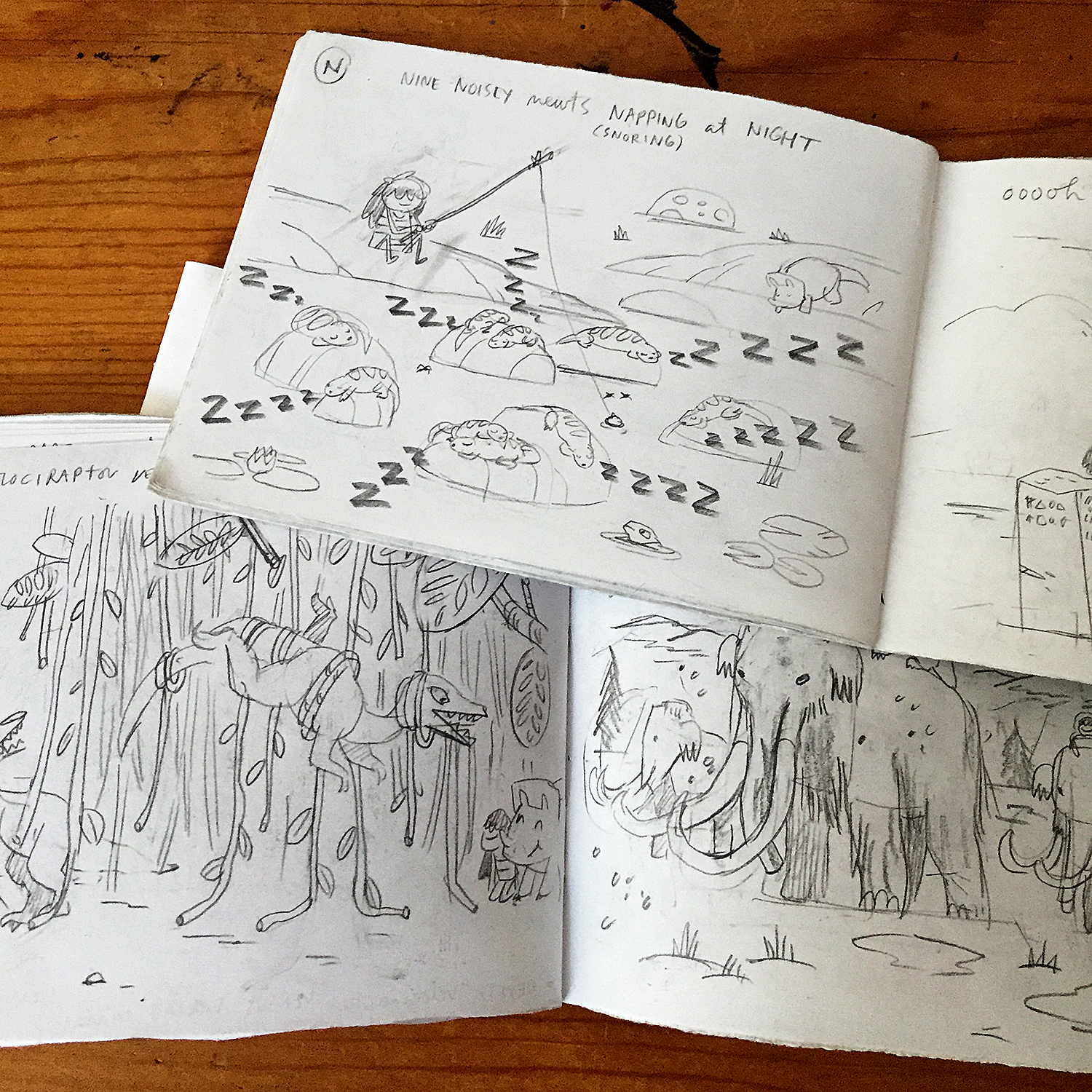
Once I settle on the dimensions of the zine. I made a mock-up from sheets of 8.5 x 11” paper folded in half and stapled. I would re-sketch my initial sketch ideas to fit this format, then cut and paste them into the mock-up. This mock up gave me a rough idea of what the finished zine might look like. It also gave me a chance to edit words and/or pictures that I wasn’t happy with. This part was really messy but so much fun, cutting, pasting, taping things into a little booklet.

Computers. Once the mock up was done, I scanned it into the computer, page by page. Then I would clean up the sketches a little more in Photoshop. Then I would draw clean lines over that. I use a Cintiq, which is special monitor that you can draw with. Once the linework was done, I then colored each drawing in photoshop.

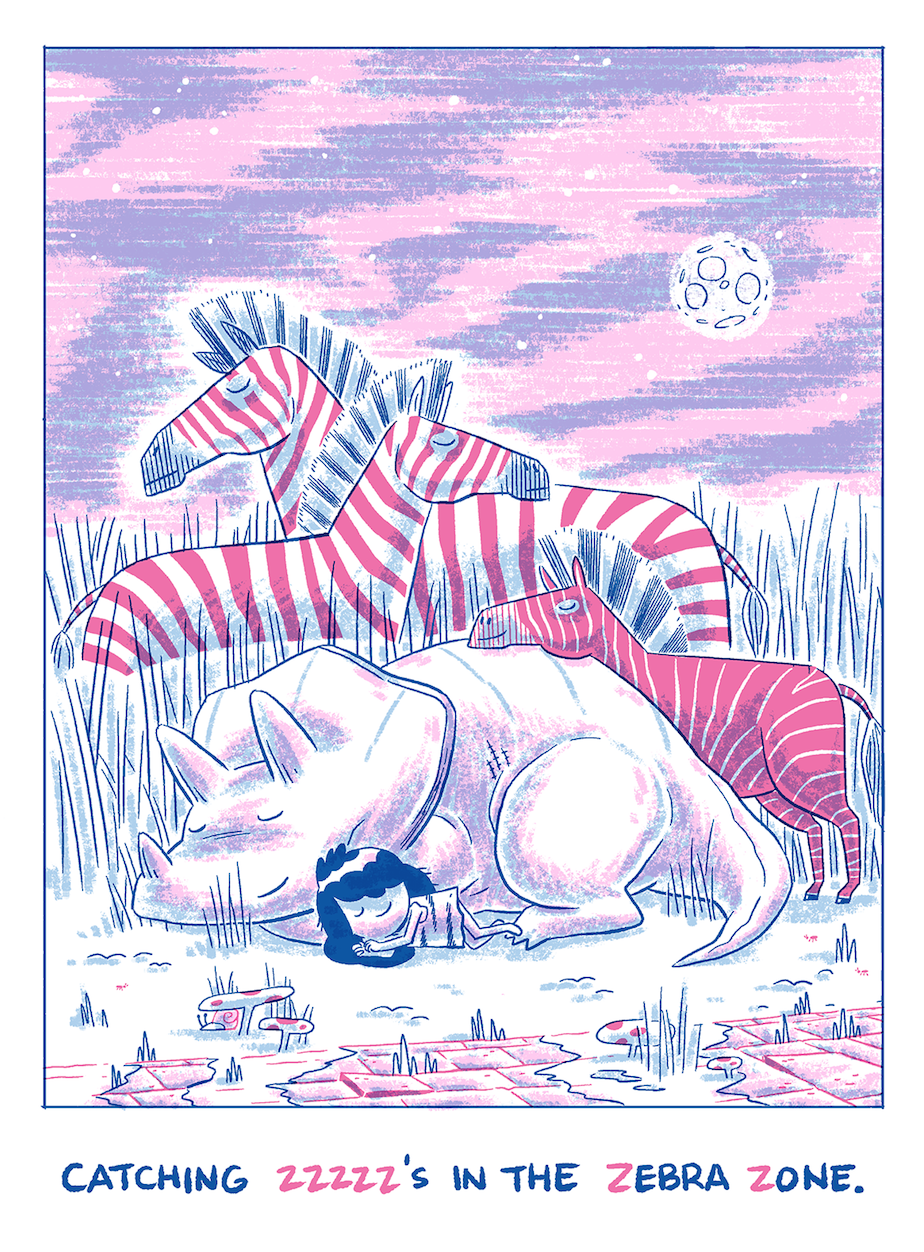
I then printed out the images on John’s risograph machine, using my old mock-up to determine which images go on which side of the paper. Then I took all those print outs to a copy place where they assembled them into booklets, stapled them, and trimmed them down to the final dimension. And voila, zines!
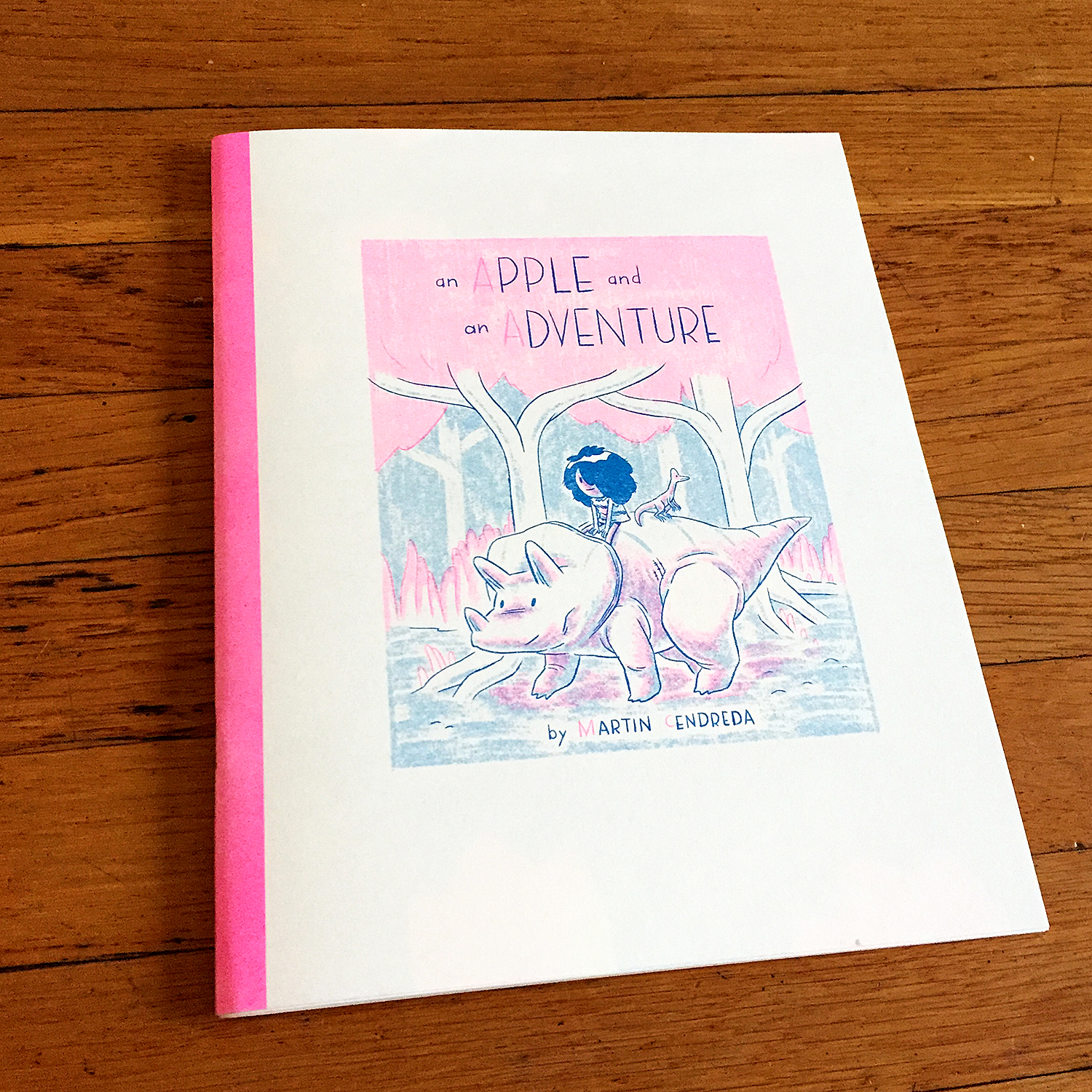
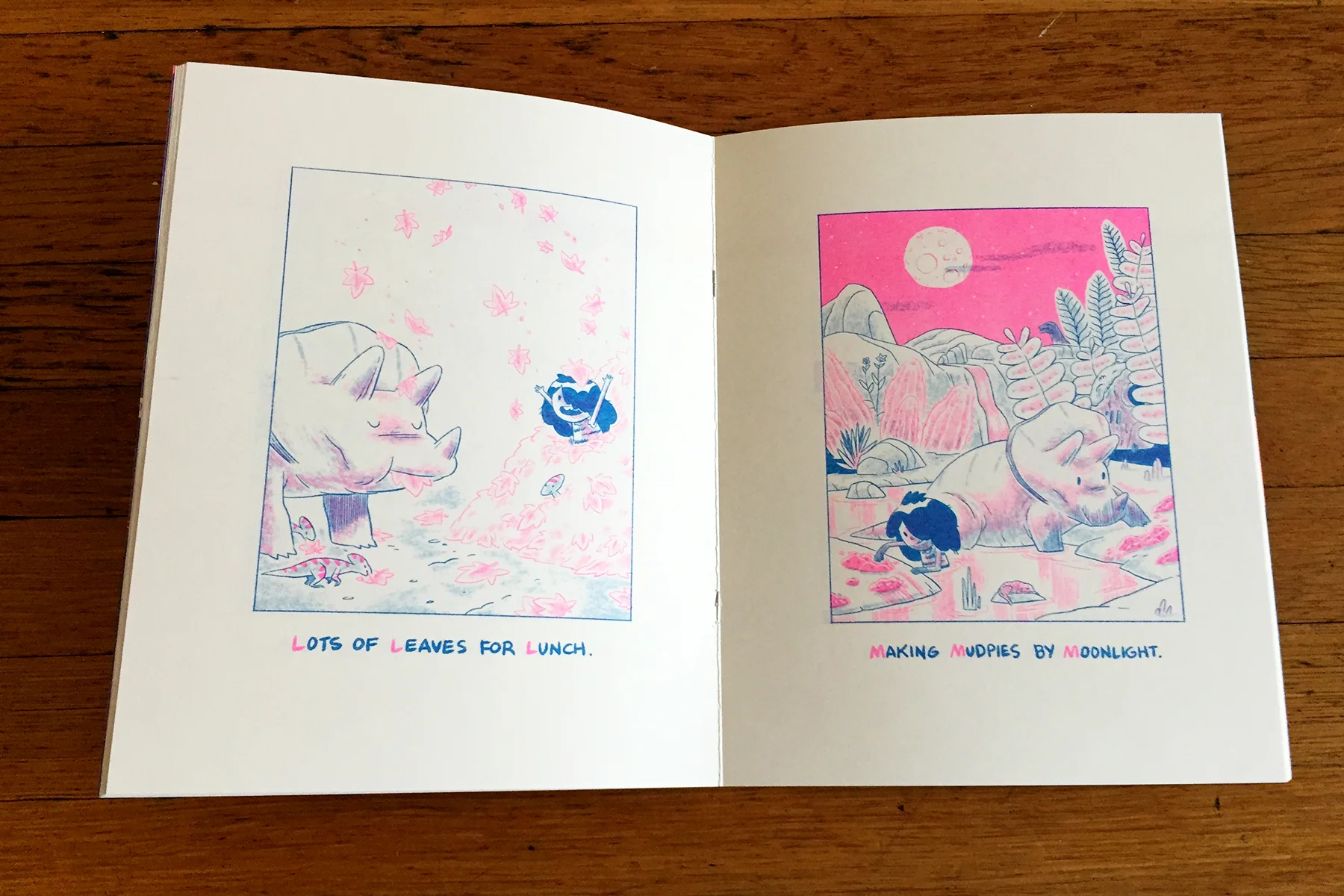
Matt Gagnon, Editor in Chief over at Boom, bought the zine version at Secret Headquarters. He liked it so much, he offered to re-publish it in a nicer, hard-cover edition. How could I say no! All the artwork was mostly done, all I had to do was clean up the lettering, draw some endpapers, and add some things to the cover. Here are some pics comparing the zine version to the book version.
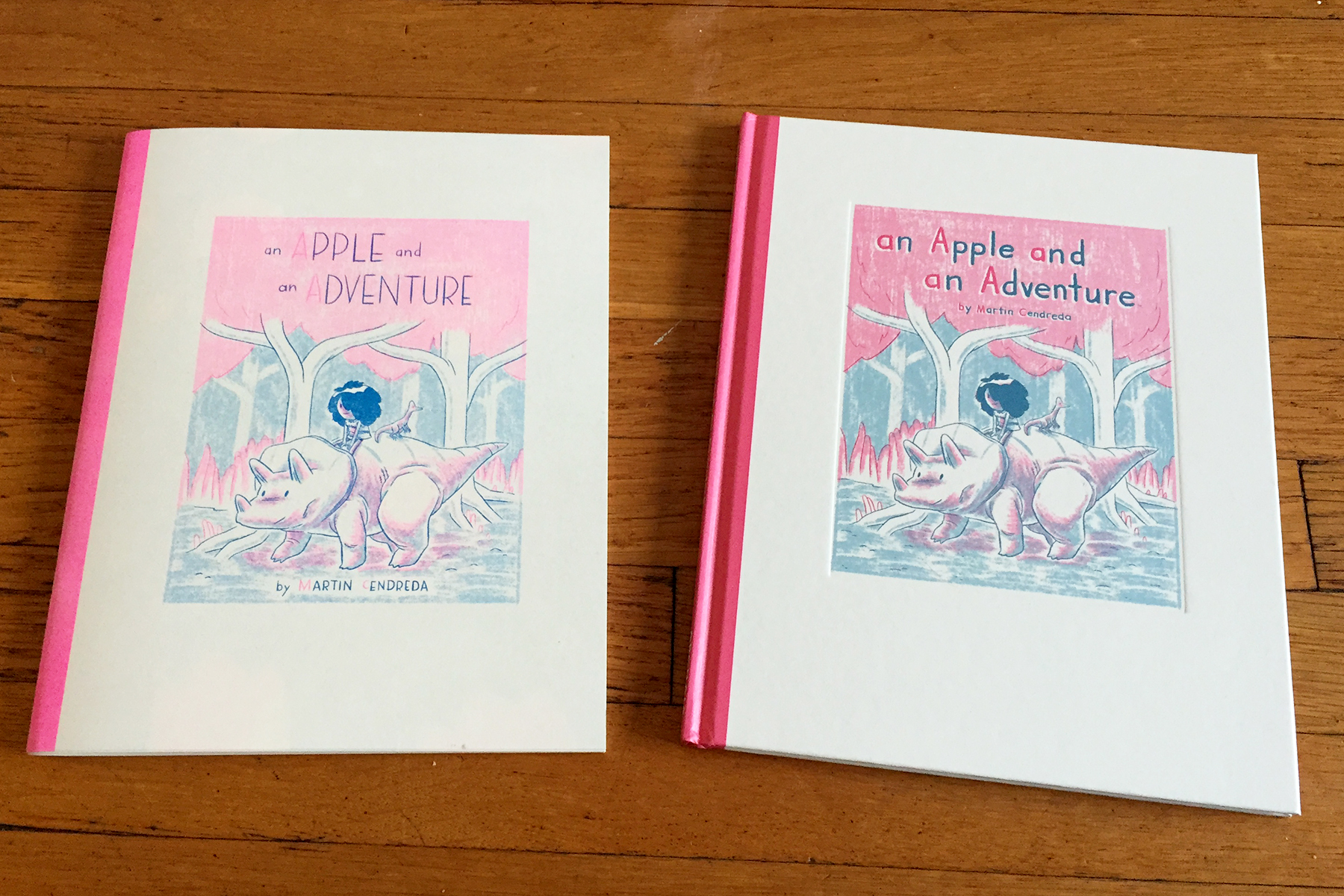

More images of the final book!


We hope you enjoyed reading about Martin's process in creating An Apple and An Adventure, from inspiration to sketching, zine-making, and printed hardcover picture book! Don't forget to enter our drawing contest to win this book and an original piece of art by Martin.

The Grow Issue: A Cover Comes to Life
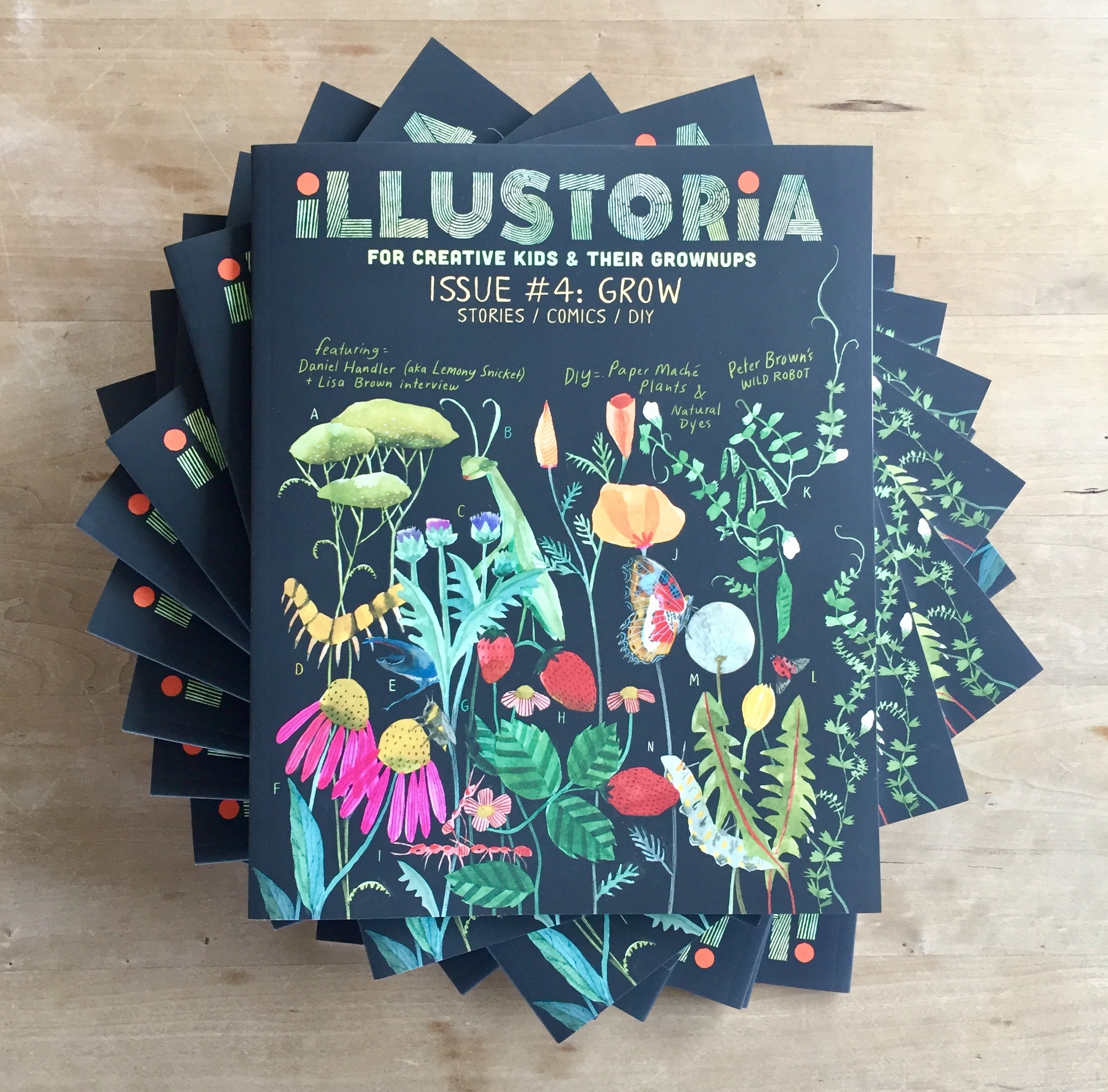
We couldn't be more excited to announce that Issue #4 has arrived from the printer! The contents of The Grow Issue are as rich and teeming with life as the cover. I'll share more about all the amazing writers, artists, and makers who contributed to this issue soon. But for today I'd love to highlight the wonderful artist behind this cover and the making of it.
Fave local artist and watercolorist extraordinaire Lindsay Stripling graces our cover with her lovely art depicting the flowers and insects that she remembers from long days spent playing in her grandparents' backyard in Lafayette during her childhood, and the flourishing flora she finds in Northern California. Lindsay is a master of her craft, who paints dreamy tableaus of scenes set in folk and fairytale worlds from her imagination. She tells us that the best way to tackle her paintings is to allow for mistakes, since they are impossible to avoid. As soon she messes something up, she just turns it into something else. Find her awe-inspiring work here. You'll also find Lindsay's gorgeous watercolors in another spot in this issue, accompanying our illustrated story A Brief History of Ultramarine Blue written by Alexis Joseph, pigment expert and founder of the swoon-worthy art supplies shop Case for Making in the Outer Sunset of San Francisco.
Here's a look at Lindsay's issue 4 cover sketch, already so beautiful:

We knew we wanted the flora and fauna to contrast against a black background. Our creative director, Elizabeth Haidle, came up with this nuanced coloring of the masthead against black:
Lindsay's final art in place with a mock cover design:

As much as we loved the simplicity of this cover, we knew we'd want to accommodate callouts for our delectable main features, so Lindsay filled out the space with added pea tendrils. We also included lettering so the plants could be identified on the back cover.
And so...the final cover!

Elizabeth designed and illustrated the back cover to beautifully compliment Lindsay's art and the theme of nature and the outdoors, introducing the legend for curious kids (and grownups) to pore over.

We hope you love how this cover turned out and the entire contents of this issue as much as we do! Find out more about all the goodies in issue 4, which includes contributions from creative duo Lisa Brown and Daniel Handler (aka Lemony Snicket); an essay on the making of The Wild Robot by Peter Brown, author of The Curious Garden; an inspiring, illustrated Q & Artist interview with illustrator Diana Sudyka; a new Literary Giants as Kids comic featuring Mark Twain; stories, art, DIY, and activities galore. Click here to see our full table of contents and a few spreads from The Grow Issue. Enjoy!

Creator Crush: Yuliya Gwilym

artwork by © Yuliya Gwilym

artwork by © Yuliya Gwilym
artwork by © Yuliya Gwilym
artwork by © Yuliya Gwilym
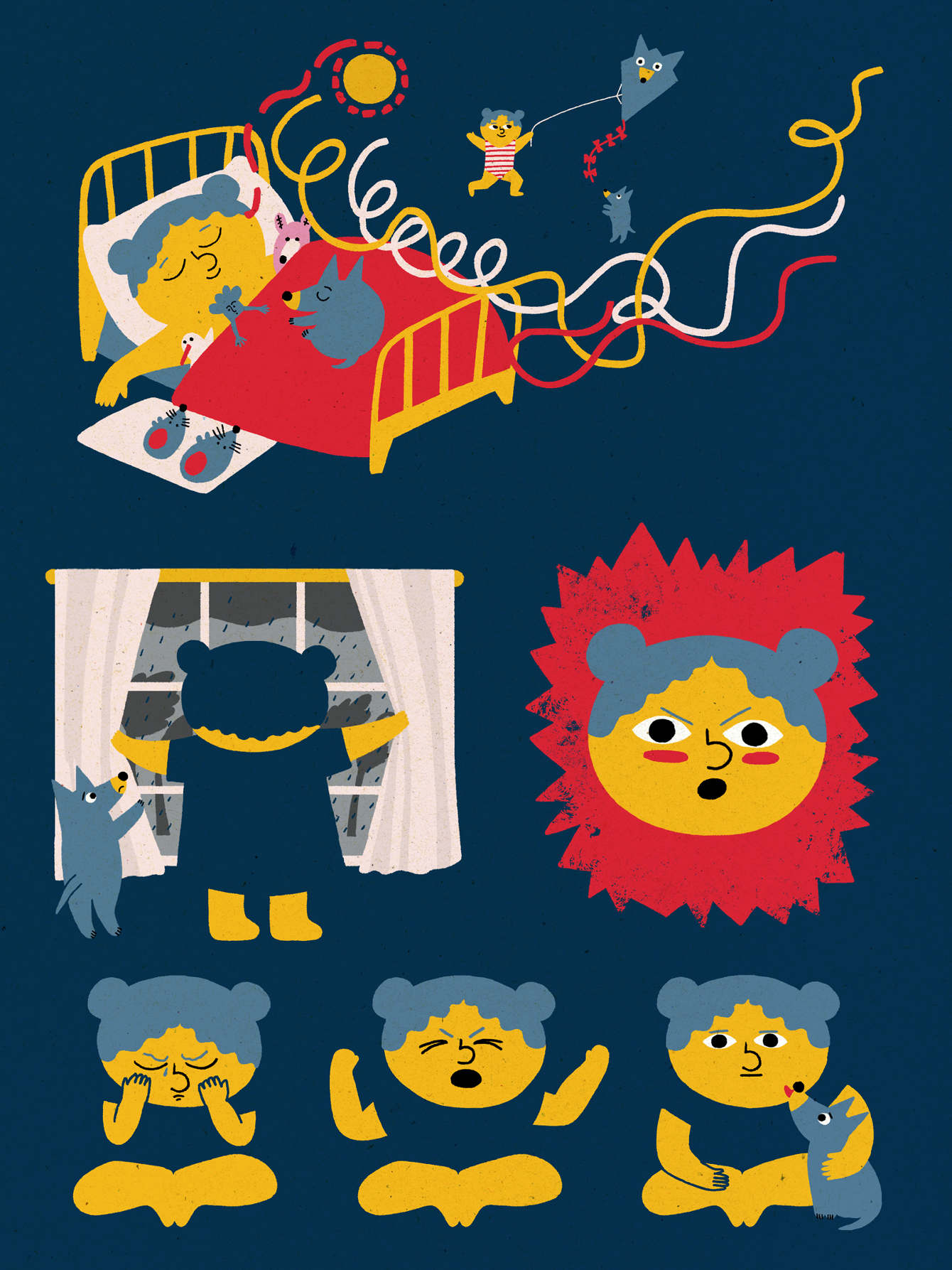
One day I was flipping through a draft of Illustoria Issue 3: Outside-In and Yuliya Gwilym's illustrations immediately caught my eye. The bold shapes and extraordinarily unique color palette struck a chord in me, as if my subconscious always wished and longed for Gwilym's unmatched style and then boom -- it was miraculously handed to me on a silver plater.

Yuliya's piece, "Axe Soup," in ILLUSTORIA issue 3: The Outside-In Issue.
I became quickly obsessed with the graphic simplicity and dynamism of her artwork, reminiscent of the Soviet illustrations of Nathalie Parain and Suprematist Kazimir Malevich. Gwilym's accessible, energetic, and endlessly playful work will add an extra dose of happiness to your day. We're so lucky to have the chance to interview Yuliya, as well as showcase her work in Issue 3 and Issue 4 (which comes out this spring)! Make sure to catch more of Yuliya's work at http://cargocollective.com/yufrukt.
What are you currently working on?
I’m currently experimenting with a flip animation book that tells a story about a little elephant. I’m also designing a little game kit for kids with special needs.

artwork by © Yuliya Gwilym
Can you talk about your process of creating a project, from start to finish?
I start by talking about an idea I have with my partner or artist friends. I try to turn visuals I have in my head into words which usually helps me get a clearer idea. I then do a lot of rough sketches and after that go straight into finals, that way I have some room for experimentation and mistakes which sometimes bring the most fun results. I like to work with different media so my design process varies from time to time.
artwork by © Yuliya Gwilym
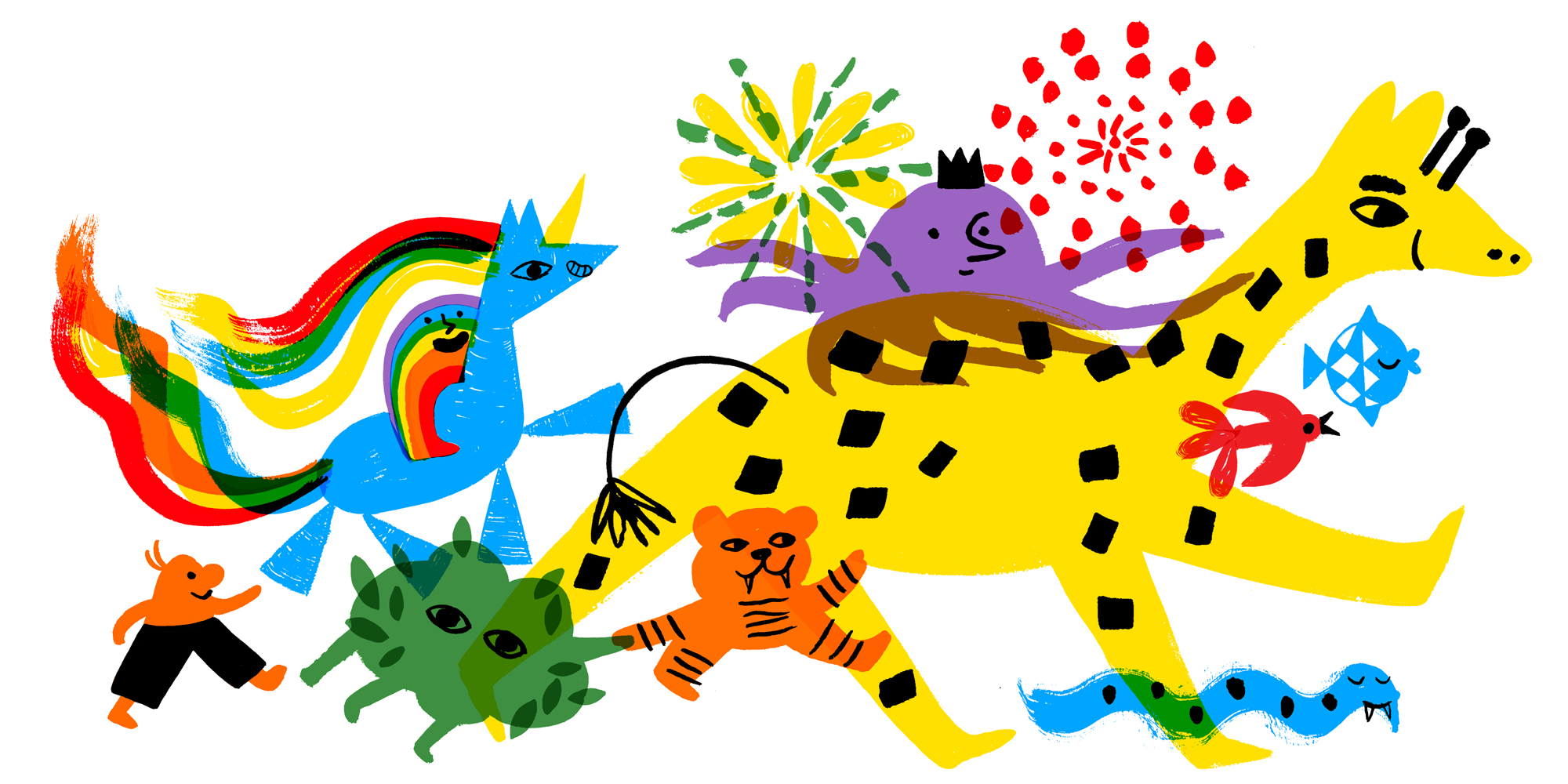
artwork by © Yuliya Gwilym
Where did you grow up? Where do you live now?
I grew up in Kiev, Ukraine. It’s a big but very cozy city, I spent my summers in the countryside hut built by my grandparents, helping grandma harvest tomatoes and pick up lost animals from the forest in my spare time. For the past 10 years I’ve been living by the North sea, in the Hague, the Netherlands. I definitely miss hot summers and sweet tomatoes but I love to live abroad -- exposure to other cultures brings out the best in people.
photo by © Yuliya Gwilym
What were you like as a kid?
Its hard to say these things about yourself, my mum says I made friends with everyone wherever I went and was generally very open (which often included telling our personal family stuff to strangers).
What were your favorite childhood books?
When I was very young I loved the poetry of Samuil Marshak, I knew most of his books by heart and they had beautiful illustrations by graphic artist Vladimir Lebedev who I still admire very much.
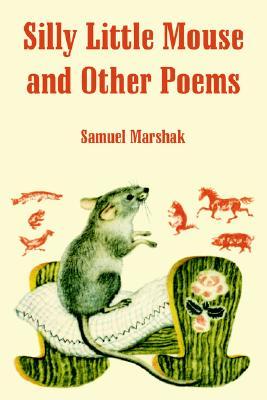
Slonenok (The Elephant's Child) by Vladimir Lebedev
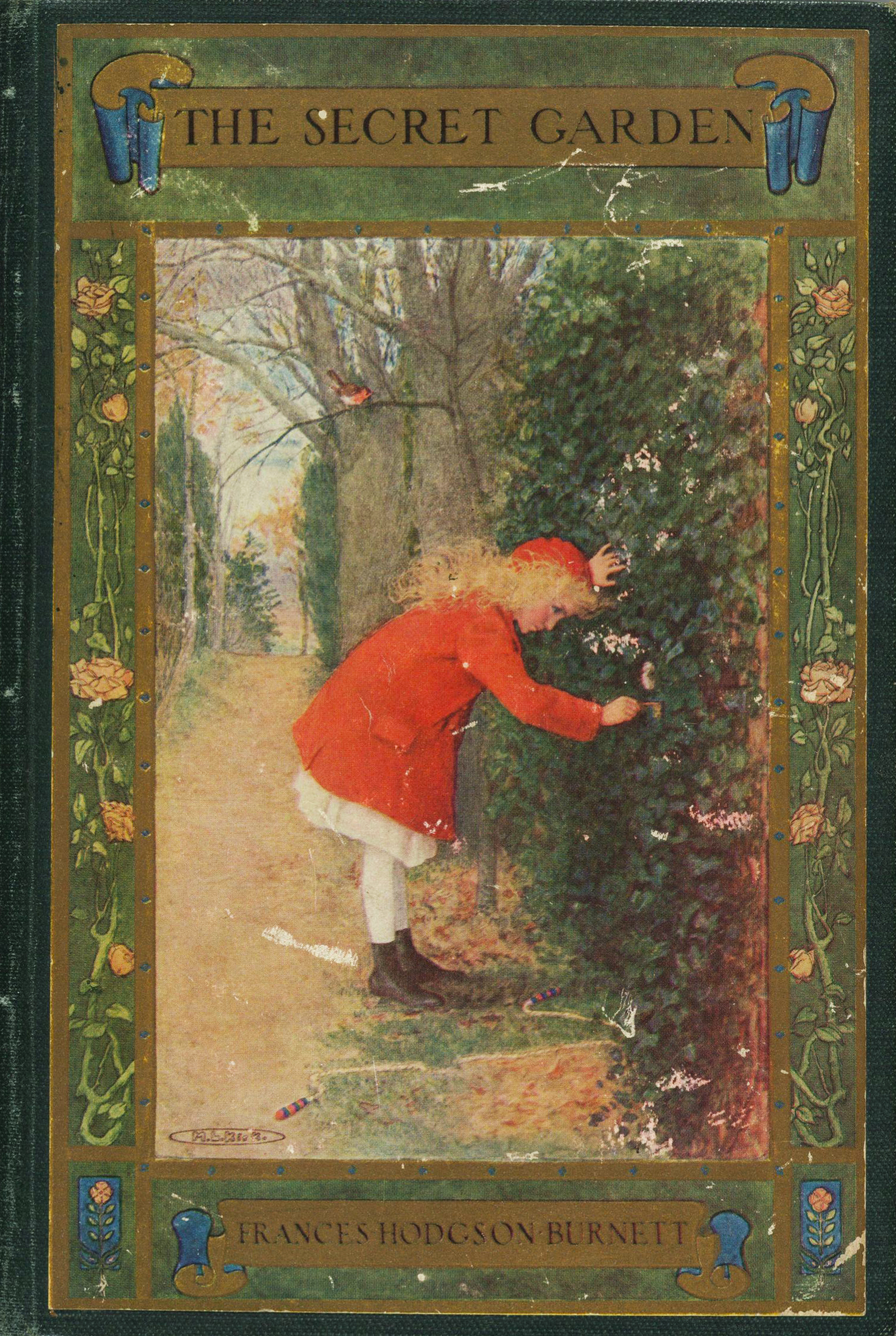
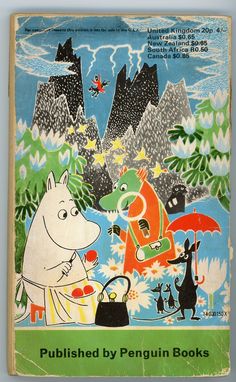
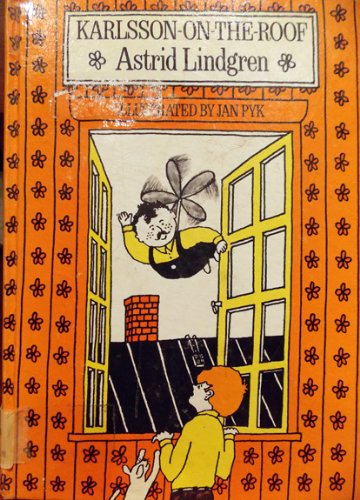
A bit later my favorite books were A Little Princess and The Secret Garden by Frances Hodgson Burnett, The Adventures of Family Mumin-trolls series by Tove Jansson and Karlsson On The Roof by Astrid Lindgren.

Did you have a favorite subject in school? A least favorite subject?
I liked classes of drawing, crafts, mythology, choreography and biology. I really didn't like math…

artwork by © Yuliya Gwilym
When did you know you wanted to be an artist and writer?
In primary school I wanted to build hotels for homeless animals (there are a lot of stray cats and dogs in Ukraine) or be a vet. Later in high school I decided I want to be artist and designer.
Who or what inspires you?
My biggest inspiration comes from children, listening to the weird things they say. I love starting strange discussions with kids and seeing where it brings their adventurous minds. I also find animation and movies very inspiring, old things and folklore, stories from when my grandma was a little girl, I’m inspired by Japan and Japanese yokai, traveling and meeting new people.
photo by © Yuliya Gwilym
What is the most challenging part about being an artist/writer/maker?
Constantly promoting your work, communicating the value, time and care you put into your craft to people who aren’t artists/makers themselves. Staying organised and being able to push forward and keep working even when you’re “not feeling inspired or motivated.”
When do you feel your most creative?
Just before I get into bed.
What advice would you share with young aspiring artists?
Try to be patient. When things seem slow, its not because you're not good it just takes lots of time. Make friends with other artists! It's so much easier when you're not alone and I find young artists’ community very supportive.
artwork by © Yuliya Gwilym